
Over the past twelve months, I have buried too many friends.
I have written about death before. About legacy. About what remains when the speeches are finished and somebody must explain to the next generation who this person really was. I even wrote a story called The Eulogy Your Gen Z Is Already Writing.
I have spent less time thinking about the people standing beside the grave.
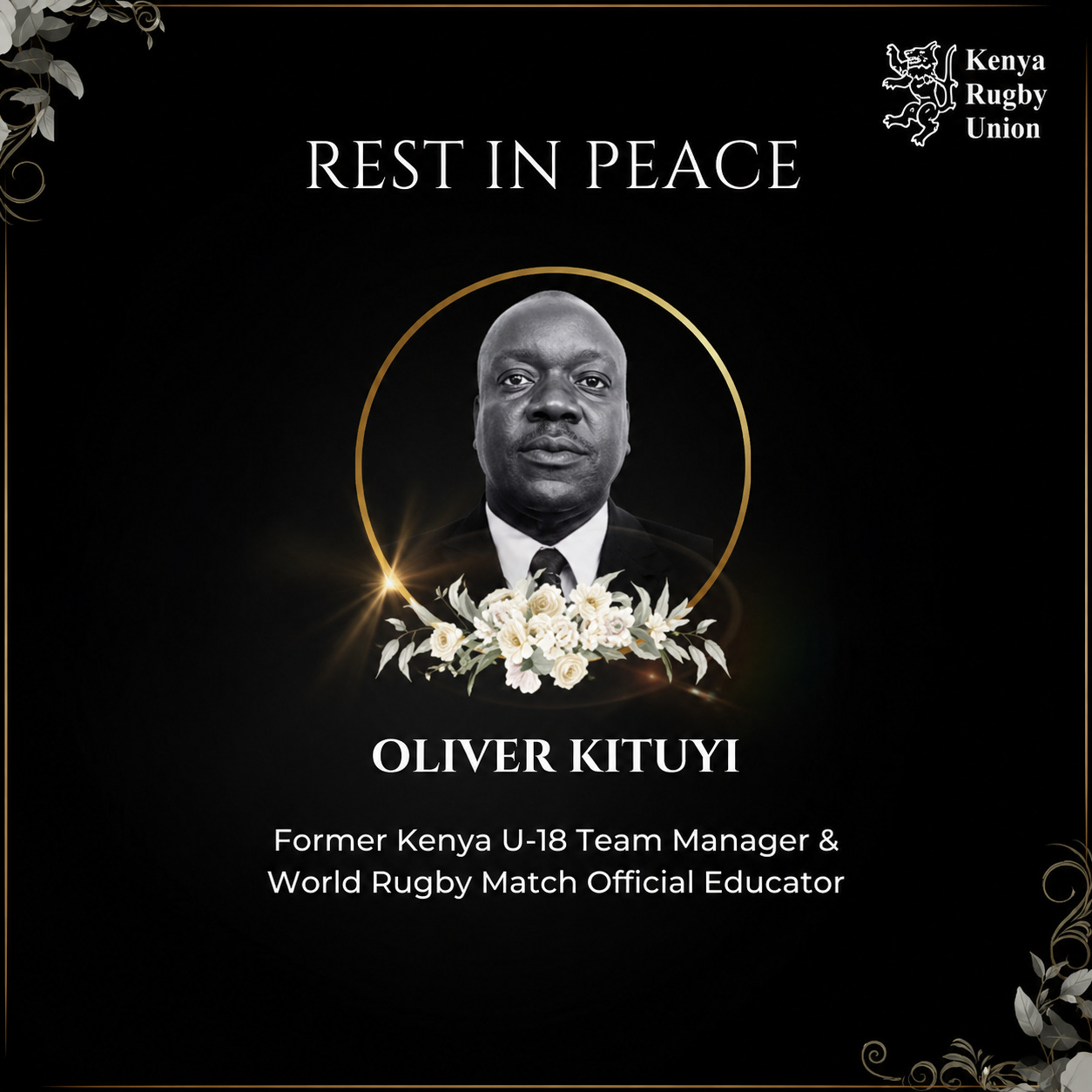
This week, rugby lost Oliver Kituyi.
Oly was a rugby man in the old meaning of that expression. He served the game away from television cameras and trophy presentations—as a Kenya Under-18 team manager and a World Rugby match-official educator.
Close to twenty years ago, Oliver and a famous Judge invited us at Kenya Harlequin to play an exhibition match at the Bungoma ASK Show. The pre-game meal at the Bungoma RFC clubhouse was a sight to behold.
We asked, kuna wageni wengine? Surely there were more visitors coming.
The kitchen staff looked at us as though we were mad. “Aren’t you going for wrestling? You must eat.”
Afterwards, Luhya musical legend Tindikiti and his band introduced many of us to our first taste of disco matanga. Oly somehow found original boda boda bicycles to ferry us back to the hotel. Those cyclists had a rough evening carrying 100kg rugby players through Bungoma.
The memory still lingers.
Until the next kick-off, rest in peace, Mwalimu Oliver.
Then a photograph from Milan changed the question.
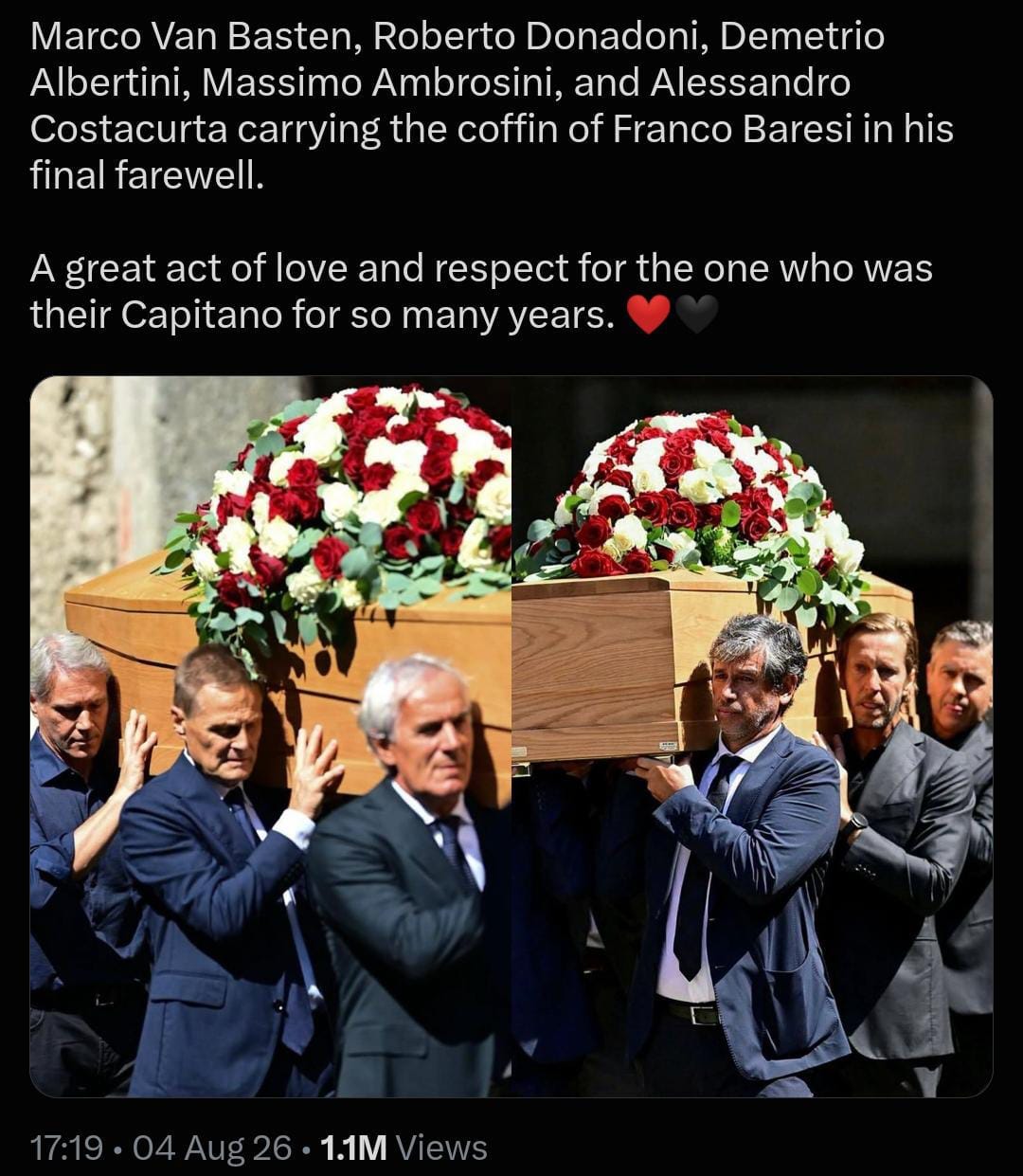
Franco Baresi was the legendary Italian defender who captained AC Milan, won three European Cups and spent his entire 20-year senior career at the club.
His former teammates were carrying his coffin from the Basilica of Sant’Ambrogio. Marco van Basten. Roberto Donadoni. Demetrio Albertini. Massimo Ambrosini. Alessandro Costacurta.
Men who had shared dressing rooms, victories, injuries and arguments only teammates understand.
Baresi wore Number 6 for AC Milan. When he retired, Milan retired the shirt too.
At his funeral, six acquired another meaning.
These were his people.
And the photograph asked:
Who are your six?
Networks Do Not Carry Coffins
Your six are unlikely to be the people who regularly like your Facebook posts, or most of the 5,000 connections LinkedIn says are in your network.
They are your people. (your ride or die)
The person you have not spoken to for six months but who would get into the car at five in the morning when the call came. The teammate who remembers you before the grey hair and respectable title. The schoolmate who knows which parts of your adult reputation are complete nonsense.
By our late thirties and forties, we have accumulated impressive networks: alumni groups, former colleagues, clients, club members, parents’ associations and people saved in our phones by company name because we can no longer remember how we met them.
A funeral strips away the difference between a network and a friendship.
You choose your six slowly, without realising there is a selection taking place. Calls returned. Hospital visits made. Funerals attended. Difficult conversations survived. Showing up when there is no photograph, applause, deal or advantage waiting for you.
So perhaps the uncomfortable question isn’t, Who would carry me?
Most of us could produce a shortlist.
The harder question is:
Whose six am I on?
Nobody appoints themselves to that role. You earn the place long before anybody needs you to carry something heavy.
Oly’s death brought that home because rugby is full of people who spend years carrying things that do not bear their names. Kit, water, injuries, fixtures, young players, worried parents and sometimes entire teams through seasons when nobody outside the club is watching.
The players receive the jerseys. The official photograph remembers the coaches. Beneath every functioning sporting system are people whose names rarely reach the newspaper.
Which brings me to another photograph from this week.
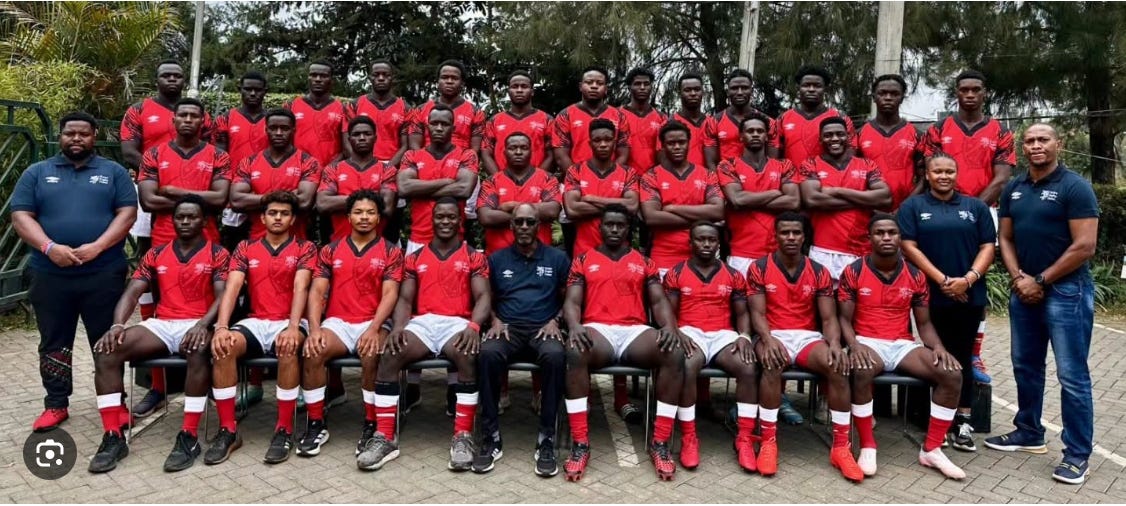
Chipu, Kenya’s Under-20 rugby team, had reached another African final.
Instead of simply celebrating the score, I found myself wondering:
Who has been carrying Chipu?
The Engine Under Chipu
For those outside rugby, Chipu is also—the last age-grade step before senior international rugby. Players arrive from schools and clubs, represent Kenya against Africa’s best young players, and then age out.
This week Chipu beat Zimbabwe 35–23 to reach the 2026 Barthés Trophy final against Namibia.
Chipu were African champions in 2019 and again in 2024. They reached the final in 2025 and are back in 2026. Kenya has also appeared at the World Rugby Under-20 Trophy four times: Nairobi in 2009 and 2023, Brazil in 2019 and Scotland in 2024.
An Under-20 team cannot build continuity around its stars. Just when the captain understands the responsibility, the fly-half begins controlling matches and the front row learns international rugby, their birth certificates send them upstairs.
Then another group arrives.
So look beneath the team sheet.
Paul Odera worked within the age-grade system. Curtis Olago led Chipu before moving into the senior national structure. Simon Jawichre now leads the Under-20s, supported by Carlos Qondani. Team management has included Jimmy Mnene, Peter Mutai, Philip Wamae, Wacera Githua and Joseph Guchu.
The medical and conditioning teams have included Dr Ondiege and now Dr Aysha; physiotherapists Stephen Mankone and Samuel Ochieng; Masti Mike and now William Motto on strength and conditioning. Jerome Paarwater also worked with Chipu during the 2024 championship campaign.
That is a lot of names. It should be.
Sport has a habit of photographing the thirty people in jerseys and cropping out the machinery that put them there. Add the school coaches, club coaches, parents and volunteers who meet these boys long before anybody calls them Chipu.
Players change because they must.
Yet Chipu keeps returning.
Somebody, somewhere, is passing something on.
Lower the Door
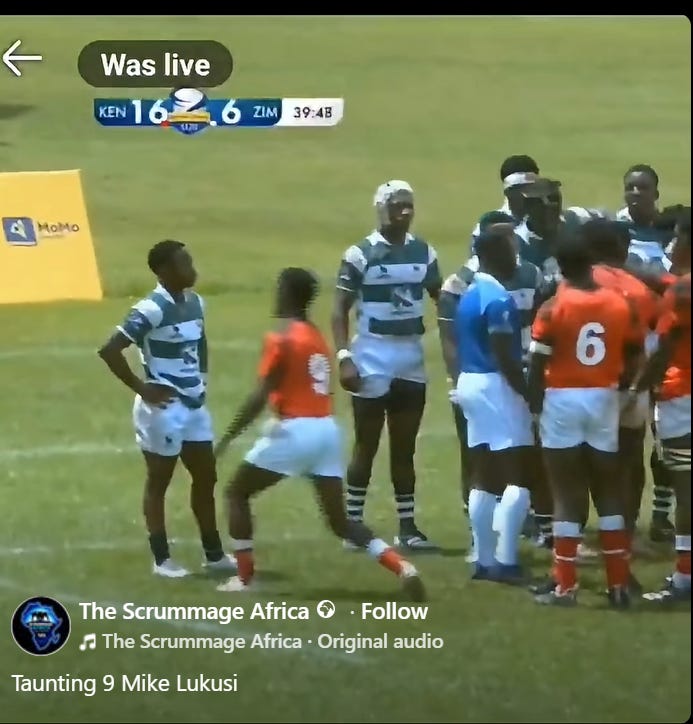
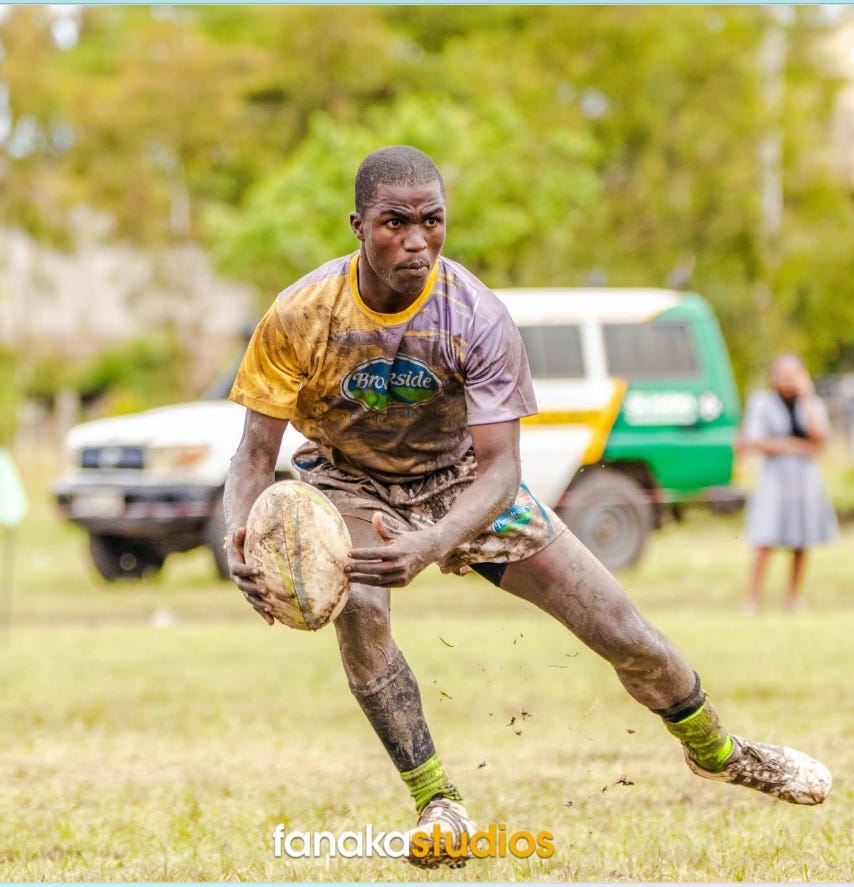
One of those new players is Michael “Lukusi” Olukusi.
At 167 cm—about 5’6”—and 75 kg, the Kabras scrum-half is not the largest player on the field. He plays Number 9, reaching breakdowns before much larger men, directing traffic and deciding where Kenya attacks next.
Olukusi was named in the Dream Team for the first two legs of this year’s National Sevens Circuit. Last weekend he was part of the Kabras side that won Dala Sevens, alongside five other 19-year-olds. There is the pathway in plain sight.
Somebody opened a door, somebody coached him, and somewhere along the way a boy became good enough to pull on a Kenya jersey.
Your child does not have to look like a professional rugby player before joining a club. That may be where they discover what kind of player—and person—they can become.
Which brings me, strangely enough, to the Nairobi Securities Exchange.

The average trade across the NSE had been approximately KSh63,950. That is roughly what someone aged 35–44 might pay for an individual medical insurance policy.
For many Kenyans, that figure quietly says: this place is not for you.
Then the stock exchange entered M-Pesa through Ziidi Trader. During its first three months, the average trade was approximately KSh2,873—about twenty-two times smaller than the wider market average.
It lowered the door.
Someone who might never have entered a broker’s office could begin with KSh1,000, KSh2,000 or KSh5,000. It will not make them rich tomorrow, but it gets them through the door.
Rugby works much the same way. One child attends one training session. A coach corrects one mistake. A parent brings them back the following week. Years later we admire the finished structure and call it talent.
We rarely remember the small cornerstone somebody laid first.
Call, Click, Carry
Young professionals and young parents eventually find themselves looking in two directions: forward at the foundations we are responsible for building, and ahead at our own futures wondering whether we started early enough.
Sometimes the answer is simply to begin.
Take a young person to a swimming, football or rugby club. Meet the coaches. Let the young one watch a session and decide whether something there speaks to them.
They may never become a Simba or Lioness. The return might instead be a young adult who can join a team, accept correction, recover from disappointment and remain accountable to others.
That is not a small return.
The same applies to our postponed financial beginnings. Learn how the investment works. Understand the risks and charges. Begin within your means. Your first KSh5,000 may not change your life this month, but it can change your relationship with investing.
And somewhere in all this, call one of your six.
Today. While there is nothing wrong. Friendships are built through their own deposits: calls returned, visits made, disagreements survived and ordinary occasions when somebody simply showed up.
When Chipu runs onto the field, celebrate the players loudly. But spare a cheer for the assistants, managers, doctors, physios, school coaches, club volunteers and parents who kept returning while generations changed.
Oliver Kituyi understood that kind of work.
One journey ended beneath Baresi’s Number 6. Somewhere else, another generation is already running onto the field with a cocky Number 9 on its back.
His name is Lukusi.
Same Forest. Different Monkeys.
Mubarikiwe. Jah Bless.
Go with song.
Godspeed Chipu. Wakadinali called it. The last dance.
Your ability to weave tales and make the connection is astounding. Well in KT.