

It started the way most Nairobi stories do.
Trying to beat the Friday jam with a genius move.
Grab a boda boda.
Brilliance or 1,000 ways to die?
Quietly, then suddenly.
Another nduthi cuts across without warning. Not recklessly — confidently.
The kind of confidence that comes from doing something a thousand times and never paying for it.
Metal catches metal.
Not enough for an ambulance. Not enough for a headline.
Just enough for a small crowd, a few opinions, and that signature Nairobi shrug — hii traffic — before everyone moves on with their evening.
My life choices flashed by. Was attendance to this event that necessary.
Will Arsenal win the league,
Will Kenya Harlequins make the playoffs…..
Life choices can come and haunt you.
Lakini mungu yuko.
Our unending trust in a Higher Power carries the day again,
and Kanairo moves on.
I say this not as someone standing on a hill. I say this as someone who has been in that story.
Nineteen years old. Riding shotgun, edging the Pilot on.
Pick-up full of young folk leaving The VUU — carnivore for the younger readers — headed at breakneck speed to catch morning breakfast from the grandfather of Chips Mwitu.
Munyiri’s fish & chips, Moi Avenue.
Full of that particular arrogance that masquerades as skill at that age.
A mistake. Vehicle flipped round the Mbagathi Way roundabout.
Tipped on two wheels — luckily we had a guy called Tunji on board.
Built like a tank, he shifted all his 120kgs to the tipping side and the pick-up fell back on four wheels.
Small enough to recover from.
Big enough to stay with you.
Those moments don’t announce themselves as turning points.
They arrive ordinary. They leave ordinary.
But they stay.
Now take that same story. Same human error. Same outcome. Different stage
Enter Eldrick Tiger Woods.

A fender bender. A moment.
The kind of thing that happens in parking lots and estate roads across the world every single day or not.
Except this one involves the most recognisable name in the history of golf, and suddenly the story is no longer about the car.
It is about the man. The pattern. The history.
Was it the people around him. The friends who said nothing.
The staff who looked away.
The inner circle that chose comfort over confrontation. Because here is the truth we don’t like to say out loud: most public failures are not individual.
They are environmental. Someone saw something. Someone knew something. Someone chose silence.
And silence is never neutral. Silence is participation dressed in comfort.
The real question is always who was there and what they chose to do.
They say every saint has a past. And every sinner a future.
But how many times will you tempt fate?
And yet. While we are busy arguing about one man, one car, one mistake — something else is happening. Quietly. Consistently. Without seeking permission or applause.
Africans are moving.

Somewhere in the United States, a list was released. Names. Positions. Colleges. Countries of origin. To most people scrolling through timelines, it was another sports update. Something to pass. But if you paused — really paused — you would see what it actually was.
Eleven Africans.
Ten Nigerians. One Kenyan.
Standing inside one of the most brutally competitive sporting systems ever constructed.
Not as development projects. Not as diversity initiatives. As competitors.
Measured. Tested. Selected.
The NFL does not do charity.
It builds pathways because it found something worth developing — young men from across the African continent who could absorb new languages of movement, new systems of discipline, and come out the other side good enough.
One name stays with me. Joshua Weru.
Defensive End.
Kenya. Rugby background. Arizona State.
On paper, just a line.
But I have been close enough to this story to know what that line represents. It is not one man’s effort.
It is the accumulation of everyone who refused to walk away.
And it is not just him. Behind each of those eleven names is a family living a version of the same story.
A mother who prayed in the specific way that only mothers pray — not loudly, not with an audience, but consistently and structurally, the way a foundation holds a building.
A father who second-guessed himself and kept going anyway.
Friends who stayed when staying was inconvenient.
And a young man on the edge of something that has no map.
This is not an American story. It simply happens to be located in America.
This is an African pattern — of patience, of accumulation, of showing up without guarantees until the door either opens,
or you build a new one.
And while those eleven are stepping forward in Ashburn, Virginia, millions of others are doing something equally powerful. Less visible. Rarely celebrated.
School fees arrive whether or not there was a good month. Medical bills get sorted even when the exchange rate bites. Rent in Nairobi is paid from a salary earned in Manchester, Minneapolis, or Melbourne.
Wave after wave.
Kesi baadaye — not as resignation, but as philosophy.
Handle today. Send what you can.
The diaspora engine does not make the front page.
It makes the country function.

And back home, the pipeline is shifting. Benni McCarthy is not waiting for talent to announce itself.
He is looking for it.
Deliberately.
Moving through diaspora networks, identifying players with Kenyan roots who may never have considered representing the flag. Linton Maina at FC Köln in the Bundesliga. Tyler Onyango from the Everton academy, now at Stockport County. Zech Obiero — son of former Kenyan international Henry Obiero — committed to the Harambee Stars. Silko Thomas at Leicester City. Brooklyn Kabongolo in the Scottish Premiership. That is not potential. That is pipeline. Already built. Already producing.
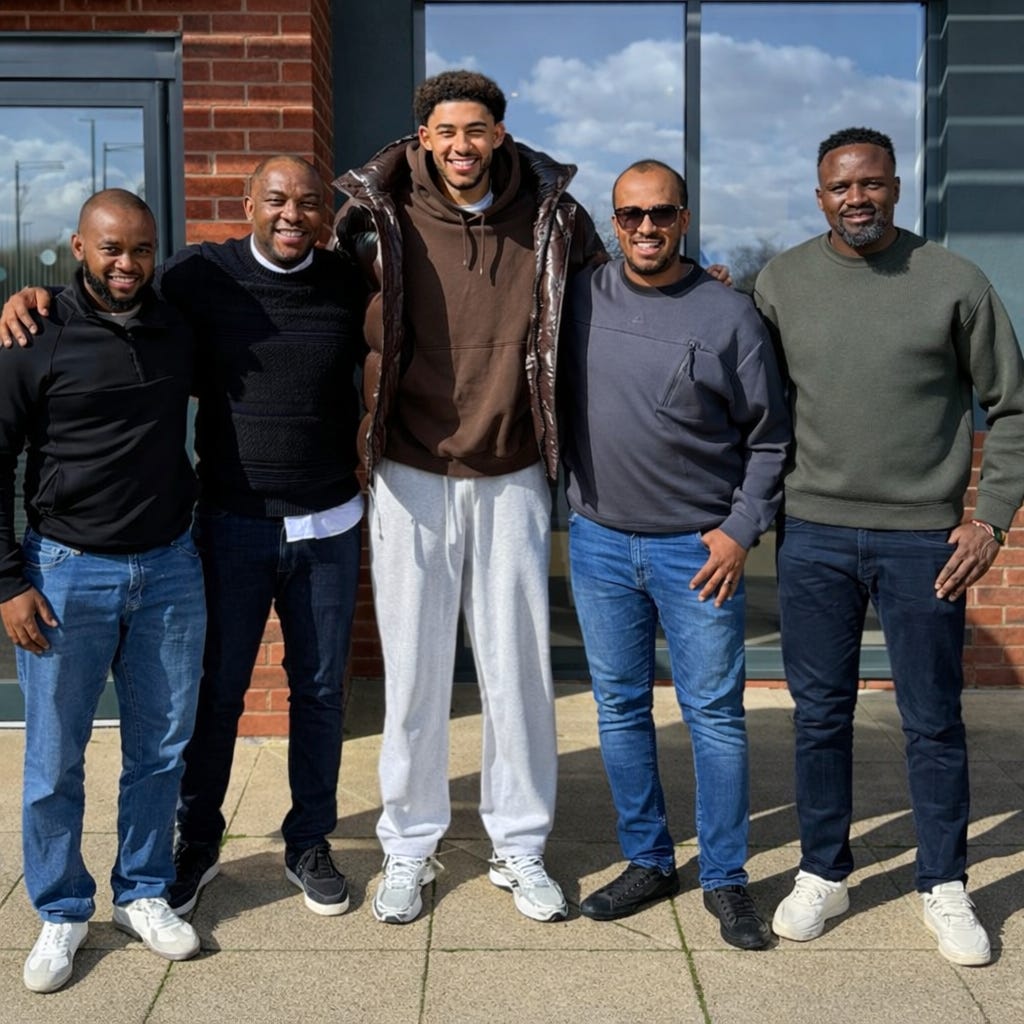
Because that is what good pipeline management looks like. You do not wait for the right prospect to walk through your door.
You go and find what you missed, reorganise what you have, and refuse to let old relationships decay.
A pipeline is not about the deal you are closing today. It is about the relationships you developed two years ago.
Pipelines behave like roads — if you stop moving on them, you do not simply pause. You get overtaken.
Old prospects do not disappear.
They either convert or they become obstacles.

Which brings us back. To the nduthi. To Tiger.
We are more comfortable analysing failure than sitting with success. One man makes a mistake — a pattern of mistakes, if we are honest — and we discuss it for days.
But eleven Africans walk into the NFL system and we scroll past it in seconds.
Why?
Because failure gives us something to judge. Success asks something from us. Reflection.
And reflection is dangerous because it cannot be directed outward.
It has to turn inward. What have you been building?
What pipeline have you neglected?
What conversation have you been postponing because the return is not immediate enough?
Narrative beats truth. Every time. Without contest. A story lands well on a timeline and it becomes fact before anyone checks the source. A WhatsApp screenshot circulates and an opinion forms before the second paragraph.
But truth is patient.
It does not compete with narrative in the short run.
It simply waits. And eventually — it shows up.
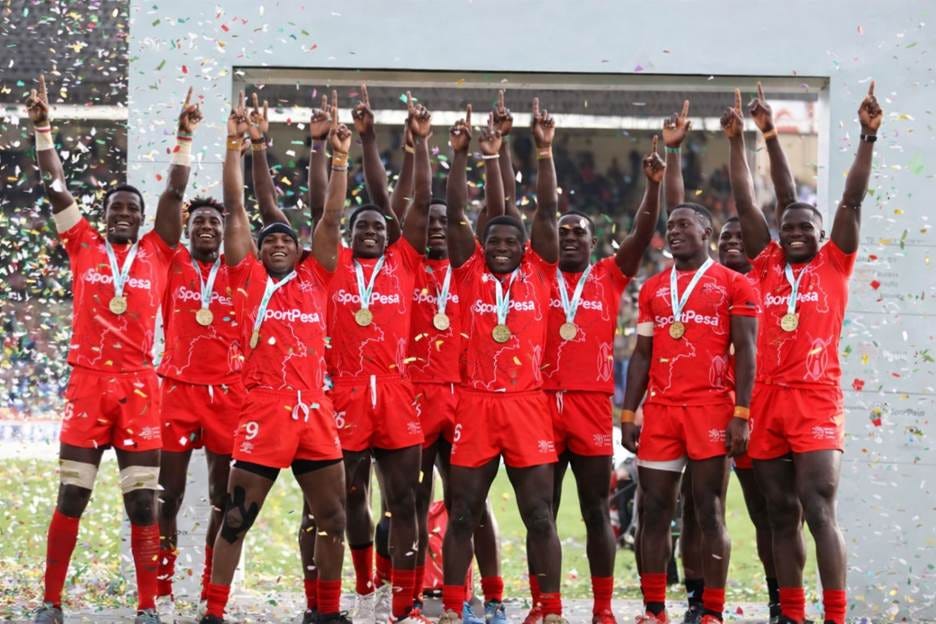
Congratulations Kenya Mens 7s on your qualification.
Sisi ndio….Shujaa…
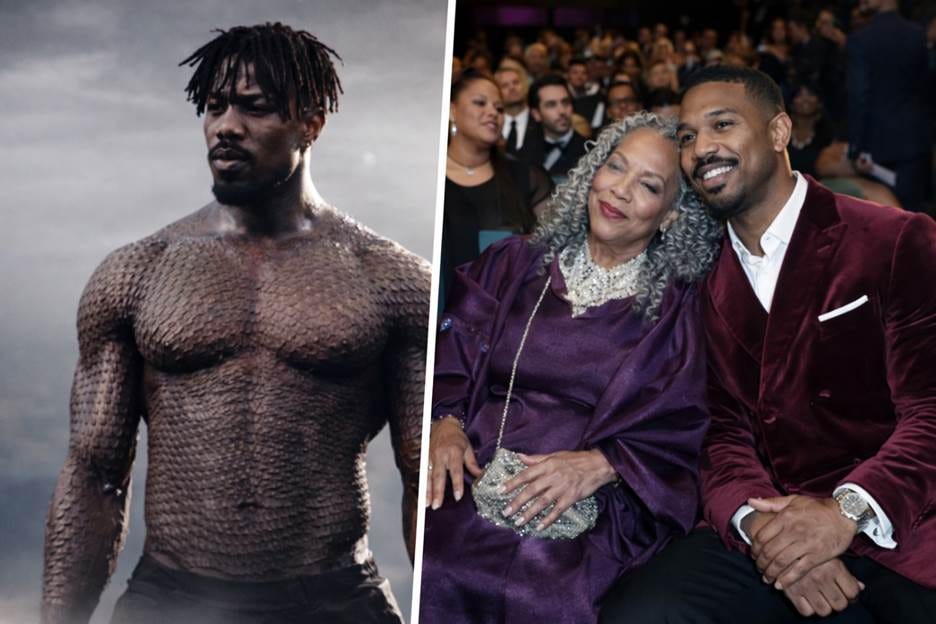
Somewhere else, in a different kind of arena, Michael B. Jordan stands on a stage. Lights. NAACP Image Awards. Recognition.
But look past the acceptance. Look at who came with him.
His mother. Not in the background. Not obscured.
There. Visible. Sharing the light.
Because across the world, the same shift is happening that has always been happening but is only now being acknowledged.
Mothers are sometimes the invisible architects of what the world calls success.
Women who carried more than biology. Who invested before investment was cool. Who showed up in the years that don’t have photographs.
Behind every one of those eleven names on that NFL list is a mother who lived that story.
Different countries. Different languages. Different circumstances.
But the same particular kind of hope — the kind that does not require an audience, that exists in the quiet dark of early mornings and the specific silence of waiting. Success has many fathers.
Many people will step forward when the door opens.
Let them. The truth does not need defending.
It is already written in the years that nobody documented.
Mambo ni matatu (three things only)
Responsibility is rarely individual. It is environmental. Who surrounds you matters. Who speaks matters. Who stays silent when speaking is uncomfortable matters. Comfort is what allows the nduthi moment to happen again.
Momentum does not announce itself.
The Africans entering the NFL system did not arrive this week.
They have been showing up for years.
Do not confuse visibility with arrival.
The work was already done.
Narrative will always try to replace truth. But truth has a particular stubbornness. Given enough time, it surfaces.
Same Forest. Different Monkeys.
If this one stirred something in you, don’t scroll past it—carry it forward. Share it with the one still sitting on the fence, tag the partner who needs the nudge, and remind your circle that this journey is bigger than survival—it’s about stepping into the arena and playing full out.
Around here we don’t hide behind safe answers; we speak straight, we show up, and we build together.
If you’ve been watching quietly, this is your moment—step in, take your place, and belong.
Subscribe 😉
The Benediction.
For the eleven.
For every family that held its breath across time zones, currencies and competing demands on their hope.
For the mothers who carried more than we will ever fully see — who invested in years that have no receipts, no applause, no record.
For the fathers who doubted themselves quietly and showed up anyway.
For the coaches who pushed when the result was invisible.
For the friends who held the line when holding it cost something.
There is a famous Kenyan Christian spiritual — Parapanda inalia — the trumpet blows, announcing the entry of the conquering soldiers.
This time a different Joshua, with a Kenyan flag on his shoulder and wrist, is blowing that trumpet at the Washington Commanders practice facility on March 30.
Blowing it for the entrance of eleven Africans.
Because no longer shall we be fed scraps.
We have a seat at the table.
May the walls keep falling.
May they be ready.
Because we are.
Mubarikiwe. Jah Bless.
Same Forest. Different Musicians.
Go with song