
There was a time when we were the problem.
Not “these days kids.”
Not Gen Z. Us.
Friday evening had a rhythm back then.
Not planned. Not structured. But somehow always the same.
I had a friend called Webster — not his real name — who was our Mobility Mobiliser. Keys negotiated, sneaked, or justified with a story that would not survive five minutes of cross-examination.
Someone fuelled the car — just enough.
Someone else contributed something liquid.
Then we’d link up with the Nairobi campo crew.
Awala, Boozer, The Loved, Jamo, Franco, Michael Jegzen— six or seven of us, identities protected for their safety.
First stop: Uchumi, Sarit Centre

The hole in the wall.
Slightly flickering lights, a kiosk window that knew what a car full of young men wanted without asking.
Engine idling. Music low but confident. Heat, laughter, noise.
A Mzinga of Vodo, Ksh 100 Smirnoff — that erased ones memory and reduced every girl who partook to tears by the halfway mark.
Pre-game.
Like we were preparing for something important.
The game itself was usually unclear.
But the pre-game?
Sacred. Ritual. Identity.
Our parents thought we were unserious. You’d hear it — not always directly — in passing comments, in adult conversations they assumed you weren’t tracking.
This generation… Lazy. Distracted. No direction.
Too much fun. Too little focus.
Sound familiar?

Because now we are the ones saying it.
We became the voice we used to roll our eyes at.
Today it comes packaged better — LinkedIn posts, newspaper columns, WhatsApp forwards, long voice notes that open with “Let me tell you something about these young people…”
Same verdict. Same confidence. Same blindness.
The Boardroom Consensus
Gen Z has been tried, judged, and sentenced. Lazy. Entitled. Addicted to screens. Unwilling to grind. And the certainty with which we deliver this verdict is dangerous, because we are not guessing.
Boardrooms, family dinners, chamas, rugby clubs. Same conclusion, different tables: “They don’t want it bad enough.”
But here is what we keep skipping

Same week. Two headlines. One — thousands of young people lining up, degrees in hand, for jobs paying thirty thousand shillings.
Long queues. Desperate hope. Serious faces.
The other — same week, same generation — lazy, soft,
WiFi-addicted, mzinga on the weekend, no ambition.
Both cannot be true. Or maybe they can. Because what we are actually looking at is not a lazy generation. We are looking at a filtered generation. A system that takes in millions and allows only a few through.
Over 4.6 million Kenyans are in the diaspora.
Opportunities are global.
Competition is global.
At home, youth unemployment is at levels that force people to improvise in ways that don’t look structured from the outside.
What we call chaos might just be creativity inside a broken system.
The Engineer Who Didn’t Complain

In 2021, Joseph Nguthiru was on a boat on Lake Naivasha with Egerton University classmates. The boat stopped moving. Not engine failure. Water hyacinth — the world’s most invasive aquatic weed — had surrounded them completely. Five hours. Trapped. Going nowhere.
Most people complain. File it under bad luck. Tell the story at dinner.
Nguthiru went home and built a company.
HyaPak converts water hyacinth — the very weed that swallowed their boat — into biodegradable packaging that breaks down within three to six months. A working business that has cleared over twenty acres of weed from Lake Naivasha while creating jobs for fishing communities whose livelihoods the weed was destroying.
The Obama Foundation noticed. UNEP named him Young Champion of the Earth. COP28 — one hundred thousand dollars and a global platform.
The same generation we call distracted is solving problems we have debated for decades. And they are not waiting for systems to approve them.
They are building while we are still discussing them.
What Sales Has Always Known
Out of thirty prospects, twenty-five will not pick a cold call.
Of those who do, most will say no — four, five, sometimes ten times.
80% of deals only close after the fifth to twelfth contact.
Follow-up is not a tactic.
It is the system.
And here is the number that should worry anyone in sales:
44% of salespeople quit after the very first rejection.
Nearly half. After one no.
What you are seeing in outcomes — a few people closing,
most not — is not talent or character.
It is a filter.
The ones still in the room are simply the ones who stayed.
That is the only variable that consistently separates results.
Now bring that back to the generation conversation. What looks like laziness is often just someone who stopped after the first no.
What looks like success is usually someone who stayed long enough to find the timing.
Same generation. Different outcomes.
Not because of character.
Because of persistence inside a system designed to remove the ones who leave early.
The Pacer Who Didn’t Stop
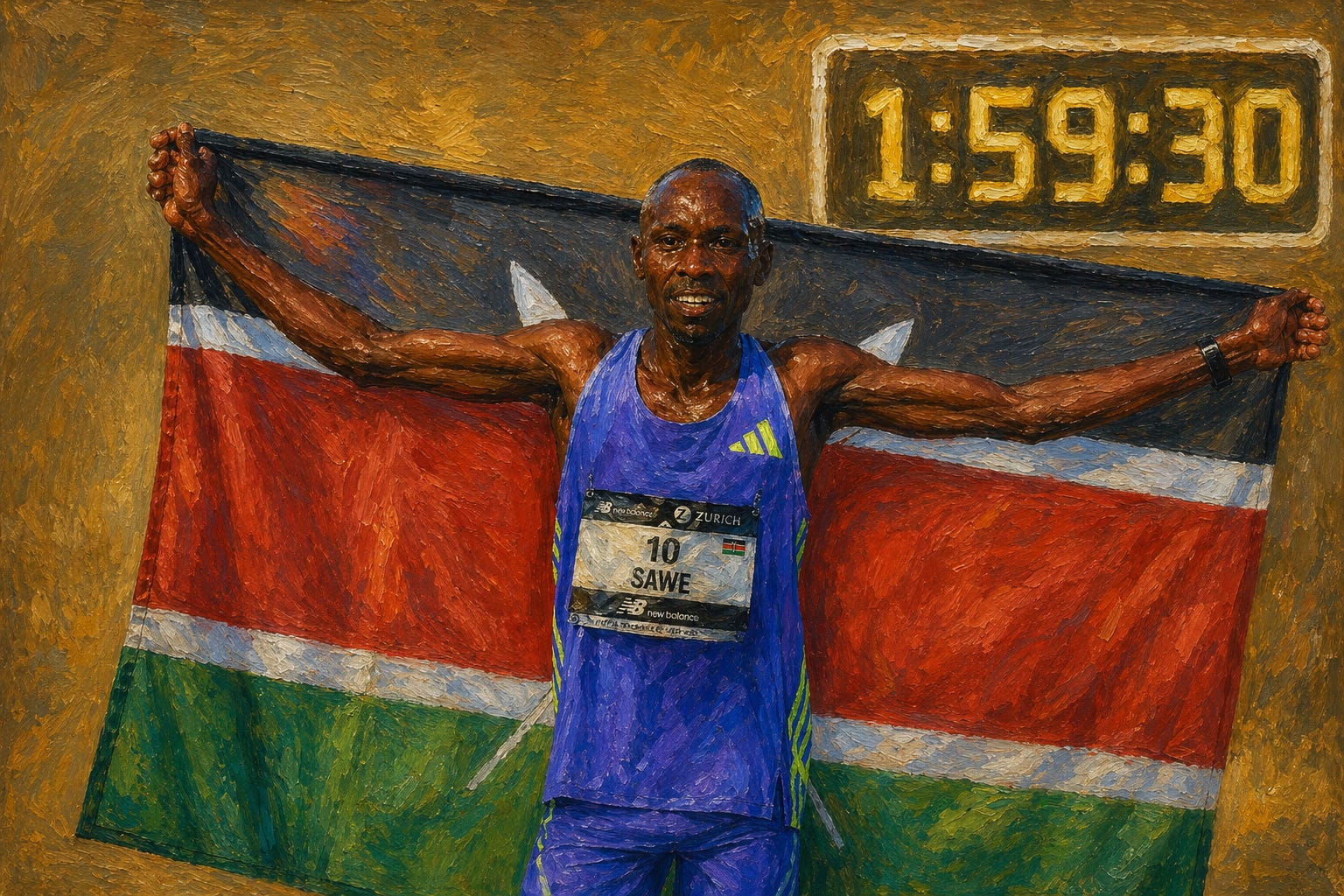
Sabastian Sawe grew up in Barsombe, Uasin Gishu. Mud walls. No electricity. During secondary school, he didn’t even compete — Leseru High School prioritised academics.
By our traditional metrics, already behind.
Late start. No pipeline. No exposure.
In 2022, he was hired as a pacemaker at the Seville Half Marathon. Set the tempo. Lead the field. Then step aside. Know your role.
At seven kilometres, he felt strong. So he didn’t stop.
Past the point where his job description ended. Past the elites. Past the course record. First place — a man who had never raced beyond 5,000 metres.
He flew home from Seville immediately. Not for media.
To bury his grandmother, Esther Sitienei, who passed away while he was running in Spain.
She was the one who believed before there was evidence worth believing in.
Valencia 2024 — marathon debut, second fastest in history. London and Berlin 2025 — back to back wins.
World Athletics Out-of-Stadium Athlete of the Year.
Twenty-five voluntary drug tests before Berlin.
Clean.
Then London, April 26, 2026: one hour, fifty-nine minutes, thirty seconds.
Four marathons. Four wins. One world record.
One grandmother who never got to see London, but saw Seville — and knew.
We call it talent. What it actually is, is consistency under conditions where most people stop.
Welcome to Philly
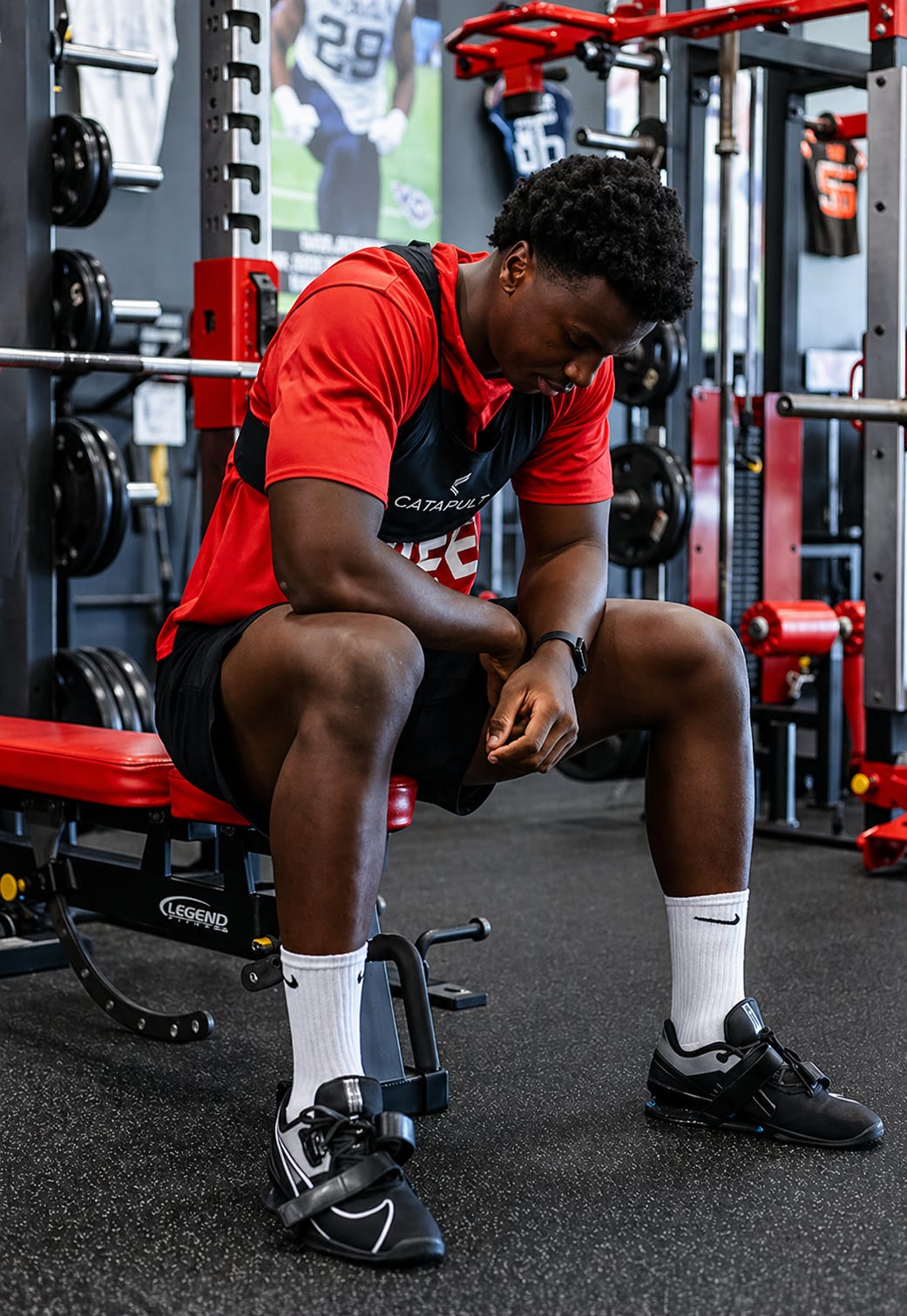
Joshua Weru started watching rugby at Kenya Harlequins the moment he could walk. At 7 age grade rugby. Age 13 Rosslyn Park School 7s (UK) representing Kenya IAPS. Then at fourteen, the UK — Rugby School, Northampton Saints Academy.
Coaches calling his ball-carrying world-class before he’d played a professional minute.
August 2022 — first professional contract, Northampton Saints, while studying at Loughborough.
November 2022 — contract terminated.
Not performance. Not attitude. Visa rules.
Tier 3 rugby nation. Needed ten international caps.
Made his debut with Kenya Simbas got only three.
Door closed. Cleanly. Bureaucratically.
France. US Dax. Still building. By 2024 — a decision most people would have found impossible.
Start over. Focus on education. Enrol Arizona State. Degree in Global Business Management.
Then the agent called.
Different sport entirely. NFL International Player Pathway.
178 Africans fighting for a space.
Only 13 picked.
Training camp Florida 10 weeks.
Bodies pushed to limits unknown.
Draft night Pittsburg 2026 — 805,000 people in attendance,
Undrafted.
All 257 picks without his name.
Then the Philadelphia Eagles called.
UDFA. Undrafted Free Agent.
On the team.
Six foot four. Two hundred and forty-four pounds. 4.45 seconds in the forty.
A Kenyan with a flag over his shoulders, holding an Eagles ball, in front of a stadium that seats sixty-nine thousand.
Not drafted. Chosen anyway.
I’m not going to say much more about Joshua. Those who know, know why this one lands differently for me.
What I will say is this: the system said no more than once.
He did not translate no into never.
He changed the sport he was playing,
not the direction he was moving in.
The Correction
The boys in that Uchumi parking lot — engine running, music low, plans unclear, energy high — eventually found their way. Not because we were special. Because the system eventually made space. And because we stayed in it long enough for that space to appear.
We don’t get to claim wisdom about resilience and then deny that same story to the generation behind us.
Mambo ni matatu (3 things)
If you lead a team — stop measuring noise. Track who is still in the room after the third rejection. That is your talent.
If you are coming up — stay longer than the system expects. The reward is on the other side of the timeline you were given. When you feel strong, don’t stop at the distance you were assigned. That is where the separation happens.
If you are watching from the sidelines — update the lens. Or you will miss the next breakthrough. And you will have been wrong, loudly, in public, just like every generation before us.
Gen Zs are here. They are already in the building.
Pick a side.
Or move out of the way.
Some people don’t wait to be invited. They just show up and become undeniable.
We danced to Motownphilly in living rooms, in discos, in borrowed moments.
Today… we sit back and watch one of our own dance to that same rhythm.
But this time — the world is watching too.
Same Forest. Different Monkeys.
If this story stirred something in you
Pull up a seat. The music hasn’t changed.
Only the stage has.
Subscribe. Like. Share
Mubarikiwe. Jah Bless
Go with song.
"We don’t get to claim wisdom about resilience and then deny that same story to the generation behind us." - powerful!
Congrats for supporting the young man chart his path.
An excellent piece….Cheers to Josh!!