
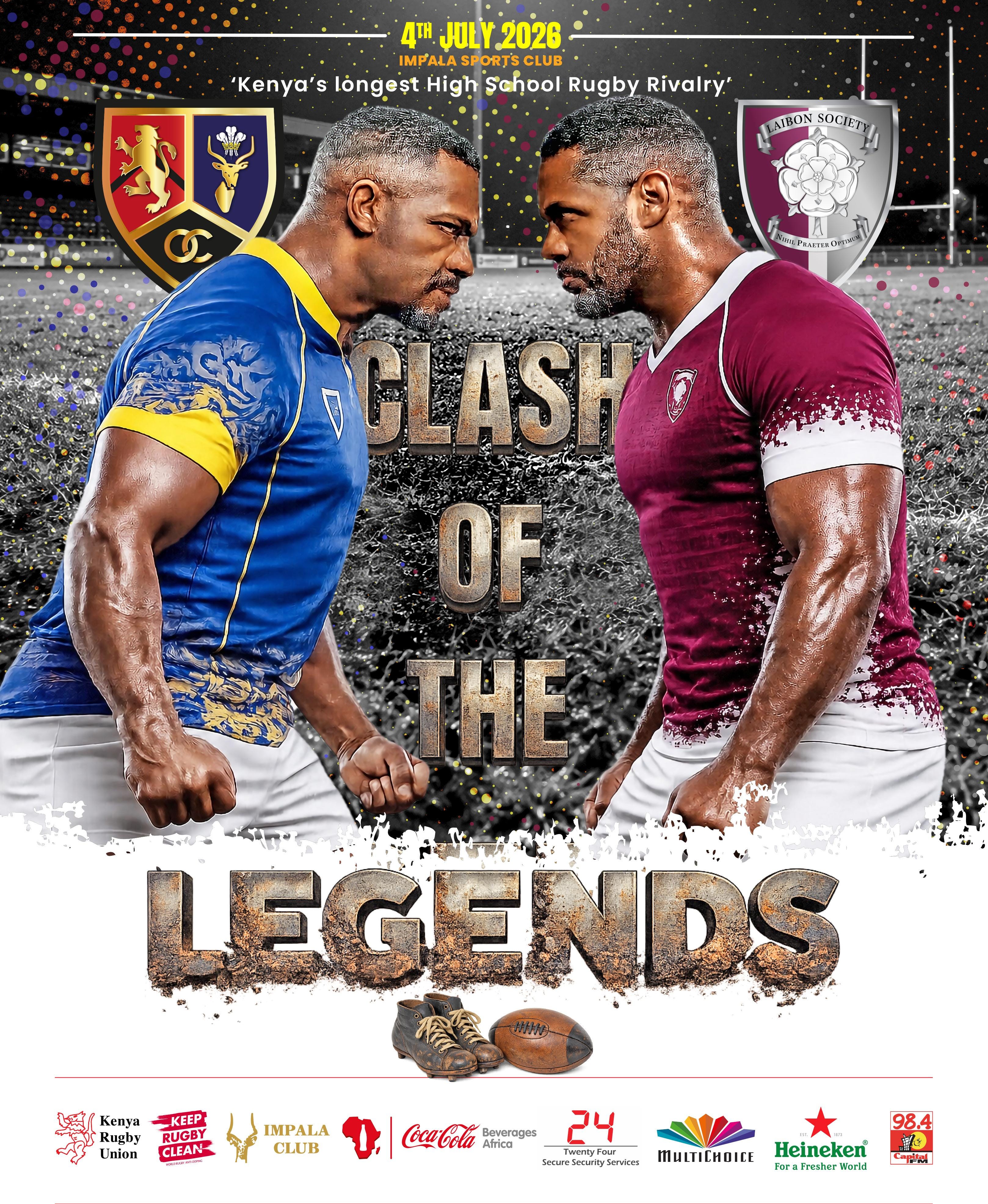
Yesterday had a name on the fixture card.
Laibons against Old Cambrians, Lenana School against Nairobi School — but for the men on that touchline, it needed no name at all.
It felt like the Wednesday afternoons after school.
A damp Saturday morning before a critical club game.
Butterflies.
Jitters.
That quiet internal question:
Can I last 20 minutes.
I did not watch it as a neutral man.
Four years I spent under the Three Feathers of Nairobi School.
Two more under the Rose of Lenana.
Old crests, both of them, borrowed from English titles that meant nothing to the boys who wore them and everything to what those boys built underneath them.
I have always watched Laibons play Old Cambrians as a spectator.
I watch it the way you watch a fight between two people you have loved.
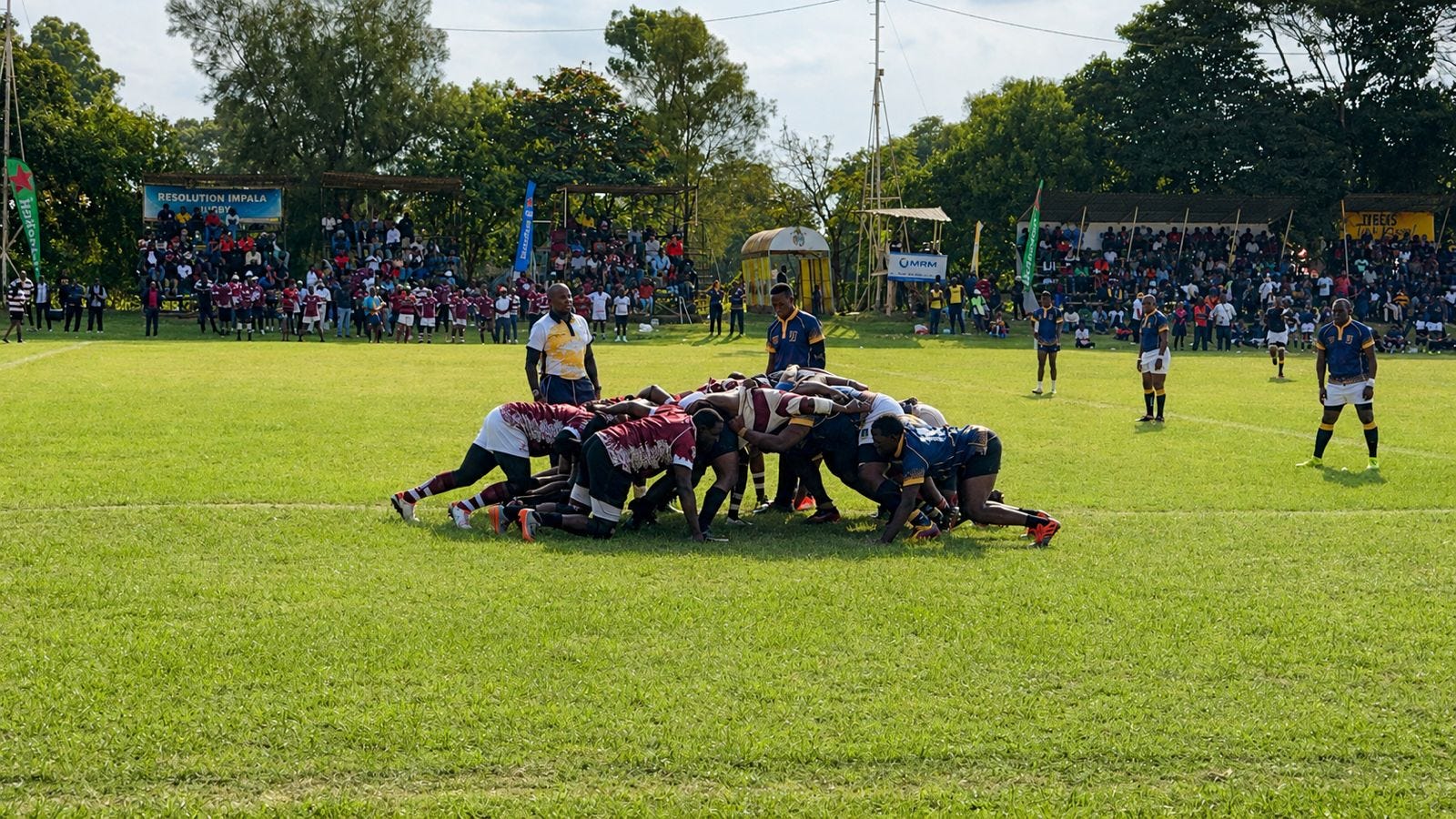
At a certain age, you know exactly what soft means — soft means you get injured.
So you go into the breakdown hard, not to prove anything to the crowd, but because muscle memory and self-preservation reached an agreement years ago.
The body complains.
The mind negotiates.
The spirit remembers.
Then someone blows a whistle and twenty years disappear into the dust.
The Annual Alumni Challenge is many things, but it is never just a game. It is old nicknames returning to life, men who haven’t spoken in years continuing conversations that were never really finished, arguments that began in Form Two resuming without introduction.
Who beat whom.
Who still insists the referee robbed them in 1997.
Who snitched.
The rivalry remains fierce, but the affection survives underneath it.
Why do school rivalries survive fifty years while many adult friendships struggle to survive five?
Patch still gathers. Changez still responds. Alliance and Mang’u still fill halls. Kenya High, Mukumu, Precious Blood, Kakamega and dozens of other schools still produce people willing to sacrifice a Saturday to remember where they came from.
Somewhere between mortgages, board meetings and school fees denominated in tears, we lose the rituals that once kept friendships alive.
Schools never really lose them — they schedule them, protect them, celebrate them. These friendships were built when nobody had titles, money or influence.
All we had was a uniform, a timetable, and an opponent we desperately wanted to beat.
The wives and families watching from the sidelines saw something entirely different — forty-year-old men transformed back into seventeen-year-olds.
The serious executive became a frantic winger again.
The respected doctor answered to a nickname nobody at his workplace has ever heard.
The retired teacher still carried the authority of a school prefect.
And the fellow who made noise in Form Three remained gloriously consistent.
Then the larger question reveals itself. This was never just about one reunion or one old rivalry. It was about the conflict between structure and belonging.
The scoreboard says one thing; the body remembers another. The institution records the result, but the heart records who stood beside you.
We sometimes measure everything and understand very little.
The most powerful networks are rarely the loudest. They are the quiet architects — the classmates who organize reunions, collect funeral contributions, attend weddings, know whose child needs school fees, call the person everyone else has forgotten.
Once you see that, you start to see the same forest showing us different monkeys across sport, business, friendship and life.
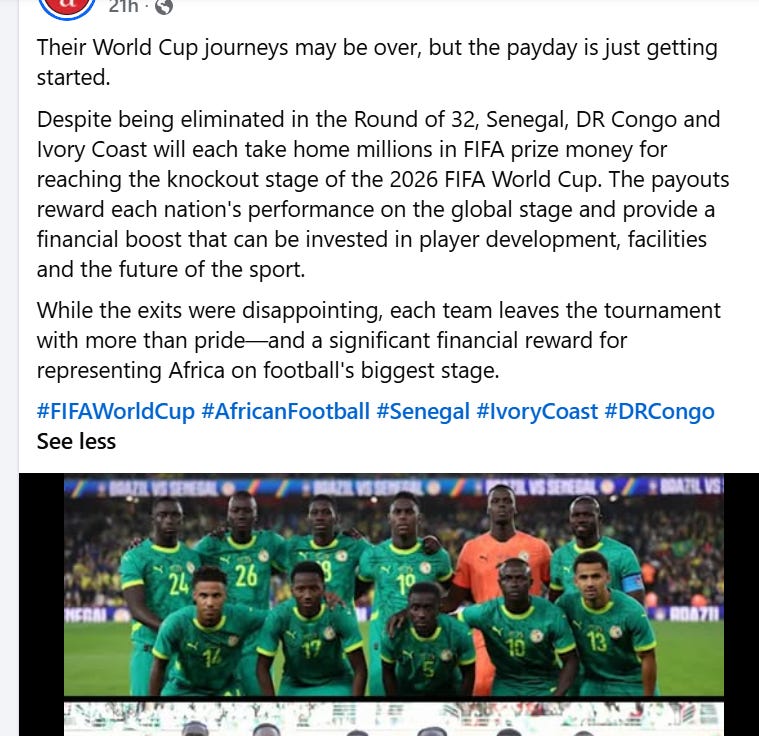
Look at football. The World Cup can be a cruel place to measure progress.
The difference between celebration and heartbreak can be four minutes. Ivory Coast, DR Congo and Senegal all watched their campaigns turn in the 86th minute or later — Harry Kane, a Lukaku equalizer, a defence that finally lost its shape after eighty-five minutes of discipline.
That is sport. That is business. That is life.
But perhaps the more interesting question is this: What exactly came home after the final whistle?
African football did not only return with heartbreak. It returned with money, and a reminder that talent alone is never enough. The 2026 World Cup is the richest in history — FIFA is distributing a record US$871 million, almost double Qatar’s US$440 million.
Tunisia walked away with US$12.5 million despite a tournament they’d rather forget; South Africa, Ivory Coast, DR Congo, Senegal and Algeria each banked roughly US$13.5 million after reaching the Round of 32.
Nine of Africa’s ten representatives made the knockout stages — the continent has never done that before. Morocco and Egypt still carry the flag.
The scoreboard tells one story. The balance sheet tells another. The more important question is what gets built afterwards — new academies, better pitches, coaching scholarships, or another generation left to survive on raw talent and divine intervention.
Yesterday, old boys gathered because previous generations built institutions that outlived them.
The men who planted those trees never sat under their shade.
African football faces exactly the same challenge.
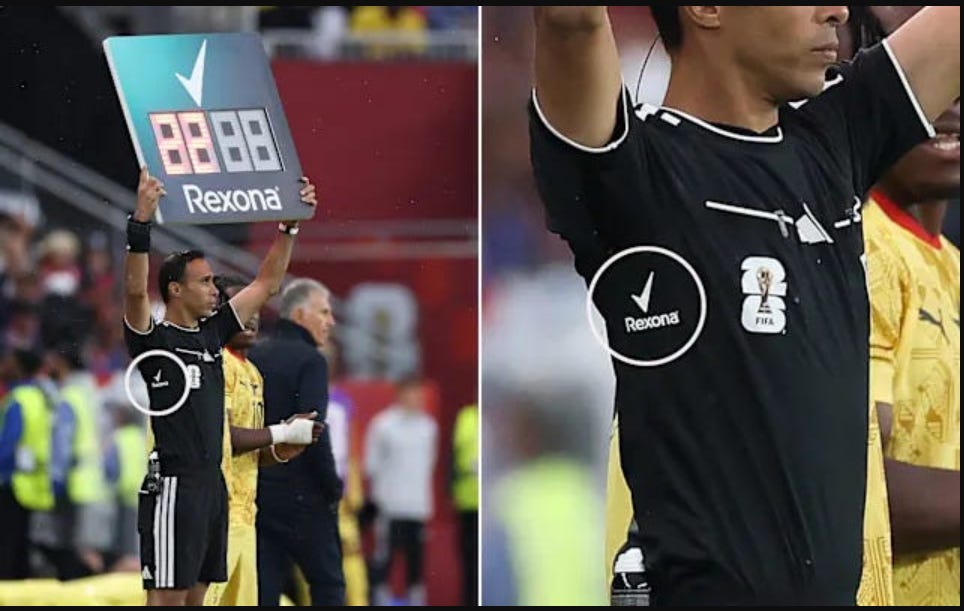
UNDER ARM CHARM.
One detail fascinated me throughout this World Cup — not the formations, not the superstars, not even the expanded format.
The fourth official.
He never scores, never lifts a trophy, never appears in a highlight package.
His entire job is to keep time and keep the game from losing its head. And quietly, under his arm, sat one of the cleverest sponsorship ideas in modern sport.
Rexona.
Not across the chest. Not on the sleeves.
Under the arm — exactly where protection is needed most.
For eighty-nine minutes of every one of the tournament’s 104 matches, nobody notices the fourth official. Then the board goes up, the arms rise, the cameras focus, and the sponsor appears exactly where it was always meant to be.
Under pressure.
Under the arm.
Rexona called the campaign “It Won’t Let You Down.”
Sure in one market, Degree in another, Rexona in a third.
Same product. Different monkeys.
Marketing people call it one of the smartest placements in football history, because it understands something older than advertising:
the most important work is invisible until the moment it’s needed.
The older I get, the more I appreciate under-arm people — the ones who organize reunions, collect bursary money, carry the spreadsheet but never ask for applause. Every old school network has them.
Every serious community survives because of them.
The same principle applies to longevity.
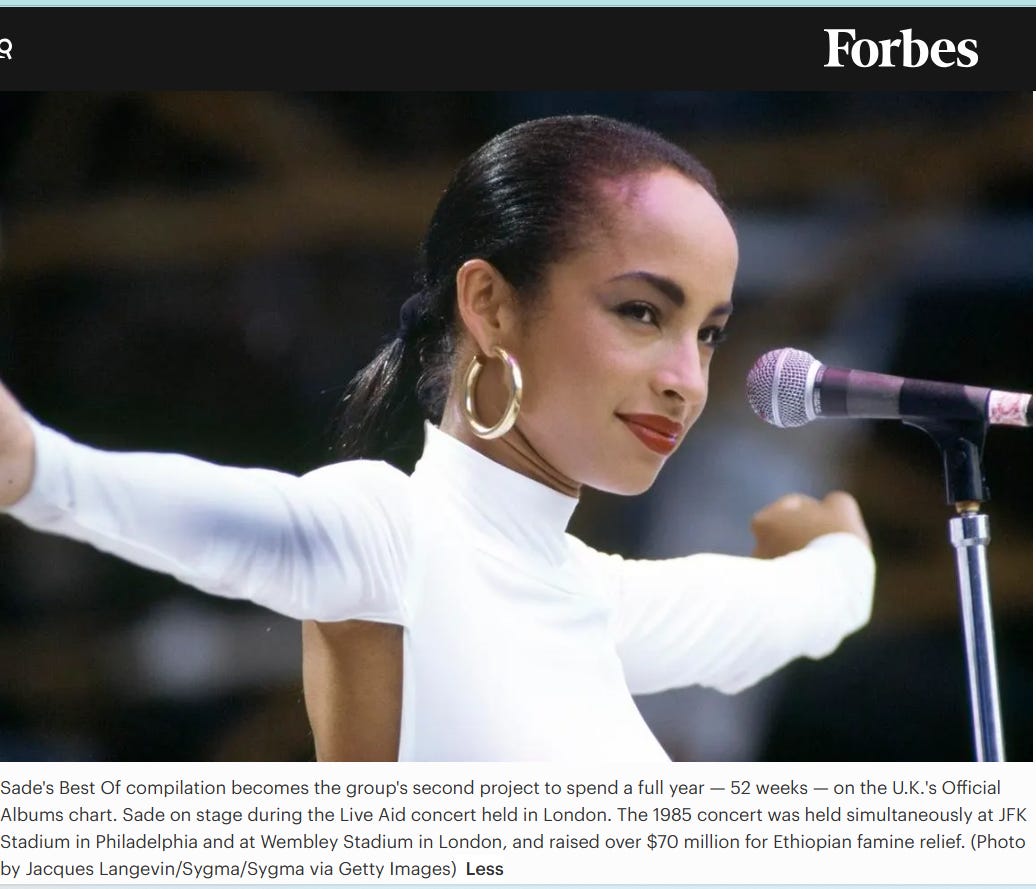
Look at Sade.
No new studio album since Soldier of Love in 2010.
No tours, no publicity campaigns, no shouting.
Yet in 2026, The Best of Sade, released in 1994, has spent 156 weeks on the Billboard charts — three years — and has sat at number one on the Contemporary Jazz charts for seventy-nine consecutive weeks. Thirty-two years on, it’s still finding new listeners.
The work was already done.
The roots had already gone deep.
The music simply kept showing up when people needed it.
That is how alumni associations work too. Mukumu Girls alumnae have funded scholarships for young women entering medicine, engineering and accounting. Precious Blood old girls organize walks and fundraising across continents. The rivalry may bring people to the stadium, but the real work begins long after the final whistle.
The same principle applies to corporate life. Monday mornings in Nairobi boardrooms have their own theatre — kahawa moto, confident dashboards, upward arrows everyone in the room knows aren’t telling the whole story.
Clean slides. Clean excuses.
But markets are not moved by clean excuses. Markets move because somebody picks up a call on a Sunday evening. Because an old client remembers how you handled a difficult claim ten years earlier. Because a schoolmate introduces you to a brother-in-law who becomes your biggest account.
The warmest leads in Africa are still people who knew us before we became important — before the suits, the company cars, the titles.
Most sales management frameworks are beautifully packaged rituals designed to create the illusion of control.
A clean spreadsheet does not equal a healthy business.
And if your commercial model ignores the friendships and trust networks that actually move African markets, you are not leading.
You are administrating decline.
That is why old school groups matter — not simply because they help us remember, but because they create endless streams of referrals built on comradeship forged in childhood. Introductions become easier. Trust arrives faster. Transaction costs fall. The under-cover work was completed decades earlier, in classrooms and dining halls and muddy playing fields. The market only ever sees the raised hands.
THREE FEATHERS AND A ROSE.
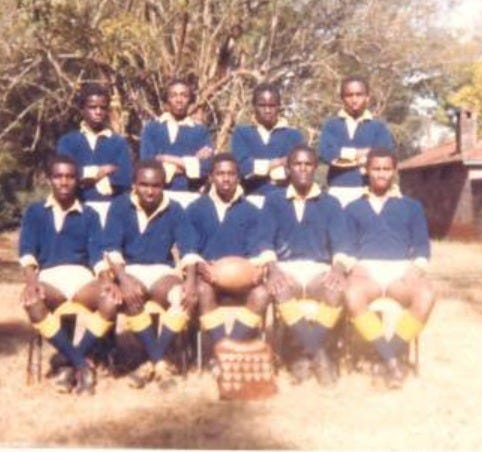
The hidden work. The under-arm people. The invisible years.
The old flames and old classmates who can wake up on Monday and restart a WhatsApp group.
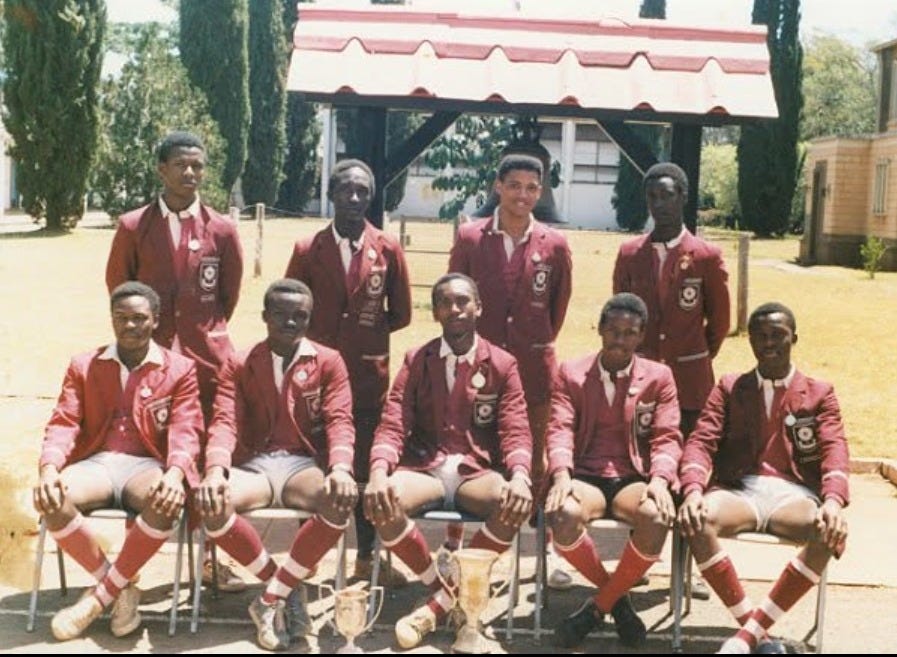
Then comes the watermelon. Not a metaphor. A lived contradiction.
You wore the Three Feathers. You carried the Rose. You committed what, in schoolboy terms, is almost heresy —
Gor to AFC, Madrid to Barcelona, United to Liverpool. Upper to Jahmu.
Yet forty years later, the answer to “which side are you on?” remains unresolved, because the rivalry itself was never the point.
The rivalry was the mechanism. The friendship was the product. The referrals happen because trust was built when nobody had money, titles, or LinkedIn profiles.
Rexona, Sade, the fourth official, the World Cup prize money, the girls’ alumni networks — those were supporting witnesses.
The Rose and the Three Feathers were always meant to walk onto the stage at the end and say what the whole piece was really about:
The work that matters most is usually completed long before anyone notices it. And sometimes, when you finally raise your hands, the only thing the world sees is what was quietly sitting under your arm all along.
Proof that even close to 40 years later, despite not sharing their dentists contacts,
Old rivals that became friends and stayed friends.
And somewhere between Kangemi and Riruta.
A watermelon found a home.
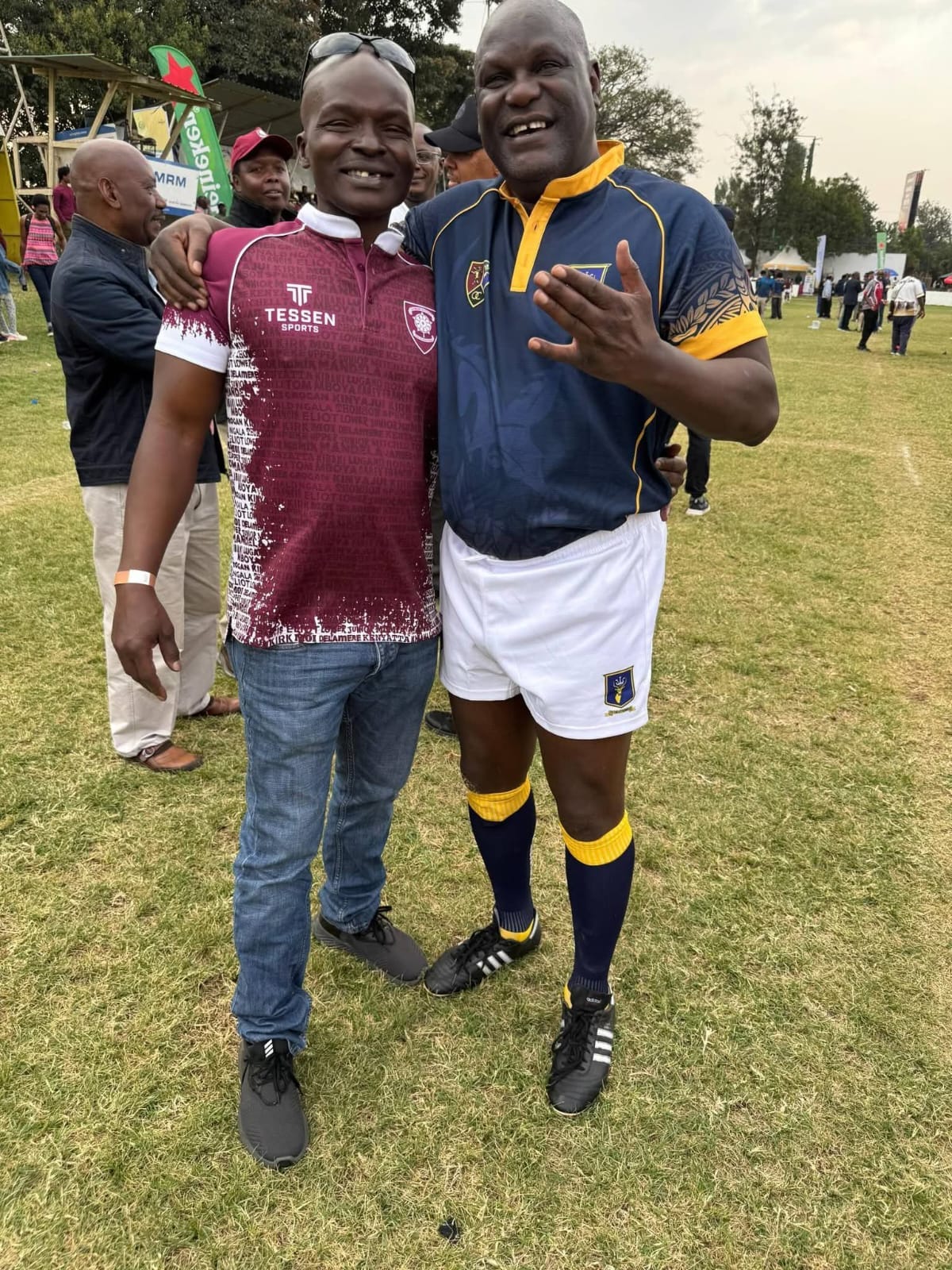
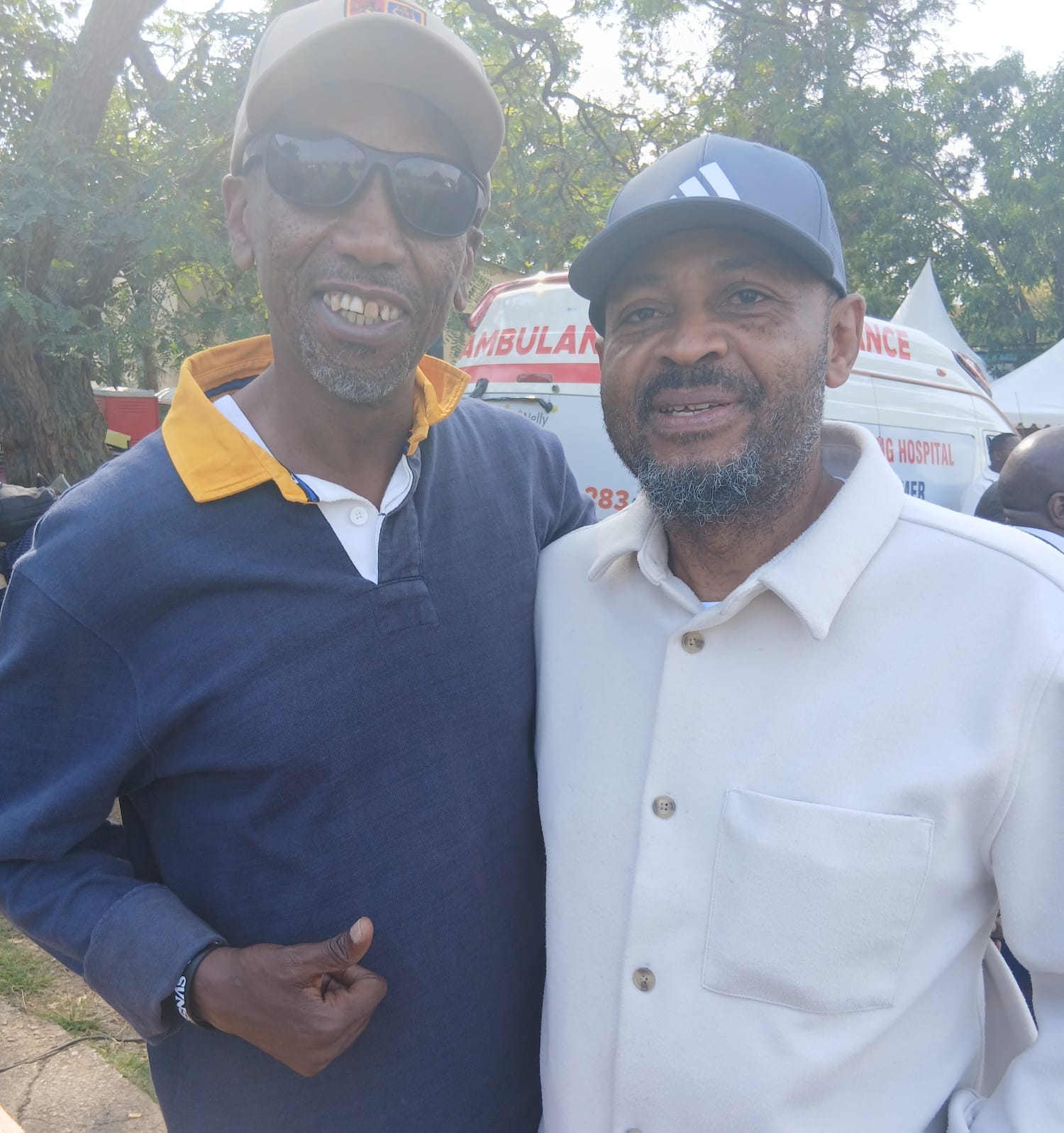
Same Forest. Different Monkeys.
Mubarikiwe. Jah Bless.
Go with song.
Love this. ‘The underarm people’. That is a clever Rexona ad indeed.
Your network is your net worth... Glue. Quiet, unassuming, almost always invisible, yet holds everything together.
Watermelon!! 😂😂 Universally accepted as a fruit and liqour holder (NH3 uses ratish soaked watermelon for hydration during their runs). You're okay. 😂