

A couple of weeks ago, our friend Mustapha invited us to his home in Mua Hills for a housewarming and the subsequent goat-eating. We got lost. Nobody knew Mustapha. After interrogating several residents, we abandoned the name and described the man.
“Aaaaah! Mnasema kwa Kilonzo!”
Apparently, our friend had visited Lamu in search of a tender and baptised himself Mustapha. Unfortunately, he had not informed the people responsible for giving directions. We were looking for a coastal gentleman. The village knew Kilonzo.
My pal Kakash calls her people “Kambodians.” That’s what the uptown people call the Kamba. Others know them as Wa Nduli. That afternoon, whatever name you preferred, they had invited us to eat a goat. Finding the host had been our first negotiation.
Then somebody mentioned the resurfaced report about returning dowry after divorce. One man remembers his grandfather’s instructions. Another has a cousin whose marriage ended. Within minutes, everybody has qualifications in customary law.
Fortunately, we had Mutush: incoming Mhesh (MP) for a constituency yet to be named, aspiring Kamba elder and our authority for the afternoon. Among the Wa Nduli, he explained, a goat can arrive with a different assignment.
This one is called Mbui ya Ulee, the goat of separation. In the customary account, a woman or her family takes it to the husband’s homestead, accompanied by witnesses or elders, and leaves it tied there to signify the ending of the marriage.
Please establish the occasion before reaching for the charcoal.
We had spent the afternoon identifying a man by his description. Now we were identifying a goat by its intentions. But beneath the laughter sat something heavier. Families that gathered for ntheo, the goat ceremony sealing the marriage, and ngasya, the bridewealth negotiations, could meet again to undo it all.
This time, nobody would be singing at the gate.
Your In-Laws May Have Different Terms
Once the Kambas explain their goat, everybody wants to know what happens elsewhere. The fellow who has been quiet throughout lunch moves his chair closer. Somebody poured him something.
We are about to discover what the wedding spokesman left out.
Among the Taita, the dowry ceremony is Wupe. One man interviewed by The Star recalled being asked for fifteen cows and forty goats. He wanted to pay everything and begin married life debt-free. His elders advised instalments.
Imagine your own delegation telling you to maintain an outstanding balance. Marriage had come with a relationship manager.
Then the Muslim account changes the conversation. At the Nikkah, the marriage contract, Mahr is due to the bride herself.
Hold on.
We have spent the afternoon discussing what families received. Here, the wife has an entitlement of her own. Before debating its return, establish whose property it is.
Divorce cannot be settled over nyama choma by declaring that everything goes back. There are children, years and sacrifices. Someone once arrived in that home carrying hopes that would never fit inside a refund calculation.
Every delegation once helped choose somebody. On Monday, another will assemble around an interview table. This time, the history arrives as a CV.
Even the Photograph Looks Employed
When did you last read your own CV? I sometimes look at mine and say, wueh. Is this me? The fellow sounds extremely useful. Everything suggests a man whose Mondays have always gone according to plan. You would hardly suspect what he survived between those bullet points.
Across the table sits someone with a less cooperative history. A redundancy. A business that folded. Work outside their profession because school fees refused to wait for the correct vacancy. We ask this person to explain themselves. Meantime the smooth CV has reached the salary discussion.
Regina Hartley, an HR executive at UPS, calls them the Silver Spoon and the Scrapper.
(I call them Ninjas)
Give the Scrapper a hearing, she argues. The struggle may contain evidence the paperwork obscures. Anyone endlessly “optimising” a LinkedIn profile knows the feeling: you improve yourself all evening; the applicant tracking system rejects you before breakfast.
Elon Musk’s test is “evidence of exceptional ability.” He asks about difficult problems and probes how candidates solved them. The person who did the work usually remembers the awkward details.
Nvidia’s Jensen Huang offered Stanford students a more alarming blessing:
“I wish upon you ample doses of pain and suffering.”
After acquiring that student debt, you might have expected congratulations. His point concerned the resilience adversity can develop. Managers, this was not an instruction to make your staff miserable.
In sales, take one result and stay with it. “Thirty per cent new business? From what base? What changed? What went wrong? What did you personally do?” Then listen. We are interviewing people whose profession is persuasion. Naturally, some sell themselves beautifully.
Examine the triumph as carefully as the setback.
Como, meanwhile, had a history requiring a second interview.

Manchester United supporters, inspect the cooking arrangements. Somebody has put your club in a sufuria and connected a cylinder labelled “Fabri Gas.”
Football WhatsApp groups have no mercy.
On Wednesday, Cesc Fàbregas’s Como beat United 4–1 in the Champions League. Before supporters finished explaining the defending, somebody supplied the gas.
Cesc Fàbregas, the former Arsenal, Barcelona and Chelsea midfielder, now coaches Como. Those who remember the teenager threading passes through Premier League defences may need a moment. The boy has grown up. Your grievances have grandchildren.
But how did Como reach this kitchen?
In 2017, after bankruptcy and a failed attempt to secure its place higher up, the club restarted in Serie D, Italy’s fourth tier. SENT Entertainment took ownership in April 2019. Como won Serie D that year, Serie C in 2021 and promotion to Serie A in 2024. Five years. Three promotions.
The Hartono brothers supplied financial backing. Former Chelsea captain Dennis Wise became influential behind the scenes. Fàbregas arrived as a player and shareholder; Thierry Henry also became a shareholder. They backed the choices with investment in players, facilities, youth development and the organisation.
That part rarely makes the meme. You can hire a wonderful person and leave them fighting the broken arrangements that exhausted their predecessor. Six months later, another farewell email. Everyone wishes them well. Nobody fixes the job.
Como built around its choices, season after season. United have witnessed the progress first hand.
The Ladies Came With Receipts

At Kasarani, Kenya won the inaugural World Boxing African Championships. Algeria followed; Uganda finished third. Here is Citizen Digital’s medal comparison for the leading countries: Kenya topped the standings, Algeria finished second and Uganda’s Bombers came third with thirteen medals.

Our Ugandan neighbours collected more medals than Algeria. Unfortunately, the table counts gold before enthusiasm. We shall discuss this at the border.
Grace Atieno, Rosemarion Otieno, Juliet Opondo and Friza Asiko supplied four of Kenya’s five golds. Eighty per cent. Before the chairman congratulates “our boys,” somebody correct the speech.
Rosemarion took Best Female Boxer; Kelvin Maina supplied the fifth gold and Best Male Boxer honours.
Gentlemen proposing a friendly spar with their partners should establish whether “one round” means what they think it means.
We recognise foreign footballers from the backs of their heads. Surely we can learn to calebrate four Kenyan champions.
Their next bouts deserve attention before the medals arrive.
Japan Has Interfered With the Furnace
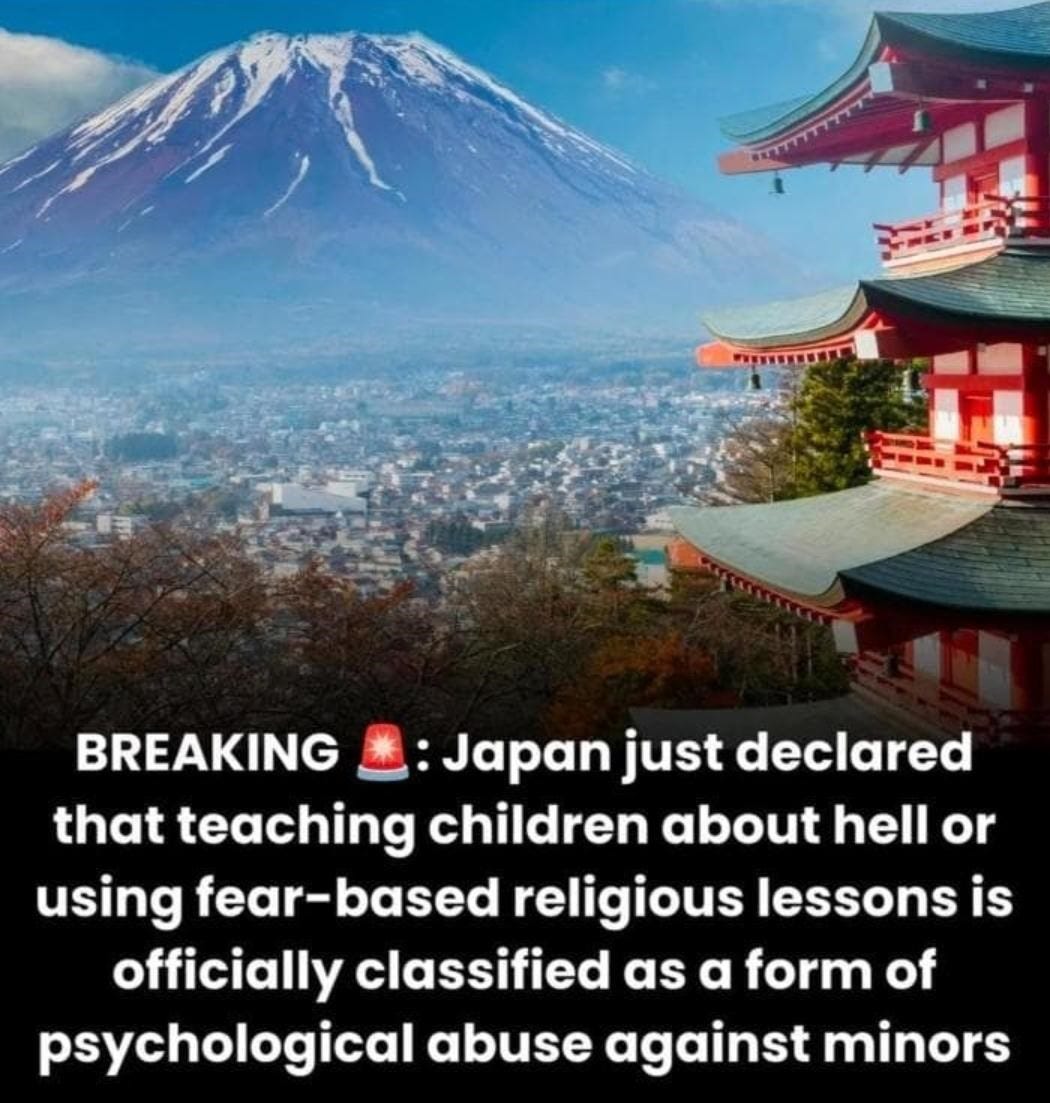
Meanwhile, that graphic says Japan has classified teaching children about hell as psychological abuse. Several Sunday-school teachers and grandmas would require legal representation. We barely understood addition and subtraction but were already receiving detailed briefings about everlasting fire. The actual December 2022 guidance concerns coercive religious practices, including terrifying children into compliance.
Japan has not abolished hell.
But imagine your child bringing that screenshot to breakfast.
Getting ready for church now requires a vetting committee.
Back in Mua Hills, we needed a description to find Kilonzo. Mustapha’s impressive new name had got us lost.
On Monday, hear the person behind one CV. Ask what they did when things fell apart. When you choose them, help them succeed. We put considerable effort into welcoming people.
The harder work begins after the visitors leave.
Which custom surprised you? Bring your elders’ version to the comments. Share this with someone choosing a colleague, building a team or marrying into unfamiliar territory.
Subscribe for next Sunday. And if a goat arrives before then, call Mutush.
Same Forest. Different Monkeys.
Mubarikiwe. Jah Bless.
This week’s recessional hymn is led by Kasau Katombi. Pewa Pewa.
Go with song.