

The breakup negotiations had reached the kitchen.
By that point I had already secured the television, the home theatre… and the usual boys’ toys — the PS1, the old mobile speakers, foreign rugby shirts, plaques from visiting teams, and a Bob Marley poster drawn in pencil that had followed me through several houses.
Those assets had been locked down early. Everything else was now negotiable.
Until we got to the kitchen.
Breakups begin politely.
People use words like fairness.
Then someone reaches for the sufurias.
The fridge was never really part of the negotiations. It was one of those massive Kelvinator relics from the 1980s. The kind of fridge that eventually migrates to the garage because it simply refuses to die.
Whenever that fridge switched on, the house lights blinked briefly, as if KPLC needed a moment to reconsider its life choices.
Nobody was moving that thing.
Which meant the real war moved to the smaller items.
The sufurias. The plates. The glasses. The mwikos (cooking spoons).
My carefully assembled collection of Tupperware utensils — the only real investment I had made in the kitchen.
Anyone who has ever tried to split clothes understands the problem immediately. You cannot divide them like furniture.
Which means the battlefield shifts somewhere else.
In our case, the battlefield became kitchenware.
At that stage of life I had a couple of years as a sales rep under my belt, but:
The furniture in the house had arrived the African way, through donations from parents and relatives who believed young people deserved a head start.
Which meant very little of it actually belonged to either of us.
But the kitchen…
The kitchen was where daily survival happened.
Now I should confess something important here.
I was working out every day. Which meant food was not optional.
Food was fuel.
She understood this perfectly.
And like all experienced negotiators, she went straight for the jugular.
She claimed the two-burner gas cooker and the gas cylinder.
It was a brilliant tactical decision.
She was almost certain that within a month I would be starving and would return, humbled, hungry, and ready to renegotiate the entire relationship.
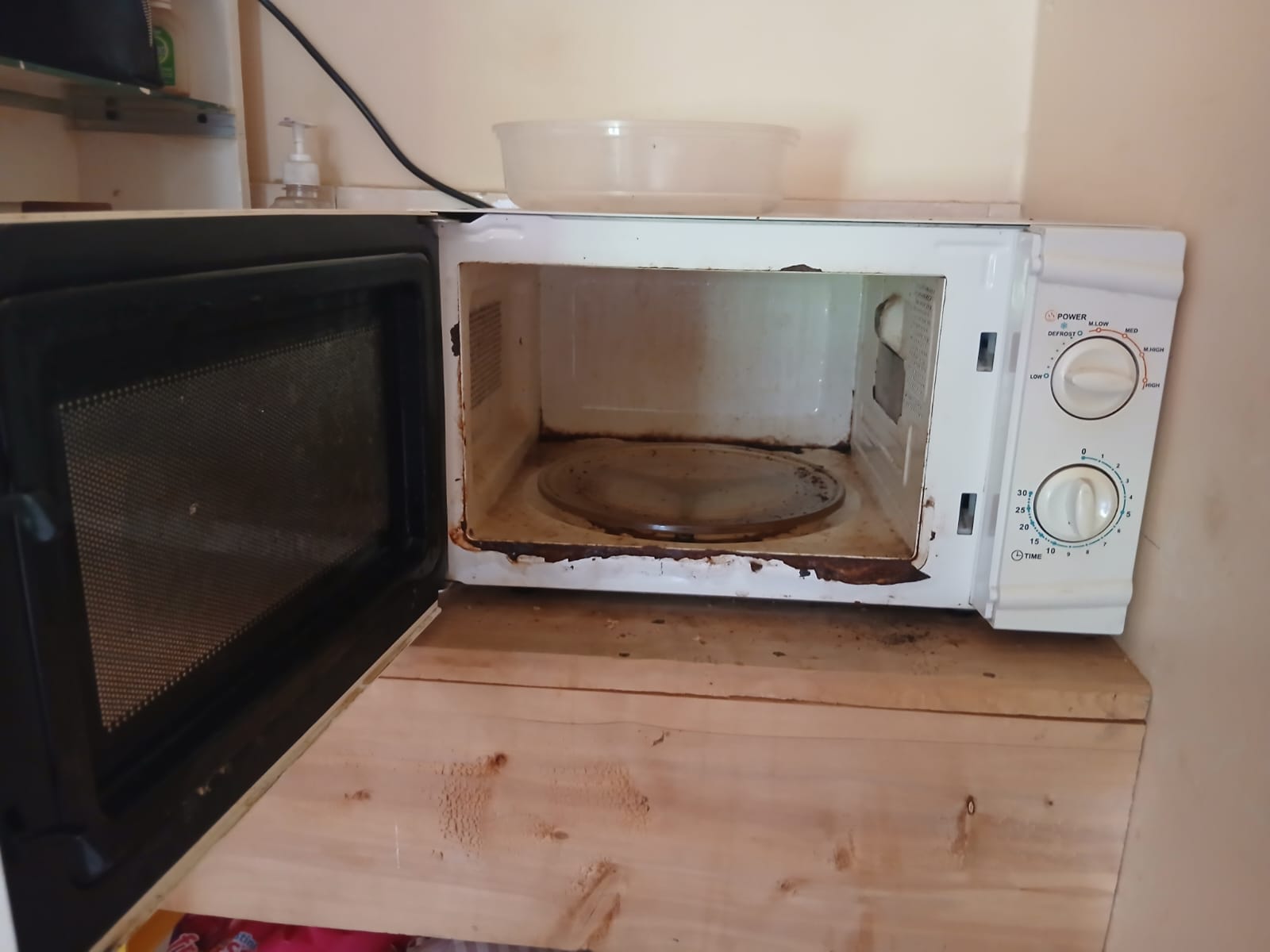
And that’s how I ended up with the microwave.
For the next two years that microwave became the centerpiece of my culinary survival strategy.
Everything passed through it with the thoroughness of an Olympic dietician’s meal plan:
Protein: Matumbo. Omena. Nyama wet fry. Tong’ mang’eny (many eggs)
Hydration: Tea. Coffee. Supu ya mifupa (bone broth)
Carbo loading: Chapos. Pilau Njeri. Githeri chips mwitu
Cruciferous Veggies: Sukuma (kale). Makofisi (cabbage). African Nightshade (Managu)
Pre game: Mukimo gi rech (mukimo with fish soup)
The microwave had no sense of boundaries. Whatever had been heated the night before left its ghost behind.
Morning coffee sometimes carried faint hints of yesterday’s mukimo.
Pilau Njeri reheated in the evening occasionally carried traces of lunchtime tea.
If culinary fusion had a laboratory, that microwave was it.
Slowly, unintentionally, I began to build depth. At the time I thought I was simply surviving. Only later did I realise something important about breakups.
Depth rarely comes from comfort.
Depth comes from the moments when comfort disappears and you are forced to rebuild with whatever tools remain on the table.
And once you start looking at the world through that lens, you begin to notice something interesting.
Breakups are everywhere.
Even in places where we pretend everything is stable
Every March arrives with the same unmistakable energy.
If you think sports fans repeat their greatest victories too often, you have clearly never observed how societies commemorate milestones.
England will remind you about the 1966 World Cup.
Springbok supporters will remind you that they have four Rugby World Cups.
Arsenal fans will gently — and sometimes not so gently — remind you about forty-nine unbeaten games and the EPL in the last century.
But none of them have the institutional stamina of International Women’s Month.
It arrives every March like winter in Game of Thrones.
The messages appear everywhere.
Television. Corporate emails. WhatsApp groups.
Conference stages. Social media timelines.
Louder than CNN. Louder than Al Jazeera. Louder than Firstpost or Xinhua.
In perfect chorus:
Happy International Women’s Month.
One hundred and fifteen years of caring, giving, nurturing…
and continuously reminding the rest of us mere mortals that they did.
History supports the argument. Because some victories deserve to be remembered.
Especially the ones that forced systems to change.
Make your peace.
Early.
Happy International Women’s Month!!!
Same Forest. Different Matriarchs

But back to the breakups, and when they hit close.
Like a family disagreement.
The global sportswear industry offers a famous example.
Adolf and Rudolf Dassler once ran a shoe factory together in Germany.
Then the relationship collapsed. The brothers separated.
Adolf founded Adidas.
Rudolf founded Puma.
One had Usain Bolt. Rihanna. Neymar Jr. Lewis Hamilton.
The other Leo Messi. Samuel L. Jackson. Lamine Yamal. Bad Bunny.
One family breakup ended up creating two global brands that would compete for decades.
Competition drove innovation. Athlete sponsorship exploded.
Entire marketing strategies were invented.
Depth emerging from separation once again

I would later experience a different kind of breakup in my professional life.
Sales is one of the few professions where success as an individual contributor can become the biggest obstacle to becoming a leader.
You build your reputation by closing deals.
You become the person who solves problems personally.
You carry the targets.
You win the awards.
Then one day someone taps you on the shoulder.
Congratulations. You are now a Unit Manager.
Except management is not a promotion.
It is a breakup.
You break up with being the hero. Now your job is to build other heroes.
The insurance industry understood this decades ago. Which is why the Life Insurance Management Research Association (LIMRA) developed a training program with a very appropriate name.
Crossroads.
The program was designed to help new sales managers transition from individual performers into team leaders.
Recruiting. Coaching. Performance management. Planning. Building culture.
The lesson was simple. Your success no longer belonged to you.
It belonged to the people you helped succeed.
And once you experience that transition, you begin to see organisations differently. Which raises an interesting question.
Most of us have experienced some version of this moment.
The Founder’s syndrome.
Many small businesses explode and the success requires more heads.
More people who can do.
The founder’s voice is somehow muted in the noise of the new disciples.
The founder is forced to turn and face the orchestra.
And let the music play.
With you as the conductor and not the lead violin.
Many businesses struggle to break the founder hold.
Many founders struggle with separation anxiety.
Can they really do it the way I did?
A breakup that forced us to rebuild.
A partnership that ended and unexpectedly opened new doors.
A Series B funder that changed the rules.
If you have experienced something like that, it might actually be worth sharing.
Talk to us and lets start a conversation around it, because those stories,
The real ones, are usually far more interesting than the theories.
Same Forest Different Monkeys.
Unfortunately, organizations themselves are not always eager to embrace those conversations.
Anyone who has spent time around boards, committees, or chamas knows how silence is often mistaken for harmony.
A respected corporate leader shared this article on Linkedin.
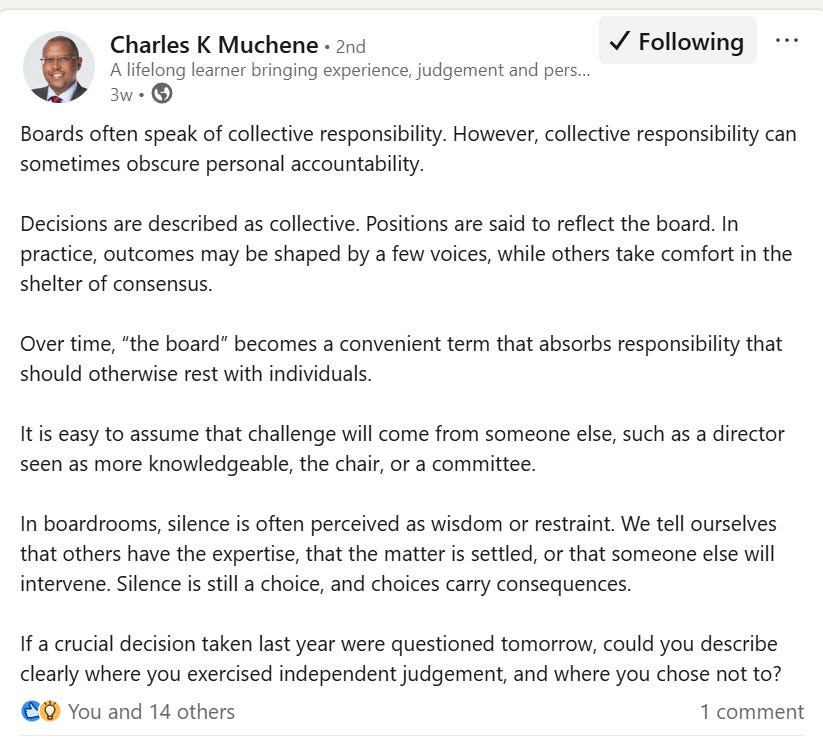
Agendas circulate. Minutes are approved. Reports are presented politely.
And then comes the final agenda item.
Any Other Business. AOB.
This is where uncomfortable truths occasionally try to surface.
But it is also where many ideas quietly die. (The board secretary instructed that AOB’s be submitted 2 weeks before the meeting)
People hesitate. No one wants to appear disruptive. And so organisations continue moving forward, sometimes politely ignoring the very conversations that could make them stronger.
Depth requires friction.
Without friction, systems stagnate.
Sporting competitions sometimes demonstrate this better than boardrooms ever will.
Same Forest. Different Arena.
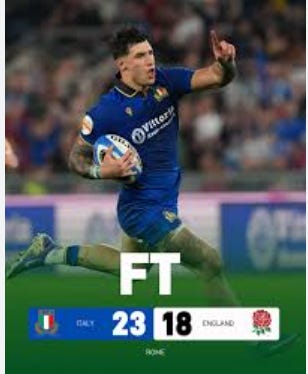
For more than two decades Italy occupied an uncomfortable position in European rugby. They joined the Six Nations Championship in 2000.
The defeats came quick and fast.
And often.
Pundits questioned their presence. Fans suggested replacing them with Georgia.
Yet Italy stayed. Year after year. Scrum after scrum. Season after season.
Learning. Improving. Absorbing pressure.
Then eventually the scoreboard told a different story.
For the first time in Six Nations history, Italy beat England.
Somewhere in the background the English anthem probably still echoed.
Swing Low, Sweet Chariot.
Except this time when the chariot swung low,
It came up, but with an Italian carrying it home.
The victory did not happen overnight. It was the result of two decades of staying in the competition long enough to build depth.
Persistence doing its quiet work.
Forza Italia!!
Which brings us back to the broader lesson history occasionally forces humanity to confront.
Conflict and separation have shaped the world in ways comfort never could.
Few speeches captured that reality more clearly than one delivered in 1963 by Ethiopian Emperor Haile Selassie at the United Nations.
Speaking against racism and injustice, Selassie I warned that peace would remain fragile until humanity learned to treat every nation and every person with equal dignity.
Bob Marley later turned those words into one of the most powerful songs ever written.
War.
Until the philosophy which holds one race superior and another inferior is finally discredited and abandoned…
There will be war.
The Conquering Lion of the Tribe of Judah understood something life eventually teaches all of us.
Depth is rarely comfortable. Sometimes it is built in kitchens during breakups. Sometimes in boardrooms. Sometimes on rugby fields.
And sometimes across the long arc of history itself.
Comfort preserves the present.
Breakups create the depth required for the future.
Depth is rarely comfortable. Depth definitely beats starving.
And sometimes depth simply begins with a microwave
If reflections like this resonate with you — about business, sport, life, and the strange ways Africa and the world evolve — you are welcome to stay in the conversation.
Should you choose to leave,
Go with song.
Mubarikiwe. Jah Bless.
Same Forest Different Riddim.
Always a pleasant read
Comfort preserves the present.
Breakups create the depth required for the future.
Super!!