
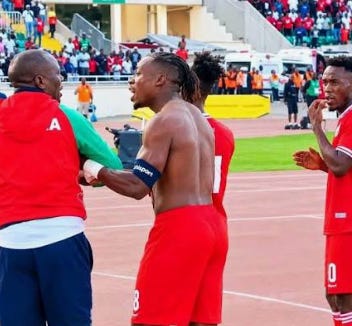
Abud Omar stood shirtless at Nyayo, arguing with the kit manager.
He had just given his national jersey to a supporter after Kenya’s 1–1 draw against Eritrea. The captain went to thank the fans; the kit manager came to retrieve the shirt.
The kit manager’s approach had the urgency of a defender chasing a winger through a gap. Only this time, the prize was the shirt. Teammates stepped in to separate them.
A national shirt carries weight long before anyone puts a price on it.
You train for it. Wait for selection. Phone home when your name appears. Pull it over your head knowing that, for ninety minutes, you are wearing the country. Then you give it to someone who shouted himself hoarse for you.
Imagine that supporter getting home. The shirt comes out. People gather. Add the players’ signatures and it becomes something to frame, show your children, leave to somebody.
Or sell.
After that match, a fan advertised a jersey bearing ten players’ signatures and Benni McCarthy’s for KSh300,000. An asking price, mind you. We have not seen the buyer’s M-Pesa message. Nor is it established that this was Omar’s shirt.
FKF vice president McDonald Mariga explained: “It is because we only had one jersey.” The shirts were needed for the next away game. He promised: “From next year, we will solve it.”
What happens when the next call-up is a different size? Does the new winger inherit the departing defender’s shirt and safety pins?
Are we selecting the best eleven—or the eleven who fit?
Questions, not confirmed arrangements. But “we need it next game” deserves more than a washing instruction.
I remember the 20th century rugby routine: represent Kenya, return the shirt, shorts and stockings washed, then collect your allowance. But that was the stone age.
Never worn a national jersey? Imagine leaving your job. You surrender the laptop, phone and car keys.
Then HR points at your chest.
“The branded polo shirt also.”
Even the one you wore through three company retreats?
Getting the shirt is one thing. Being ready for what it demands is another.
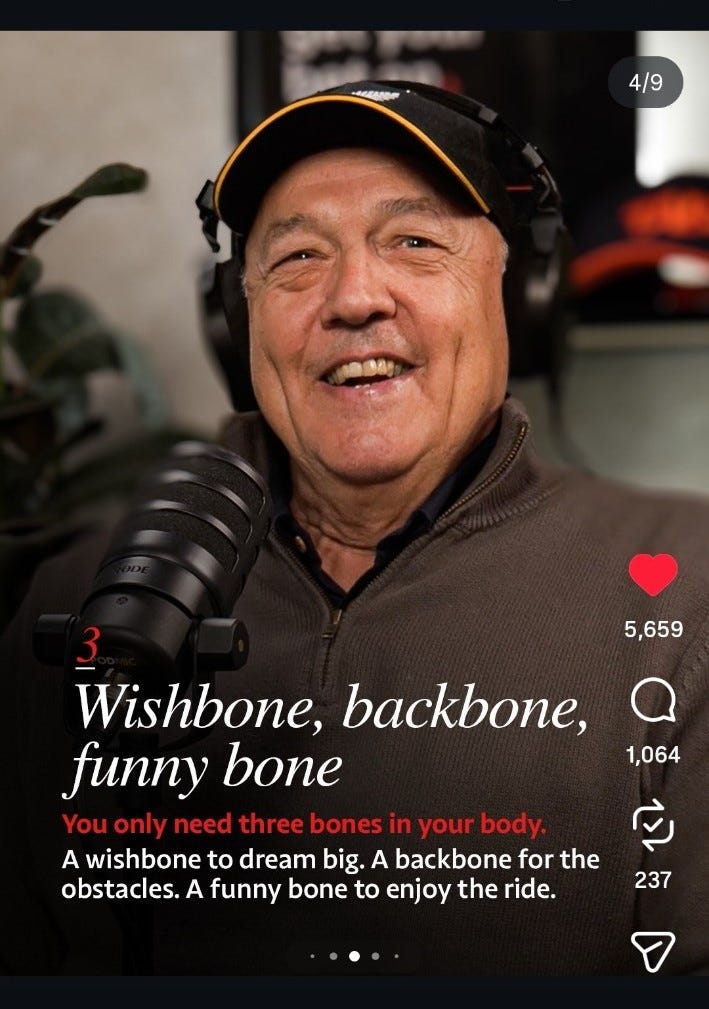
That is where Gilbert Enoka, the rugby mental skills coach, comes in. He spent 23 years helping New Zealand’s All Blacks handle the pressure, including their 2011 and 2015 Rugby World Cup victories.
He has also worked with New Zealand’s Black Caps cricket team and Silver Ferns netball team. Now he is back with the All Blacks as Leadership and Mental Performance Coach under Dave Rennie, preparing for the 2027 Rugby World Cup.
These professionals already know how to play. The problem comes when seventy thousand spectators, a scoreboard and your own thoughts start offering instructions simultaneously.
You can practise a kick a thousand times. Taking it with your country’s hopes attached requires another kind of preparation. So does recovering after you miss. Mental readiness helps an athlete stay attentive, make decisions and remain useful when the afternoon stops following the training-ground script.
Enoka uses an old saying: wishbone, backbone, funny bone.
The wishbone gives you something to chase. Selection. A national shirt. A World Cup. For some of us, getting through school fees without the bank manager becoming a family friend.
The backbone carries the work—and the uncomfortable admissions.
The funny bone lets you laugh when your five-year plan discovers it did not consult life.
Ambition without action becomes a WhatsApp status.
Determination without perspective can make you unbearable at home.
After the All Blacks’ 2007 World Cup exit, Enoka acknowledged shortcomings in his preparation. He sought help. Imagine the boss saying at Monday’s meeting.
“We missed the target. Here is what I got wrong.”
No lengthy introduction about market conditions. No junior team leader suddenly owning the entire failure. You can almost hear the chairs stop squeaking.
But keep that funny bone ready.
Manchester City fans thought they were watching an expensively assembled orchestra. Then a certain re-tired rugby player circulated Milli Vanilli wearing City shirts. Remember their song, Girl You Know It’s True?
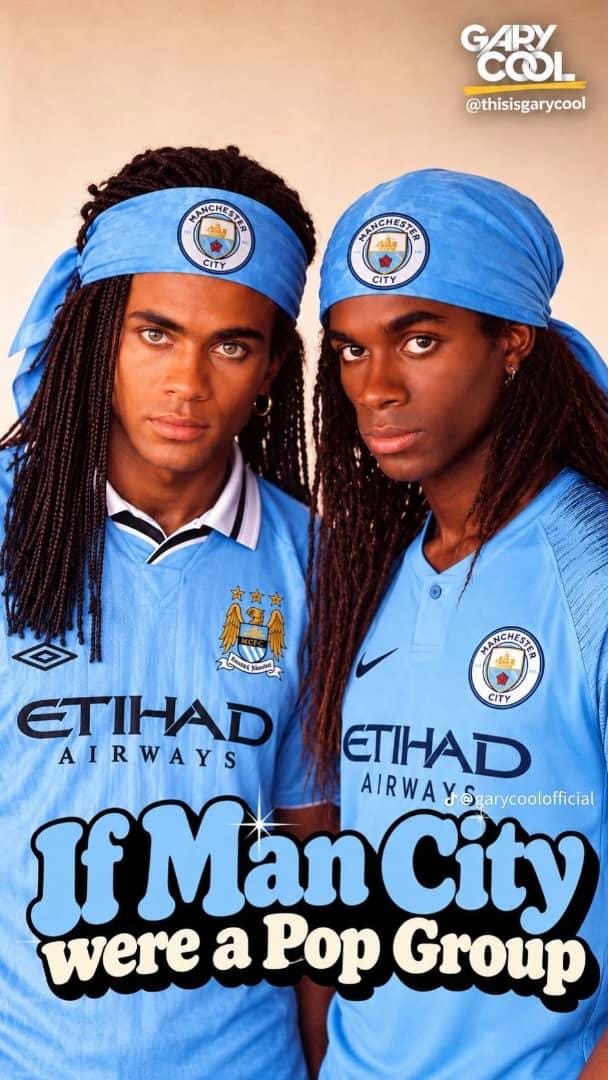
Let us check who was paying for the music. Milli Vanilli gave us the hair, dancing and faces on the sleeve. Other people supplied the recorded vocals. Their Grammy was revoked in 1990. Now Rob and Fab wear City shirts, courtesy of fellow “creators” with the funniest of memes delivered courtesy of paid AI imaging.
Citeh fans, remain seated. Your players really played. Agüero really scored. The players were real. They were amazing finds. The awkward question concerns the money.
Robinho: £32.5 million. Agüero: £38 million. Kevin De Bruyne: a reported £55 million. Roughly £125.5 million before wages. You watched the unveiling. Bought the shirt. Explained to your United-supporting neighbour what a properly managed club looked like.
Then the accountants entered the chat.
On September 29, the independent commission found City guilty on 114 of 115 charges. City denies wrongdoing and has appealed. City was cleared of one failure-to-cooperate allegation. The financial charges all stood.
Even a class monitor would struggle with that report card.
The commission found that sponsors paid only part of the recorded fees, with the owner’s company, Abu Dhabi United Group, providing the balance. Alongside arrangements reducing recorded costs, the schemes distorted City’s financial position by more than £900 million across nine seasons. So, my good friends Obewa Jones, Arrex and the sky-blue faithful, while you admired De Bruyne’s passing range, the commission examined the money’s route to Manchester.
City’s reported defence says the additional sponsorship money came from the Abu Dhabi government, rather than the owner’s company. The commission rejected that explanation; City is challenging its findings.
Same destination. Fierce argument about whose pocket.
You knew who supplied the passes. Did you know who supplied the pounds?
Before rival fans reallocate medals on WhatsApp, punishment remains undecided. The £900 million is an accounting distortion, not a fine. Relegation has not been announced. Etihad told the US government in 2015 that it funded the sponsorship itself. City’s reported defence now points to Abu Dhabi government money.
Somebody needs to reconcile the background vocals.
The Premier League has released a redacted decision, with further material still confidential.
Here in Kenya, we are also asking for paperwork—for the $16 billion Dangote refinery.
Different project. Familiar request: show us the agreement. Ekuru Aukot has requested the agreement and ownership details; President Ruto told critics to use proper channels.
Citizens and supporters can applaud an announcement while still asking to see what sits behind it. That is reasonable scrutiny.
Please pass the documents with the ribbon-cutting photographs.

Then came the news from Tennessee. Christa Gail Pike received two doses of a lethal-injection drug on September 30. She continued breathing. Witnesses reported snoring. AP reported that an ambulance eventually took her to hospital.
How do you sleep through your own execution?
But “slept through it” sounds peaceful. Her attorneys said she was unconscious and on a ventilator, receiving medical care after the state’s attempt to kill her.
Pike was 18 when she killed 19-year-old Colleen Slemmer in 1995. She was convicted of murder after a sustained assault. Colleen’s life and her family’s loss must not become background to a startling headline.
Governor Bill Lee halted the remaining executions for the year and ordered an independent investigation. The prison commissioner announced his resignation. Tennessee’s Department of Correction said it followed its established protocol.
That is where the backbone must return: examine the method, hear the warnings, account for the outcome.
Enoka’s three bones help us through difficult moments. They also remind us to know when the funny bone must fall silent.
“Then there is Luka Modrić, still doing his homework after all those trophies.”
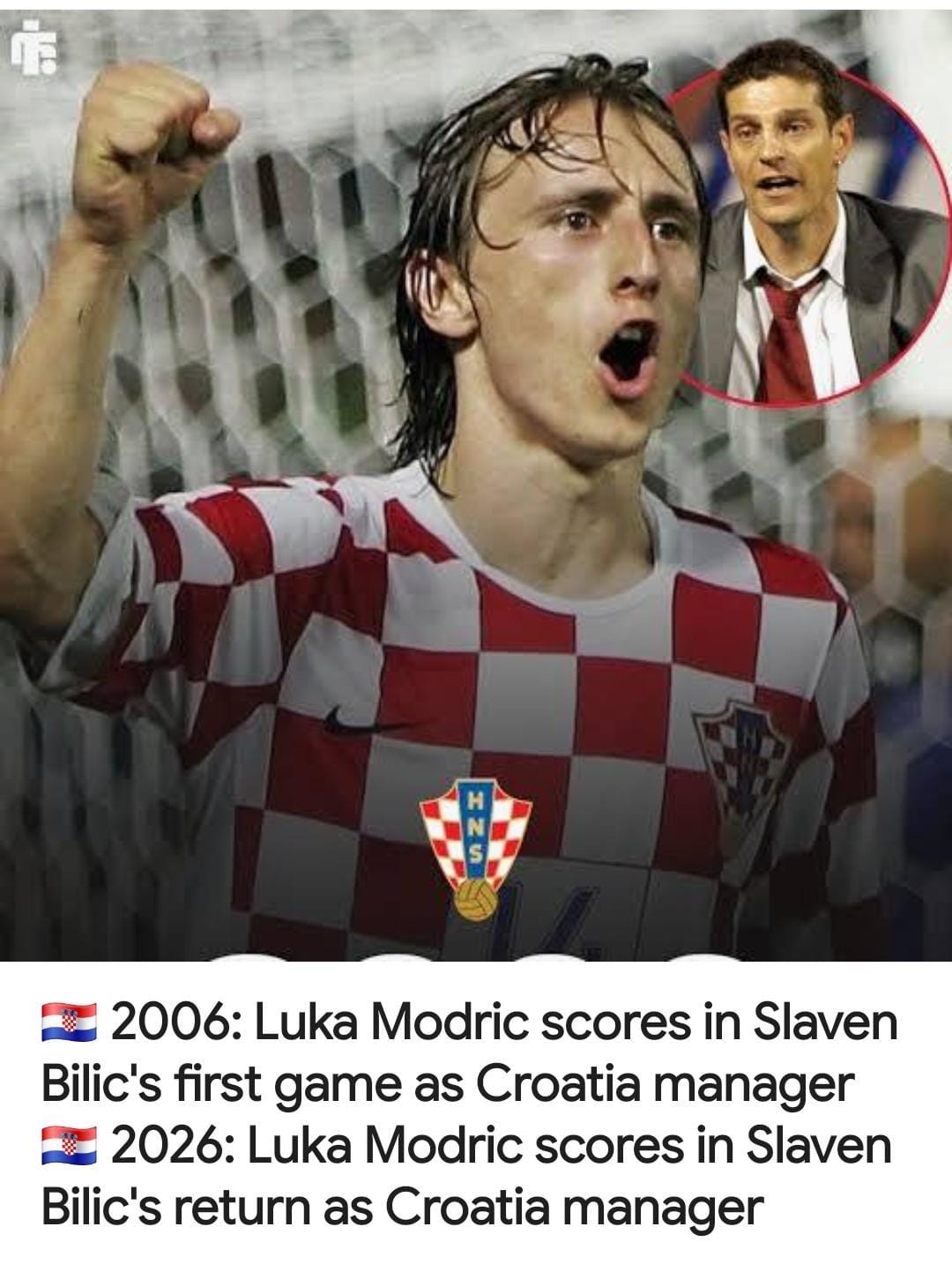
Luka Modrić.
Coach Slaven Bilić remembers him joining Croatia’s Under-21 side in 2004 alongside boys two years older. Standing at 5 ft 8in and 66 kilos. Slightly built, but already willing to take responsibility.At a meal, Bilić’s son asked whether Real Madrid could win the league. Modrić listed Madrid’s remaining opponents, then Barcelona’s, in order. He knew where the title could be decided.
Some of us cannot name our next three customers without asking the sales administrator. Modrić knew the opposition’s homework too.
Thirteen seasons at Madrid brought 28 trophies, including six European Cups, plus the 2018 Ballon d’Or.
The useful part is the attention that survived the success. The medals accumulated; he kept studying the game.
Same forest. Different coaches. Still standing.
Salute. Another GOAT.
The wishbone got him dreaming. The backbone kept him preparing. The funny bone belongs to those who retired mentally after their first management appraisal.
For Monday: which bone are you relying on—and which have you neglected?
Have you made the difficult call, checked the figures, prepared for the next opponent? Or become so serious that nobody at home remembers the last time you laughed?
Back to Omar’s shirt.
A player wears it with pride. A supporter receives it with delight. The kit manager needs it for the next match. The shortage turns their meeting into an argument.
We can dream of great tournaments and demand brave performances. Somebody must order enough shirts—in the right sizes.
Let the next player worry about earning his place. Surely he should not also have to fit the previous fellow’s laundry.
Same Forest. Different Monkeys.
Mubarikiwe. Jah Bless.
For a week when the explanations deserve as much attention as the performance.
Milli Vanilli — Blame It on the Rain.