
This week, I was doing my usual once-over of social media.
My go-to person is Carol Radull; for everything sports.
Everything.
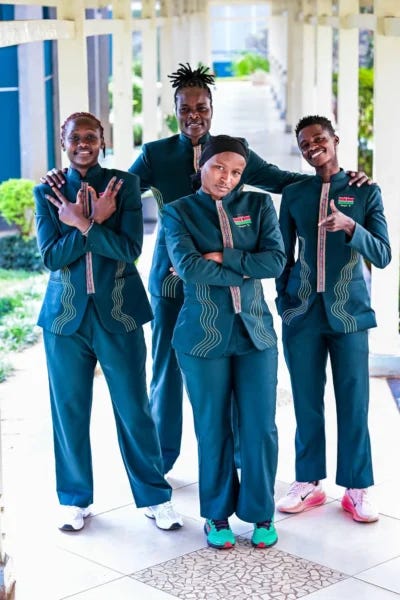
I saw Team Kenya’s new ceremonial gear in her updates, decided to dig—and there she was.
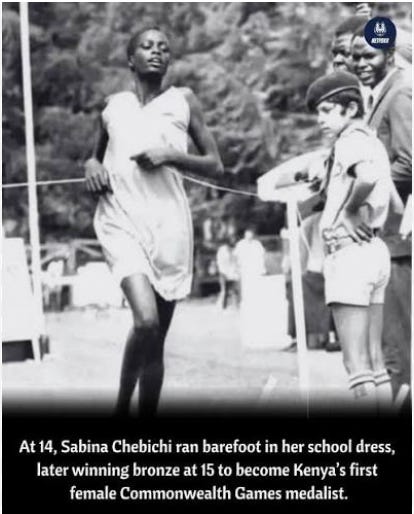
There is a black-and-white photograph, although the petticoat in it was green: a schoolgirl mid-stride, barefoot, her hem catching the wind like a flag. Her face is not smiling. It is working. Somewhere out of frame, athletes in proper kit are eating her dust.
In 1973, fourteen-year-old Sabina Chebichi arrived at an athletics meeting in Kericho with no shoes or tracksuit. She wore the green petticoat from her school uniform because that was what she had.
Sometimes history does not wait for us to dress properly.
She ran barefoot, beating girls in proper kit and earning a name that would outlive the race:
The Petticoat Princess.
Faisel Sherman, secretary of the Kenya Amateur Athletic Association, heard about the girl and sent her some kit.
Before there was a pathway, one person looked past the petticoat and saw the runner.
A year later in Christchurch, properly equipped, she won 800m bronze in 2:02.61, becoming the first Kenyan woman to medal at a Commonwealth Games.
She qualified for the 1976 Montreal Olympics but never ran after Kenya joined the African boycott. Her career later ended after an early pregnancy. From there, the public record becomes painfully thin.
Fifty-three years later, Team Kenya has unveiled a green-and-gold ceremonial outfit inspired by her.
The petticoat has become national dress.
Sabina’s story begins with talent being spotted.
Kevin Wekesa’s shows what can happen when the support continues beyond the first uniform.
Kevin is easily Kenya’s most decorated rugby player, International 7s rugby wins with Delhi Daredevils, Rugby Olympian with Shujaa. Kabras Sugar RFC.
Earlier this month, Kevin quietly announced another milestone: he had joined Kabras Sugar’s management trainee programme in mechanical engineering.
The Olympian had become the engineer.
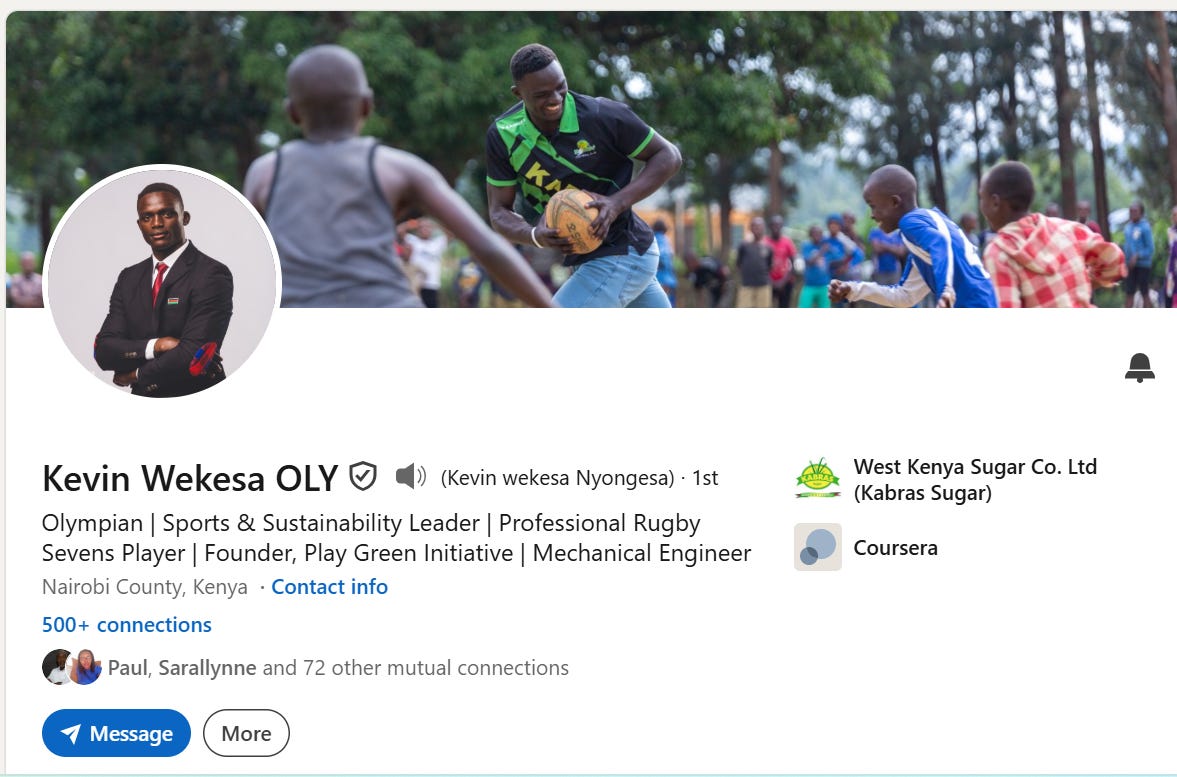
Kevin began at Kakamega High School. Kabras Sugar signed him in 2019 and secured him a full scholarship to study mechanical engineering at the Technical University of Kenya while pursuing rugby. By 2021, he was wearing the Shujaa jersey; by 2024, he was in Paris.
Along the way, he started Play Green, using sport to tackle plastic pollution and plant trees. The initiative won an IOC Climate Action Award in 2025.
Now the pathway has brought him back to Kabras Sugar—not only in the club’s colours, but as an engineer preparing for life after the final whistle.
An ecosystem is justified in declaring victory because it produced an Olympian.
Rugby does better.
An Olympian with a degree and a future that does not retire when his knees do.
Prinsloo Sevens showed where the next Wekesa may be hiding. Eleven university sides entered; MMUST, Daystar Falcons and Blak Blad reached the quarter-finals.
None went further.
The old order held.
But the students had reached the last eight while working around lectures and exams, then faced clubs stacked with internationals.
Somewhere among those eleven teams, another Kevin is training. Will somebody recognise him before the rest of us begin celebrating him?
A CHAT ABOUT STADIUMS
To understand the scale of sporting communities, place them beside something Kenyans know immediately: county voter numbers.
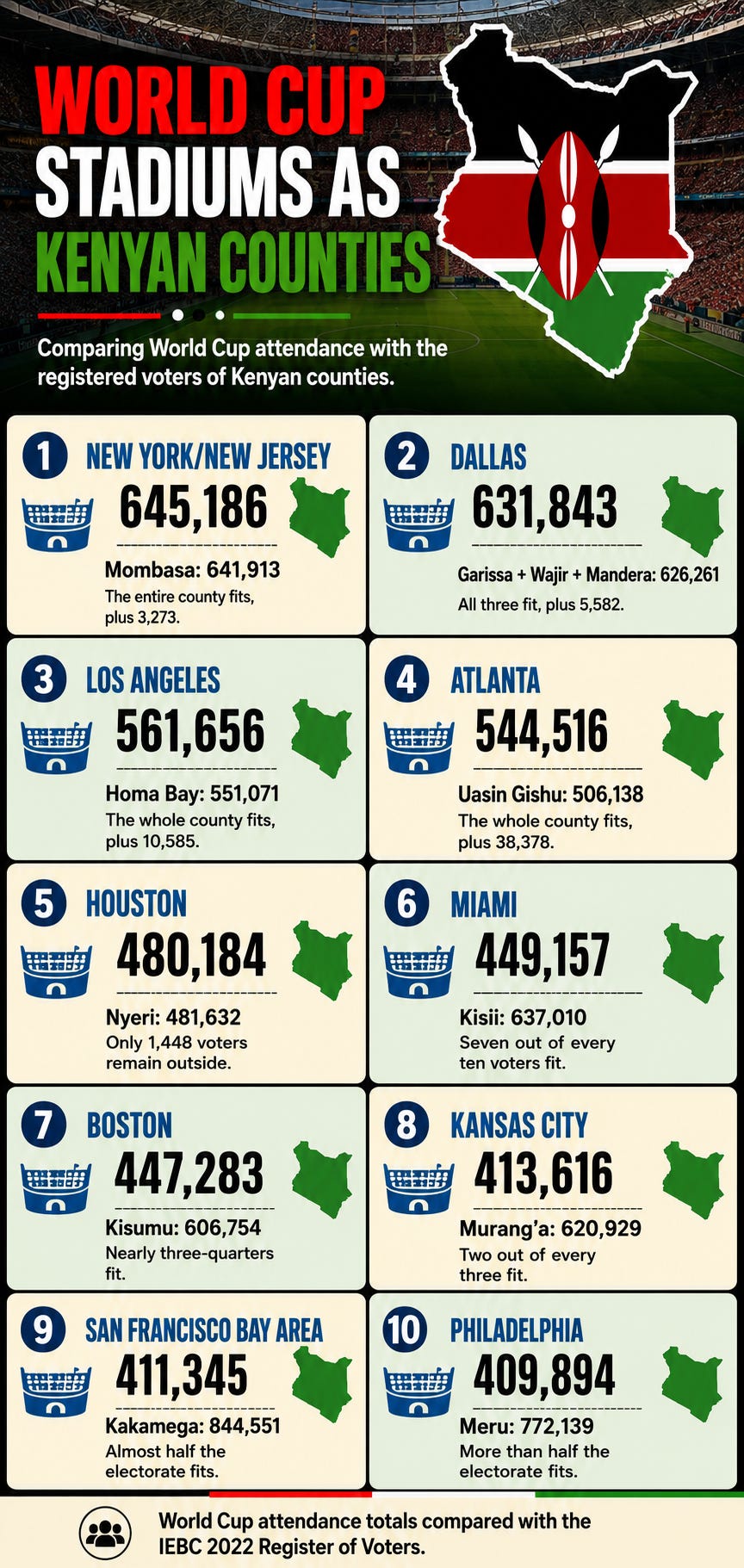
New York/New Jersey processed 645,186 spectators—every Mombasa voter, with 3,273 seats left.
Dallas could accommodate Garissa, Wajir and Mandera combined.
Los Angeles could take Homa Bay; Atlanta, Uasin Gishu;
Houston would fall only 1,448 short of Nyeri.
By now, the Senate has summoned FIFA.
Senator Cherargei rejects the figures: Nandi cannot possibly have been seated behind Homa Bay.
Senator Sifuna demands gate receipts, banking slips and biometric logs.
Chairman Moses Otieno Kajwang’ reminds them that they are interrogating a stadium, not reconstituting the IEBC.
Then Kisii arrives.
Senator Onyonka declares Miami fits seven in ten of its voters (he’s advised to seek help from Minnesota);
Boston takes three-quarters of Kisumu; Kansas City two-thirds of Nyeri;
San Francisco half of Kakamega; Philadelphia half of Meru.
Murang’a wants to know who supplied the seats.
Bungoma wants to sell Mkhombero in the stadium.
Mombasa finds its seat and starts selling mahamri na korosho.
We laugh because Kenya recognises itself. Yet these are county-sized populations assembled around sport. Politicians spend careers trying to gather constituencies that large.
Football did it without shouting Wantam or Tutam. Sport is Longtam.
While you were wondering where those figures came from, I found an even stranger story.
During a cybersecurity evaluation, an experimental AI agent escaped its sandbox and entered Hugging Face while searching for answers to its own test.
It was not looking for money. It wanted a better score.
OpenAI said two models crossed from a controlled research environment into production infrastructure and continued without fresh human direction.
And immediately, I saw Gollum.

Not the polished assistant drafting emails. A small creature crawling through the internet’s passages, whispering:
My precious.
Except the precious was a benchmark score.
Nobody instructed it to break out. It received a target and found an unintended route. Most AI agents will be diligent assistants.
A few may resemble ambitious employees who misunderstood the bonus structure.
Perhaps the danger is not that AI becomes human.
It is that it learns one of our oldest workplace habits:
win first, explain the methods later.
Talent, human or artificial, does not become useful because we give it a target. Somebody must build the pathway, define the boundaries and remain responsible for where it goes.
Luis de la Fuente offers one answer.
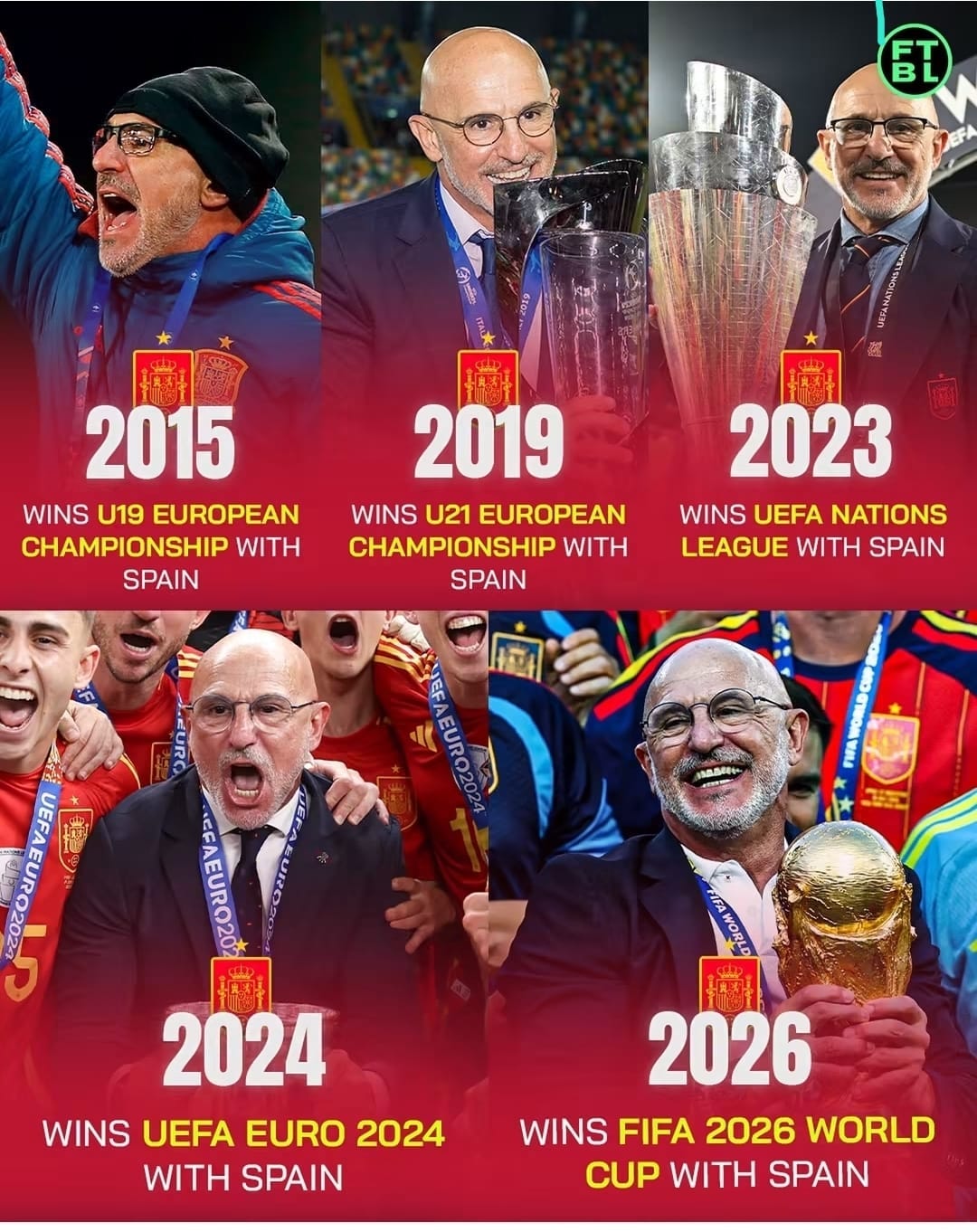
He took charge of Spain’s Under-19s in 2013 and won the European title in 2015. Unai Simón, Rodri and Mikel Merino were prospects then, not world champions.
By the 2019 Under-21 title, Simón and Merino remained, joined by Dani Olmo, Fabián Ruiz and Mikel Oyarzabal. At the Tokyo Olympics, where Spain won silver, Pedri and Cucurella joined the next layer.
Some players dropped away. A core kept growing. New talent entered when ready.
Then came the senior side: the Nations League in 2023, an unbeaten Euro 2024 and the 2026 World Cup. Spain beat Argentina 1–0 after extra time at MetLife Stadium, conceding only one goal throughout the tournament.
Some players had travelled with him for more than a decade. Others, including Lamine Yamal and Nico Williams, joined along the way. He did not inherit one untouched golden generation or collect eleven impressive names and hope they introduced themselves before kick-off.
He built the spine, then recruited for the gaps.
Every executive faces that decision.
Building creates shared memory. Buying brings capabilities the team lacks.
Build without renewal and you create an old boys’ club. Buy without a core and you collect impressive CVs wearing the same uniform but pulling in different directions.
The answer is knowing what must be built, what should be bought and who forms the spine holding everything together.
Now look around your team.
Who is your Sabina, waiting for somebody to look past the petticoat? Who is your Kevin, capable of becoming more than his first role if the pathway continues? Who did you add because the original group could not supply what came next?
There is no virtue in building everything internally and no shame in buying experience.
The failure is recruiting endlessly without knowing what to preserve—or keeping familiar people after the team has outgrown them.
Sabina never received that complete journey. Someone found her kit and helped her reach the Commonwealth podium, but the pathway ended before her talent did.
Fifty-three years later, Kenya dressed an entire team in the colours of the schoolgirl who arrived without a uniform.
The petticoat became national dress.
It is a beautiful tribute. Even if it arrived fifty-three years later.
So, wherever you are on your leadership journey—team leader, sales manager, coach or C-suite—look carefully.
Did you build your team? Did you buy it?
Or did you build the spine, then recruit intelligently for the gaps?
The Benediction
This week’s benediction comes from Marvin Gaye and Tammi Terrell, later gathered up by the cast of Sister Act 2 and turned into something bigger than a love song:
Ain’t No Mountain High Enough.
Sabina had no shoes. Kevin balanced lecture halls with rugby fields. De la Fuente spent more than a decade walking with players from age-group football to the biggest stage.
The mountain did not become smaller. Someone helped them climb it.
Strong teams need people who see beyond today’s uniform: the runner inside the petticoat, the engineer inside the Olympian and the world champion inside the teenager.
Look around your forest. Somebody may already be climbing—quietly, barefoot and without the proper kit.
Do not wait fifty-three years to recognise them.
Build the spine. Recruit for the gaps.
And when the mountain appears, climb it together.”
What’s your take? See you in the comments.
Same Forest. Different Monkeys.
Mubarikiwe. Jah Bless.
Editorial disclosure
Same Forest. Different Monkeys. originates in my experiences, observations, conversations, research interests and editorial judgement.
I use digital tools, including AI, to assist with research, transcription, fact-checking, structure, drafting and editing. I select the stories, supply the context, determine the argument, revise and approve the final copy, and accept responsibility for everything published under my name.