
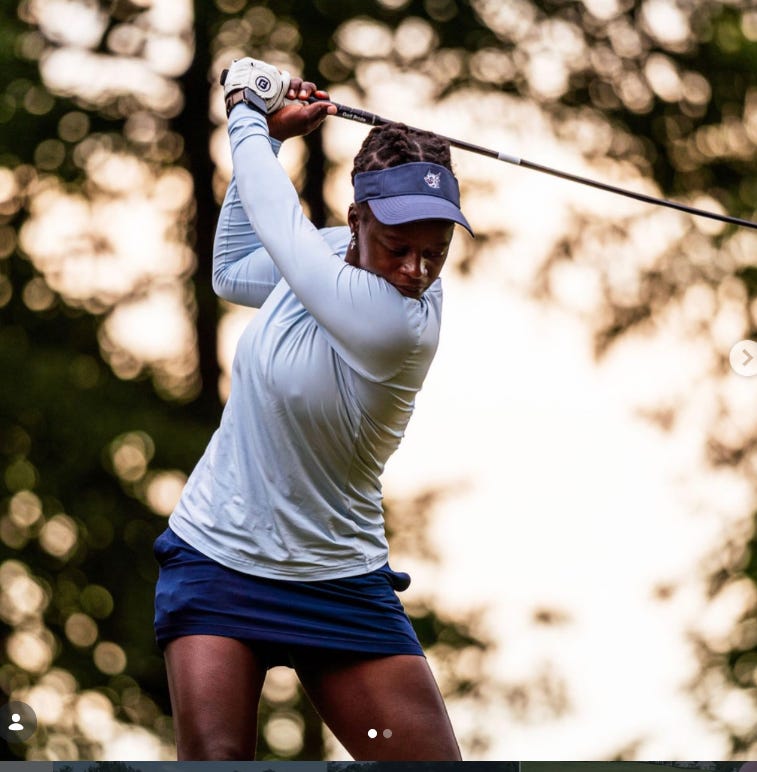
Rose Naliaka became Kenya’s first female professional golfer, then started an academy to teach girls who might otherwise never have had the chance to play. She visited schools to find them.
One of those schools was Jamhuri Primary.
Rose selected a group of girls there. Serah Khanyereri wanted to go too, but she was left out. She was under five feet tall, and Rose worried that she was not mature enough to board the matatus to practice. Serah has clarified that point: Rose did not think she was too short to play golf. The concern was the journey to training.It was a reasonable concern.
It still left one little girl watching the others get picked.
Serah found out where they practised and went to the range. She borrowed a club from one of the selected girls and began hitting balls.
She kept turning up. After two weeks, Rose let her join.
In 2019, Serah travelled to the United States to study and play golf. The community college she first attended, in New Jersey, had no women’s golf team.She searched for another college and found St. Thomas University as it was starting its first women’s programme. She joined the team. Serah earned a Bachelor of Arts in Sport and Fitness Administration/Management and went on to study Sports Business at master’s level. St. Thomas named her a graduate assistant in its golf programme. She also coached children, worked as a golf course ranger and did data entry while pursuing her own game.
In May this year, she won the Mile High Women’s Open in Denver, her first professional victory. This month she entered LPGA pre-qualifying. Her three rounds totalled 226; she finished tied for 61st and did not advance.
But this is just one tournament.
There are many more to come. More training, travel and money. She needs our help. Read to the end to see how.
THE SWOOSH AND THE SHOPKEEPER

Nike spent years among the hundred corporate giants in America’s S&P 100. On 21 September, it was removed. The index is a shortlist drawn from the larger S&P 500; losing a place does not stop Nike trading or selling shoes. But it does tell us that the Swoosh no longer ranks among that particular group of heavyweights.
How does a brand with that much reach find itself there?
There is no single explanation for Nike’s troubles. But its push to sell more directly to customers, while pulling back from some wholesale relationships, raises a familiar sales question.
Why give a retailer part of the margin when you could sell the product yourself?
Because the retailer does more than take a slice. It buys and holds stock. It puts shoes where customers can see and try them. Its staff help someone find a fit. It learns what people in that neighbourhood ask for. If you reduce that relationship, your own operation has to take on the work.
Nike’s fiscal third-quarter results give the question some bite: wholesale revenue rose while Nike Direct revenue fell. Those figures do not prove the earlier distribution shift caused Nike’s wider decline. They do show why margin alone cannot settle the choice of route to market.
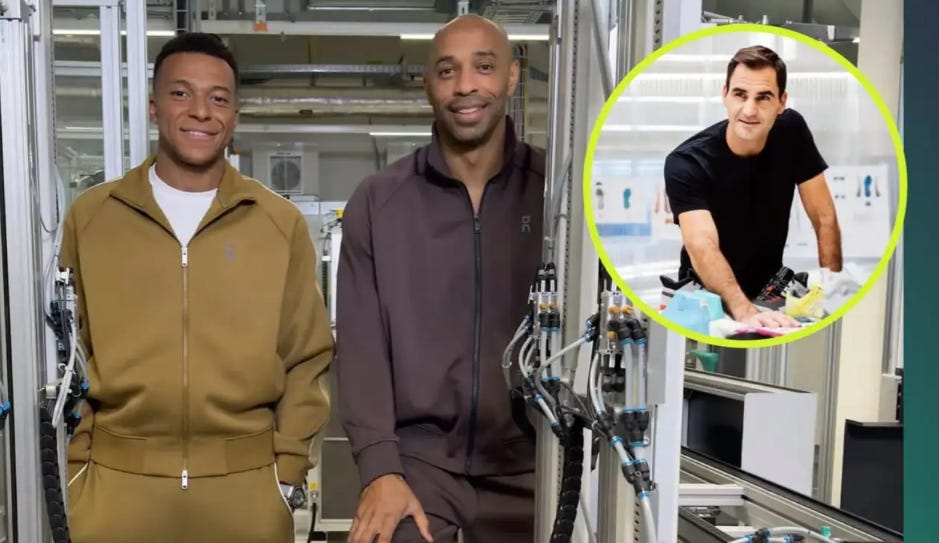
Nike is also facing challengers where it once looked untouchable. This month, Kylian Mbappé left Nike for Swiss brand On as it entered football. On already has Roger Federer as an investor and partner, and Thierry Henry has been working on its football plans since 2025. Those names will not sell boots by themselves. But while Nike works to rebuild the routes that put its products in customers’ hands, a smaller rival is recruiting some of sport’s most recognisable people to help create and sell its own.
Before celebrating a larger direct-sales margin on Monday, ask what each retailer does for you. Which customers do they reach? What do they hear? What would it cost to do those jobs yourselves?
Direct sales, wholesalers or a deliberate hybrid may each work.
Someone still has to reach the customer and make the sale.
THE CUSTOMER WHO CAME BACK
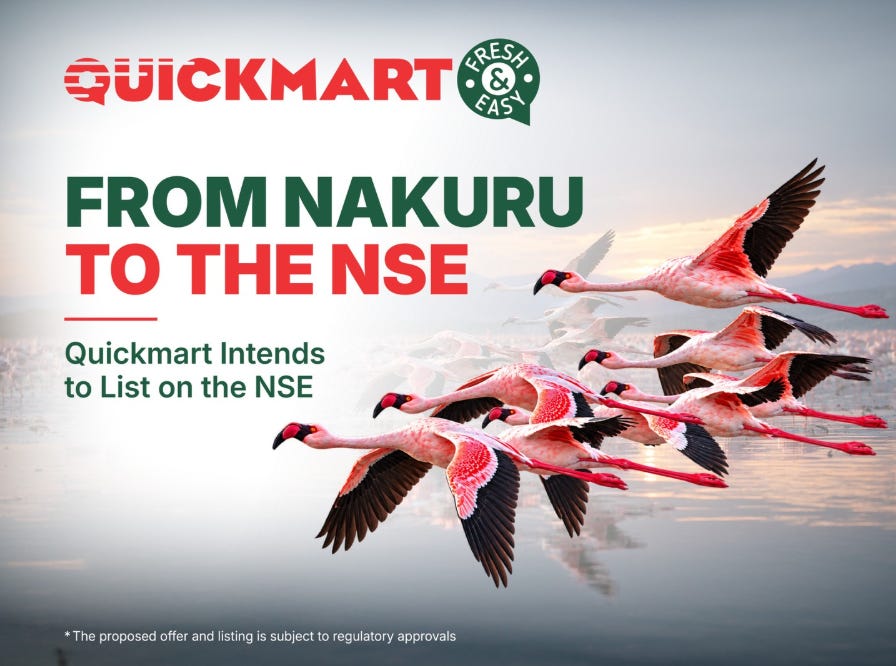
While Nike weighs how to reach shoppers, Quickmart has numbers on the ones who keep returning. Think of a stop on the way home: milk, bread, perhaps one more item before the till. You scan your Q-Points card and leave. Next week, you come back. The shop is on your route and has what you need.
Quickmart says it has about 2.5 million Q-Points members. They accounted for approximately 74% of its sales in 2025 and the first half of 2026.
The supermarket chain has proposed a listing on the Nairobi Securities Exchange. Its existing shareholder, Sokoni Retail Kenya, plans to sell existing shares representing half the company, with an option that could take the sale to 57.5%. Quickmart’s customers can now be offered a different kind of relationship: the chance to buy shares in a shop they already use. Buying Q-Points earned them shopping rewards; buying shares would make them part-owners.
For shoppers, the test remains the same: will the supermarket keep earning their visit next week? Those repeat customers helped build the business in which shares may now be sold. The loyalty card records that they came back and what they bought. It also explains why they chose Quickmart, or what might send them elsewhere next month.
For a sales team, the Monday exercise is simple. Find ten customers who have bought from you more than once. Ask what brought them back, what nearly put them off, and what they still buy somewhere else. Then listen long enough for an answer you did not expect.
ELEVEN VS FIFTEEN + KIRINYAGA BRIEFS
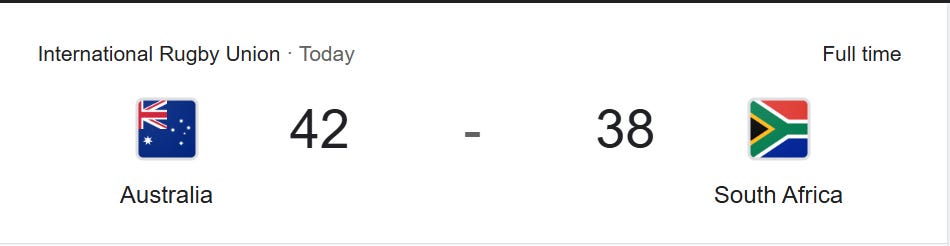
Australia led the world champion Springboks 42–17 after 64 minutes in Perth. Then four Wallabies went to the sin bin. For much of the final ten minutes, Australia had eleven men against fifteen. South Africa scored three tries, but Australia held on to win 42–38.
I thought rugby had supplied all the absurdity we needed for one Sunday. Then I saw what was happening in Kirinyaga-Kutus.
Residents were in the street holding up women’s underwear printed with
“NGAAF Kamau Murango 2027.”
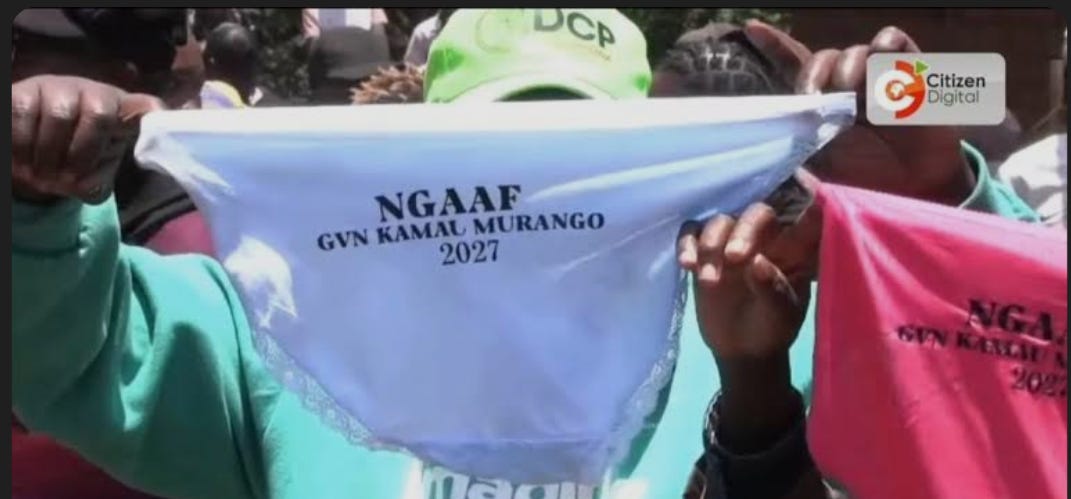
Some complained that the garments did not fit.
Others asked why politicians were offering underwear when people needed help earning a living. One man pointed out that husbands could buy underwear for their wives themselves. The pictures were always going to travel. Senator James Kamau Murango denies producing, buying or distributing the garments. His name on them does not prove who ordered or paid for them. Kirinyaga Woman Representative Njeri Maina has asked for evidence identifying those responsible. Whoever arranged the giveaway, if it was one, may have wanted voters to remember a name (or not). The voters were talking instead about what they needed—and why somebody thought underwear was the answer.
The English language has been keeping notes.
THE ENGLISH LANGUAGE HAS BEEN WARNING US
The English language is truly a masterpiece. It can put two completely opposite ideas together and somehow persuade us that everything is perfectly normal.
Found missing. Open secret. Small crowd. English holds all three together as if there’s nothing strange about it, then doubles down: act naturally, it tells us, right after insisting something is clearly misunderstood, or fully empty, or pretty ugly.
By the time you reach original copies and an exact estimate, the language has stopped pretending to make sense. It just gets on with contradicting itself — a tragic comedy, a foolish wisdom, liquid gas, a working holiday, work from home.
We even have a name for these strange marriages: oxymorons.
Then COVID arrived and gave us the modern classic: Social distancing.
And according to whoever sent this WhatsApp forward, the undisputed heavyweight champion remains:
Happily married.
I forwarded it to someone carefully.
But somewhere between laughing and protecting my domestic peace, I realised that perhaps English isn’t confused at all. Maybe it has simply been describing us.
We go on working holidays carrying laptops, chargers and three unfinished deadlines. We demand original copies from people who vanish down River Road to produce them. And anyone who has ever built a house in Kenya knows your fundi’s exact estimate is simply the amount you will definitely exceed.
Perhaps that’s why oxymorons work. The contradiction isn’t really in the words. It’s in us. We spend our lives holding two opposing ideas and somehow making both true.
As for the heavyweight champion, I’m not touching that one.
Some contradictions are better left unexplained.
Serah kept showing up. Quickmart’s customers keep coming back. Nike is rebuilding relationships it once thought it could do without. In Kirinyaga, someone appears to have confused putting a name on underwear with earning a vote.
On Monday, ask one person whose loyalty matters to you what makes it worth staying. Then give them time to answer.
Serah’s longest drive began with a borrowed club and a trip to practice she was thought too small to make. It is still underway.
Let’s get Serah to the next stage. Her GoFundMe—Backing Serah’s Dream in Women’s Golf—is open.
Stay loyal. Stay true.
Same Forest. Different Monkeys.
Mubarikiwe. Jah Bless.
Go with song