
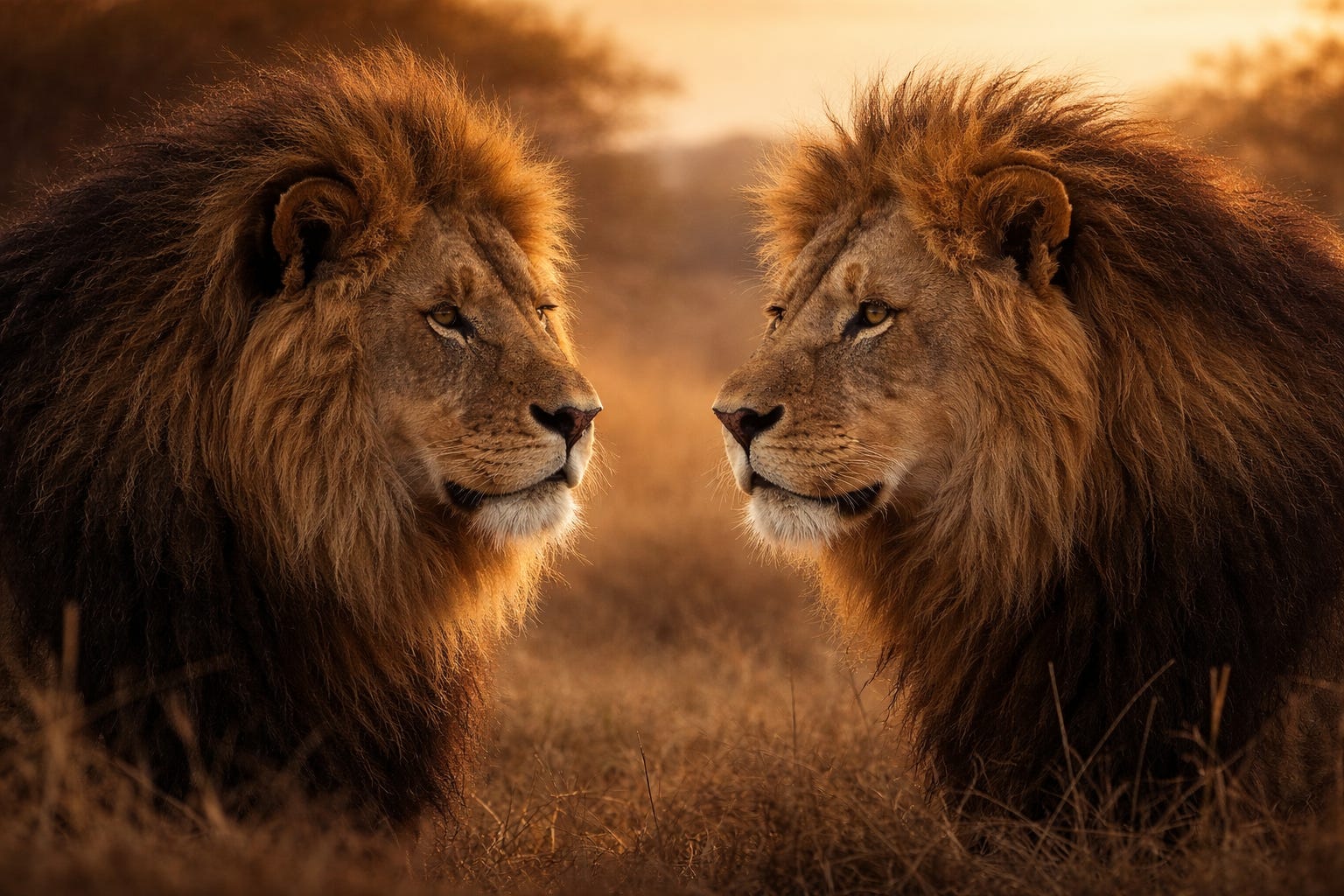
Battle of the Lions
My head says Morocco 1 – Senegal 0.
Host nation. Home advantage.
The kind of final decided by one moment, one mistake, one refereeing call that lives forever in WhatsApp voice notes.
The kind of match where history leans quietly toward the team playing at home, under familiar lights, on familiar ground.
MAROC 1 NIL
Chaos. Emotion. Tumeibiwa (they have stolen us)
But my heart says Senegal 2 – Morocco 1.
Tears of joy. Erasing memories of 2019.
A proper African night.
Drums. Flags. Teranga.
And maybe — just maybe — a fitting send-off for a man who has carried Senegal for more than a decade.
Is this Sadio Mané’s last dance at AFCON?
Sometimes football doesn’t ask us to analyse.
It asks us to feel.
And that tension — between logic and longing — is where this story begins.
Same Forest. Different Lions. (non-sports fans, stay with me)
As we go to press, I am also warming up.
Getting ready to join the boys at the local.
This final is bigger than football.
On one side, the Atlas Lions — named after the great Barbary lion that once ruled North Africa.
A symbol of power, endurance, royalty, and home advantage.
A lion shaped by mountains, history, and homeland.
On the other, the Lions of Teranga.
The lion — strength, courage, leadership.
Teranga — a Wolof word meaning hospitality, welcome, generosity, and respect.
Not politeness.
A code.
Together, Lions of Teranga describes a rare balance:
Fierce when required. Warm by default. Strong without cruelty.
Proud without arrogance.
Hospitality versus homeland. Warmth versus walls.
Teranga versus Atlas.
Same forest.
Different lions.
And as always, one quiet question hangs in the air:
Who benefits?
FIFA Weds TikTok — and Power Moves Quietly (Harusi tunayo?)

My people from the coast would ask, Harusi tunayo? (is there a wedding)
And while Africa debates head versus heart, something much quieter — and far more consequential — has already happened.
In January 2026, FIFA did not shout.
They did not posture.
They simply decided.
They named TikTok their first-ever Preferred Platform for the 2026 World Cup.
FIFA sometimes behaves like an African grandfather…
This was not a sponsorship.
It was a distribution decision.
FIFA understood something many institutions still resist:
If people don’t see you, you don’t exist.
Out of sight, out of mind, literally,
The nuptials unlocked:
A dedicated World Cup 2026 TikTok hub
Behind-the-scenes access for creators
Controlled use of archival footage
Monetisation pathways for broadcasters
Anti-piracy protection for FIFA’s intellectual property
This was not a fling.
It was controlled openness.
Open enough to grow reach.
Controlled enough to protect value.
The Business Math (This Is the Part That Makes Theorists go Ouch)
TikTok shared a statistic that should end several boardroom debates:
Fans who consume sports content on TikTok are 42% more likely to tune into live matches.
That is not branding.
That is conversion.
The old model:
Big broadcast deals
One-way messaging
Passive audiences
The new model:
Daily micro-content
Algorithmic discovery
Creator amplification
Multiple entry points into fandom
TikTok does not replace live sport.
It feeds it.
And FIFA — old, powerful, slow-moving “guka” (grandpa) FIFA
Saw it before many younger, louder organisations.
Same forest.
Different Platform.
Do Mothers Come Back Stronger After Childbirth? A Man’s View, With Data
Let me say this clearly. I write this as a pre-middle aged man.
Not a scientist. Not a feminism apologist. Not a motivational speaker.
Just a dude who has watched sport, leadership, and life long enough to recognise when we reduce complex truths into comfortable lies.
There is a statement that still makes rooms uncomfortable:
Some women come back stronger after childbirth.
People recoil quickly. It sounds romantic. It sounds dangerous.
It sounds like pressure. So let’s slow down.
And be honest.
Not all women come back stronger.
Not automatically. Not instantly. Not without support.
But the data refuses to go away.
The Statistic That Won’t Leave the Room
Across multiple longitudinal studies tracking elite female athletes — runners, footballers, rugby players, sprinters — researchers are seeing a consistent pattern:
Approximately 56% of elite female athletes who return after childbirth match or exceed their pre-pregnancy performance levels within two to three years, when recovery, support, and training environments are properly managed. That number unsettles people because it challenges something many of us grew up believing.
That childbirth only weakens.
The Women Who Force the Conversation
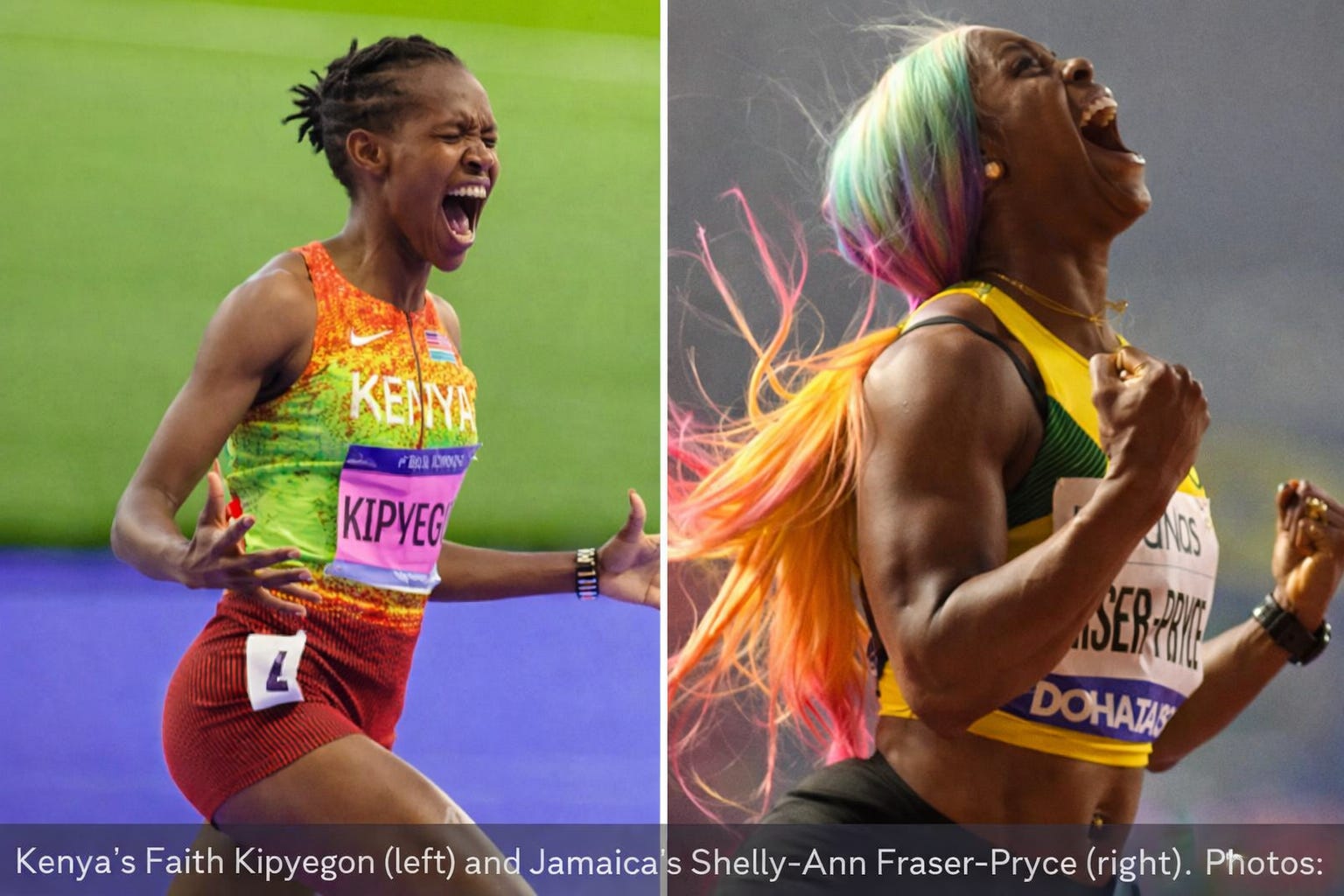
Faith Kipyegon did not return quietly after giving birth. She returned to dominate. Olympic gold. World titles. World records. Not sentiment.
Not inspiration posters.
Performance.
After becoming a mother, Shelly-Ann Fraser-Pryce produced one of the greatest late-career runs in sprinting history. In 2019, she won her fourth 100m world title in Doha in a world-leading 10.71 seconds, becoming the first mother in 24 years to claim a global 100m crown.
At the 2022 World Championships in Eugene, aged 35, she won her fifth 100m world title in a championship-record 10.67 seconds, becoming the oldest sprint world champion in history, and added silver medals in the 200m and 4x100m relay. She continued her podium streak at the 2023 World Championships in Budapest with bronze in the 100m and silver in the relay, before being named Laureus World Sports Award Sportswoman of the Year in recognition of her extraordinary post-childbirth dominance.
And Venus Williams?
Her post-partum return was defined by scrutiny.
More testing. More suspicion. More discomfort.
Not because she failed tests — but because she refused to disappear politely.
Reached four Grand Slam finals,Won one singles title.
With her 2020 title win, she became the first woman to win singles titles across four different decades.
Power structures become uneasy when women don’t shrink on schedule.
What Actually Changes (No Poetry Here)
The science is not mystical.
For some women, pregnancy and childbirth:
Force smarter, more efficient training
Improve body awareness
Strengthen mental resilience
Reset priorities
In plain language:
Motherhood does not create strength.
It reveals it — if the environment allows.
And that last part matters.
Because when women return unsupported, underpaid, rushed, or politely sidelined, performance drops.
Not because of biology.
Because of neglect.
Same forest.
Different outcomes.
The Lionesses — Seduction Before Support
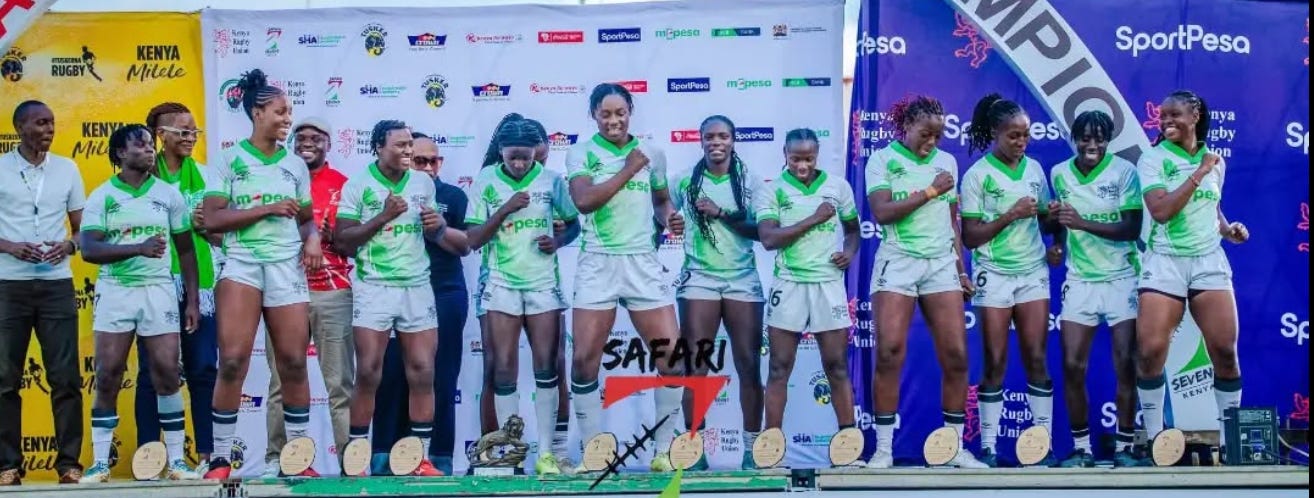
If you were wondering where this was going, have you heard about
The Kenya Lionesses?
They are our ladies Rugby Team.
The best of the best in Kenya.
They are building toward something.
Something fast. Something physical.
Something Kenyan audiences have not fully experienced yet
Women’s sport does not need guilt.
It needs curiosity.
The sense that if you show up, you might witness something unexpected.
That is the seduction.
Not obligation.
Not stories.
Promise.
Where Belief Becomes Action
If you believe women deserve support before, after and while facing challenges,
Do not applaud
Do not like or share,
Come and watch. (Bring your pals, your mbogi, Sponsor some GenZs)
The Kenya Lionesses are building toward a show worth seeing.
Not because it is the right thing to do.
But because you might witness something you didn’t expect.
Kenyans do not change.
Only their position in the forest does.
Same forest.
Different Fanatics.
#KenyaCornerIsHome 🇰🇪
I am with Senegal!!!