
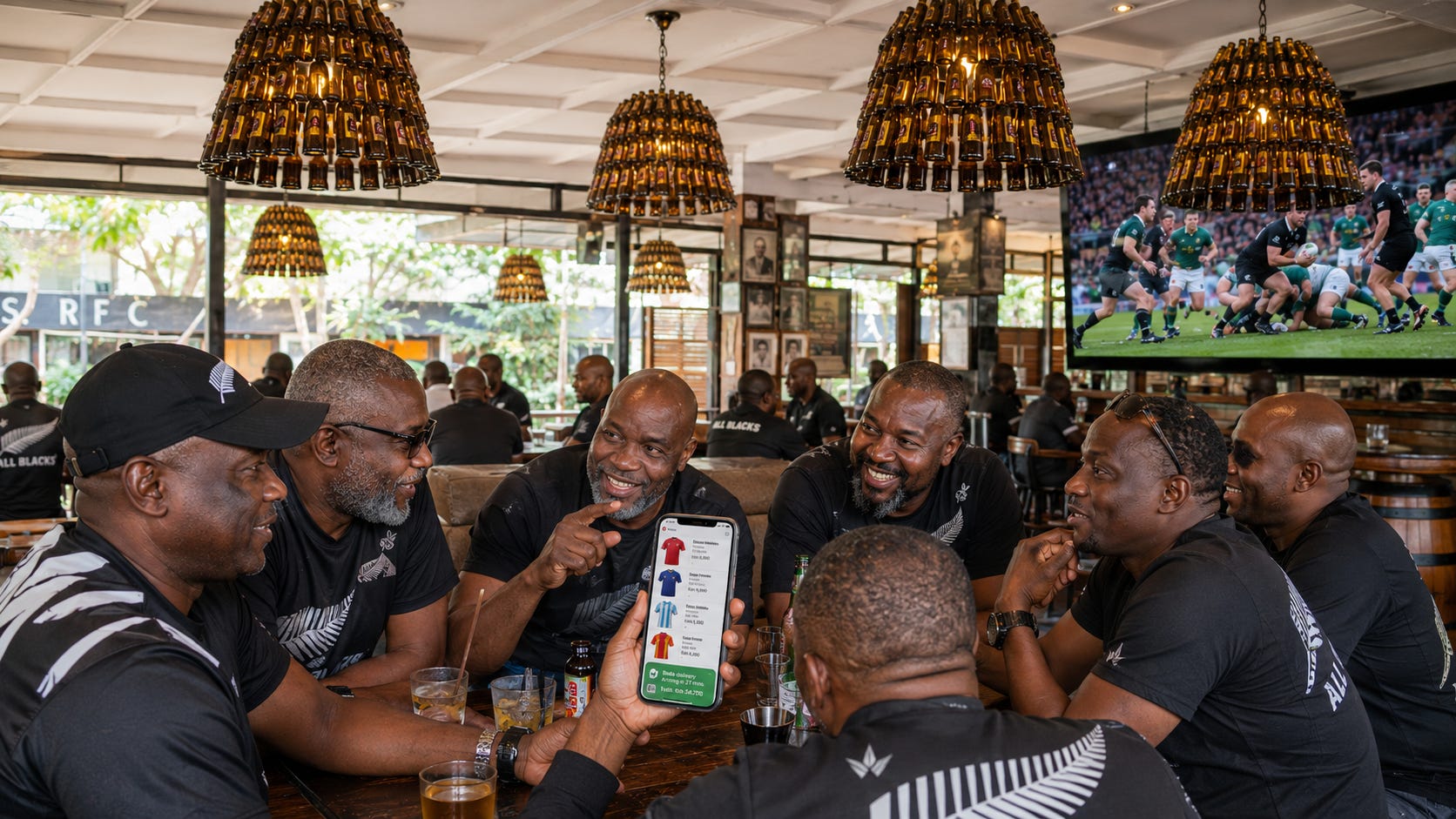
Yesterday morning I was summoned to Olang’s — Bell’s, for the formal record,
by the Luo Ruoth, Wuod Japuonj Benjamin Winston.
Officially he’s the spiritual leader of a WhatsApp group of All Blacks supporters in Africa, closed group,
vetted like State House.
But leadership and analysis begins on a bench with a White Chap and a dash of Glenmorangie, so that’s where we were.
All Blacks games sit thankfully far from the soccer madness.
This baraza, though, got crashed by fathers whose children are deep in World Cup fever — same complaint every Nairobi parent has been muttering since June:
football shirts.
One child wanted Ronaldo. Portugal went home.
Another wanted Mbappé. France followed.
This week: Yamal, Messi and Lautaro Martínez, all moved into the house together.
The children found new heroes.
Their parents found another invoice.
Thankfully the final lands in a few hours, because several households had already promised the next shirt for Christmas and EPL is yet to begin….ole wenu
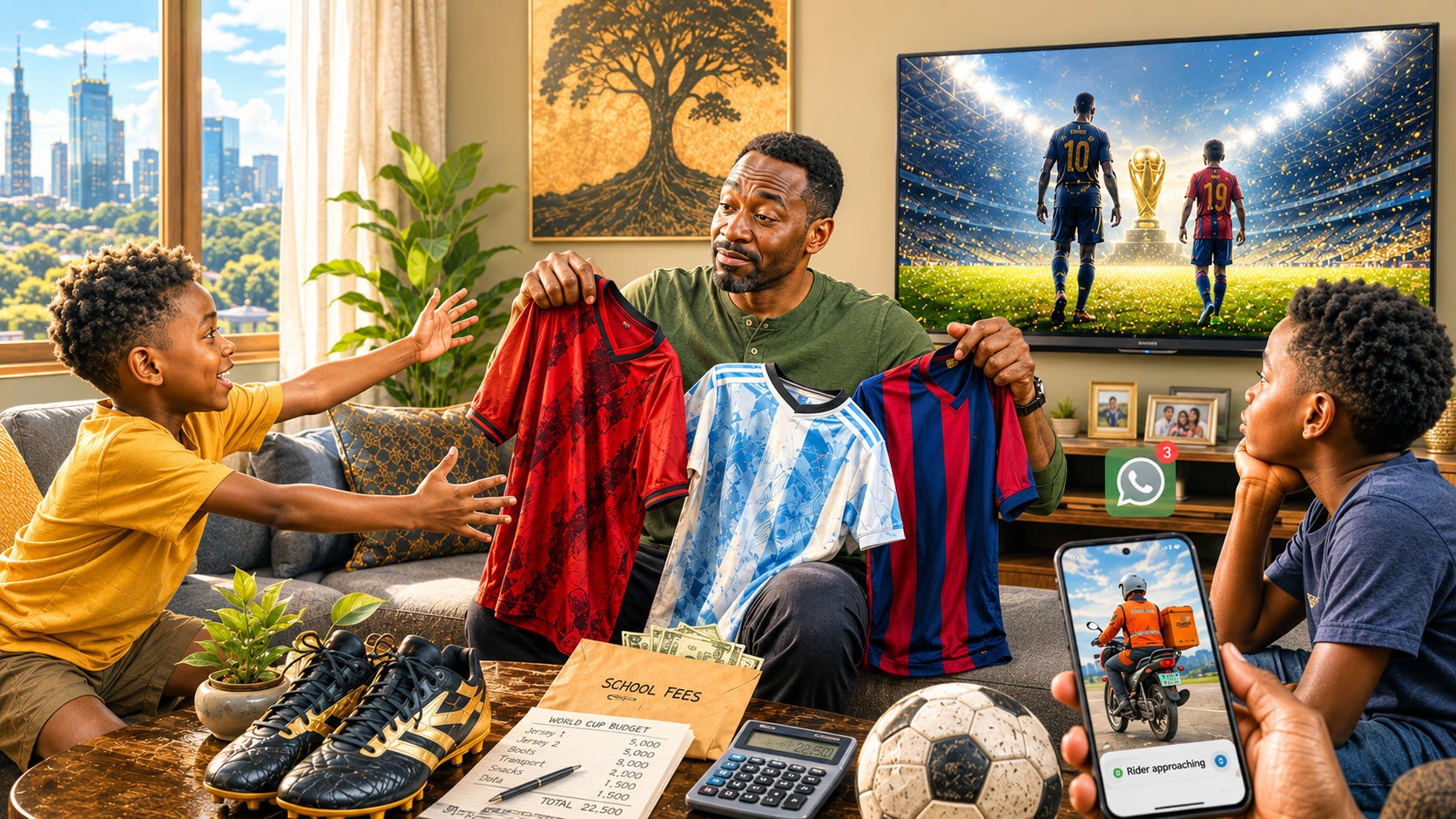
What the children want and what the parents buy are rarely the same product.
FIFA’s store prices Argentina’s 2026 replica at US$100;
Adidas lists the player-spec version at US$150.
At the Central Bank’s July 17 rate of KSh129.30 to the dollar, that’s roughly KSh12,930 for the replica and KSh19,395 for the authentic — before shipping, tax, or a name on the back
(Waliaula would set you back another 100 bucks choose wisely….consider using Wally)
Then there’s the Nairobi transfer market. Local sellers advertise “official World Cup jerseys” for KSh1,600 to KSh1,800.
The word official is doing heavy work at that price. The shirt looks correct on TikTok, arrives by boda, satisfies a child by lunchtime — but it’s not the same commercial product as the licensed one.
One purchase funds FIFA’s merchandise machine.
The other saves a Kenyan parent from converting school fees into polyester.
KSh1,600 versus almost KSh20,000. That gap is not a footnote.
It’s the whole business story.
Children buy identity. Parents buy affordability.
Brands sell belonging.
The mtaa trader sells speed.
Same shirt, different markets — and FIFA 2026 the PS game is already loaded, waiting for the console invoice to put the final nail on your credit rating’s coffin.
Same Forest, Different 19s
I grew up in the breakdance age — call it the donjo maber dance of the 80s.
What passes for those moves today doesn’t cut it, si noma kama kitambo. (RIP Paul “Cracker” Munyao — you popped and locked for all of us).
One of the anthems of that era was a song called 19, by Paul Hardcastle.
Stuttering, sampled, unforgettable:
the average age of a soldier in the Vietnam War (1975)
was nineteen.
19…19…19.
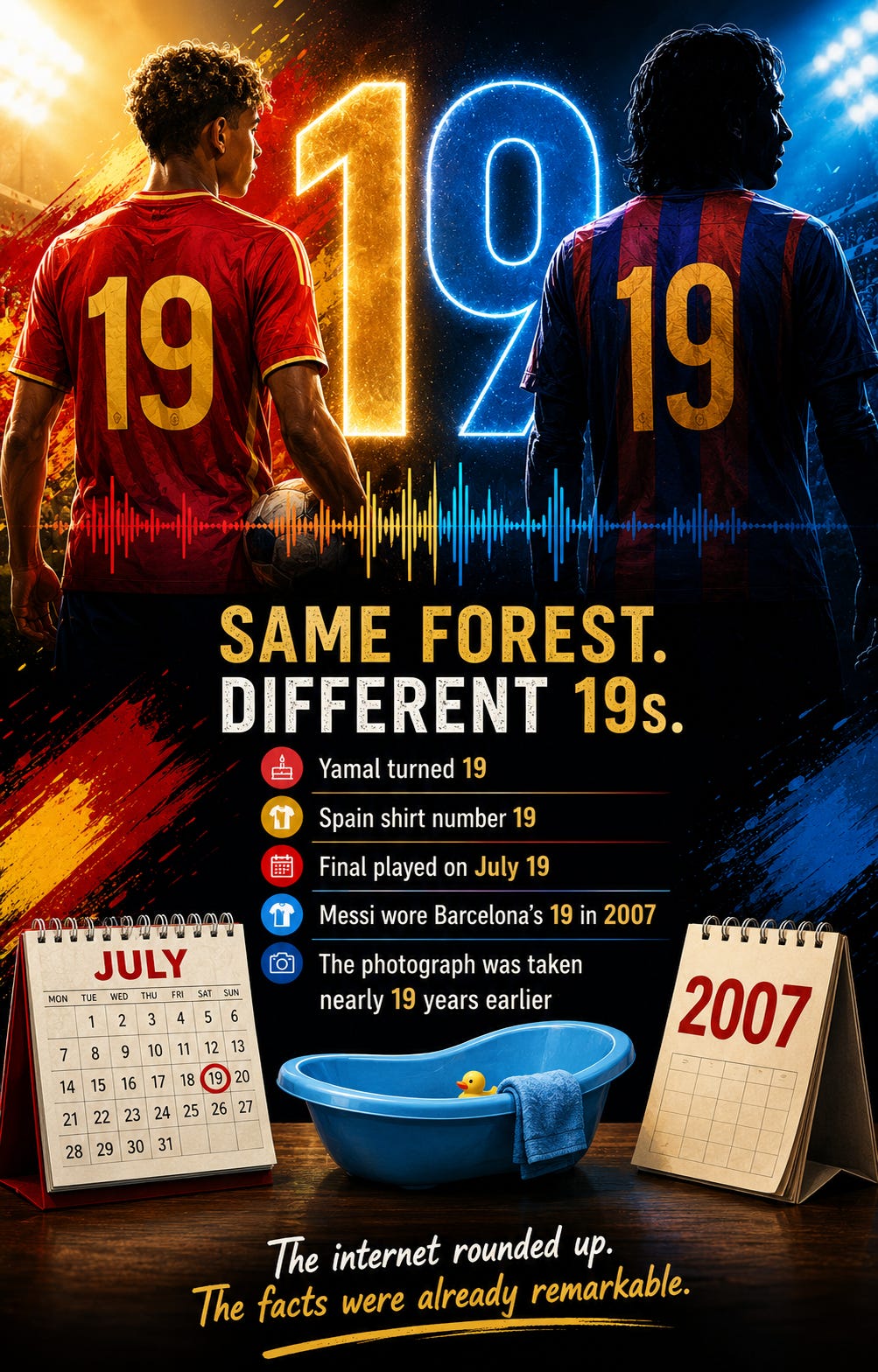
Then somebody sent me the meme. Lamine Yamal is nineteen. He wears number nineteen for Spain. The final is being played on July 19. He faces Lionel Messi almost nineteen years after Messi helped bathe him during a charity photoshoot — while wearing Barcelona’s number nineteen, the meme insists.
By the time my AI assistant finished arranging its numbers,
the Witchdoctors, jujumen and Spanish curanderos stood up and applauded my AI prompt.
Most of it checks out, with kidogo firi firi…...
Yamal was born July 13, 2007, turning nineteen six days before the final. Spain registered him in the nineteen shirt. Messi wore Barcelona’s nineteen between 2006 and 2008. But the photographs were taken in September 2007 — meaning the final lands about ten weeks short of exactly nineteen years later.
The internet rounded up.
But why spoil a good story with facts.
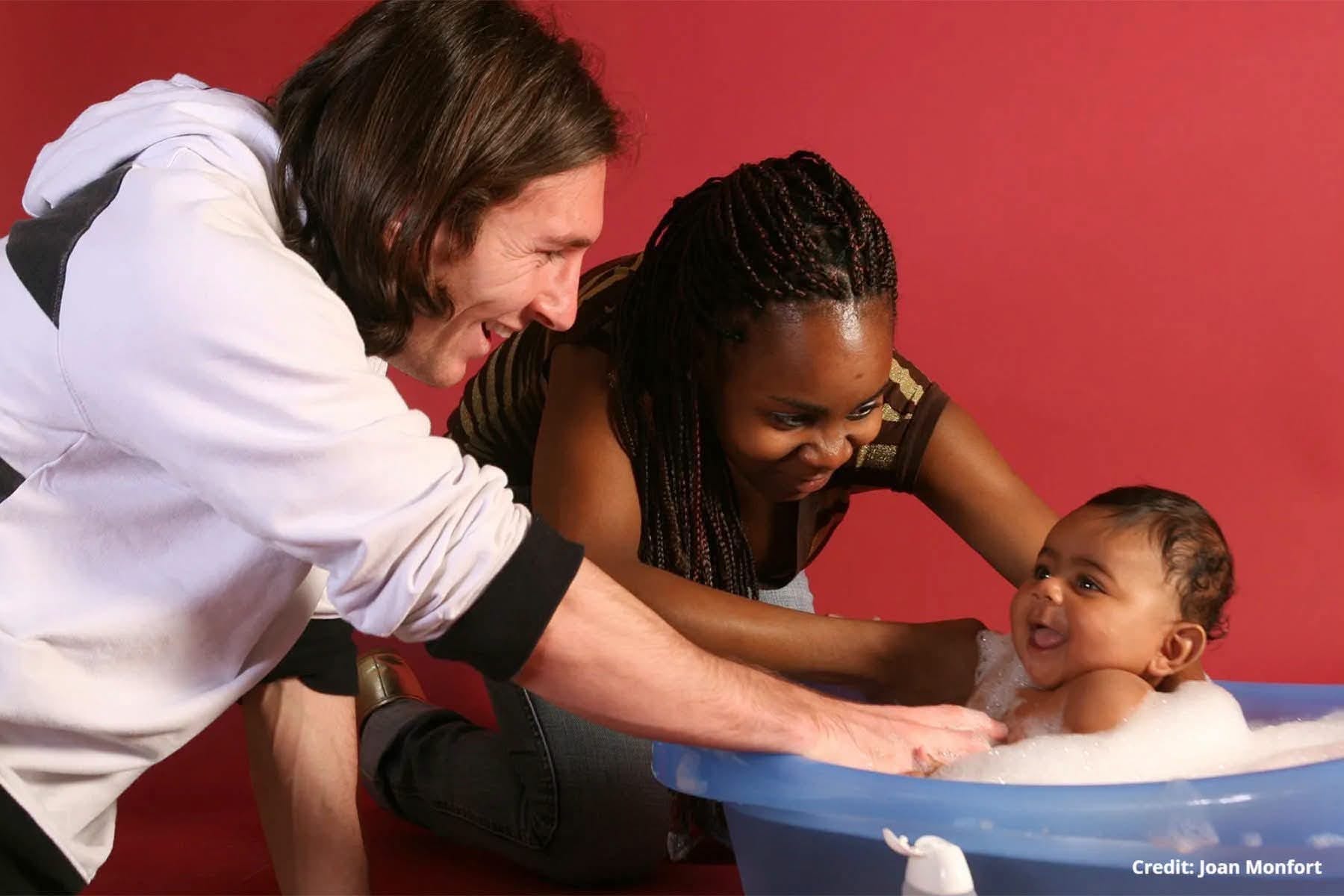
The photos themselves weren’t staged years later or AI-generated.
Photographer Joan Monfort took them at Camp Nou for a charity calendar with Barcelona, UNICEF and the Catalan paper Sport. Messi was twenty; Yamal was about six months old, his family picked through a raffle.
Monfort later said Messi was shy and unsure what to do with the baby.
Nobody photographed a prophecy. They photographed a community programme. Messi didn’t pass greatness to Yamal through bathwater — the calendar simply connected a club, a charity, a newspaper and a family. Nearly nineteen years later, the baby in the plastic basin walked into a World Cup final still carrying his community:
Rocafonda,
the working-class Mataró neighbourhood whose postcode ends 304 — the number Yamal forms with his fingers after every goal.
The meme travelled because the nineteens were irresistible.
The facts are worth keeping because before Yamal became a KSh1,600 shirt on a Nairobi rider’s back and a $150 shirt in an Adidas store, he was a six-month-old baby chosen in a raffle.
Kismat, as they say in the mtaa.
Three Goals, One Long-Awaited Cheque
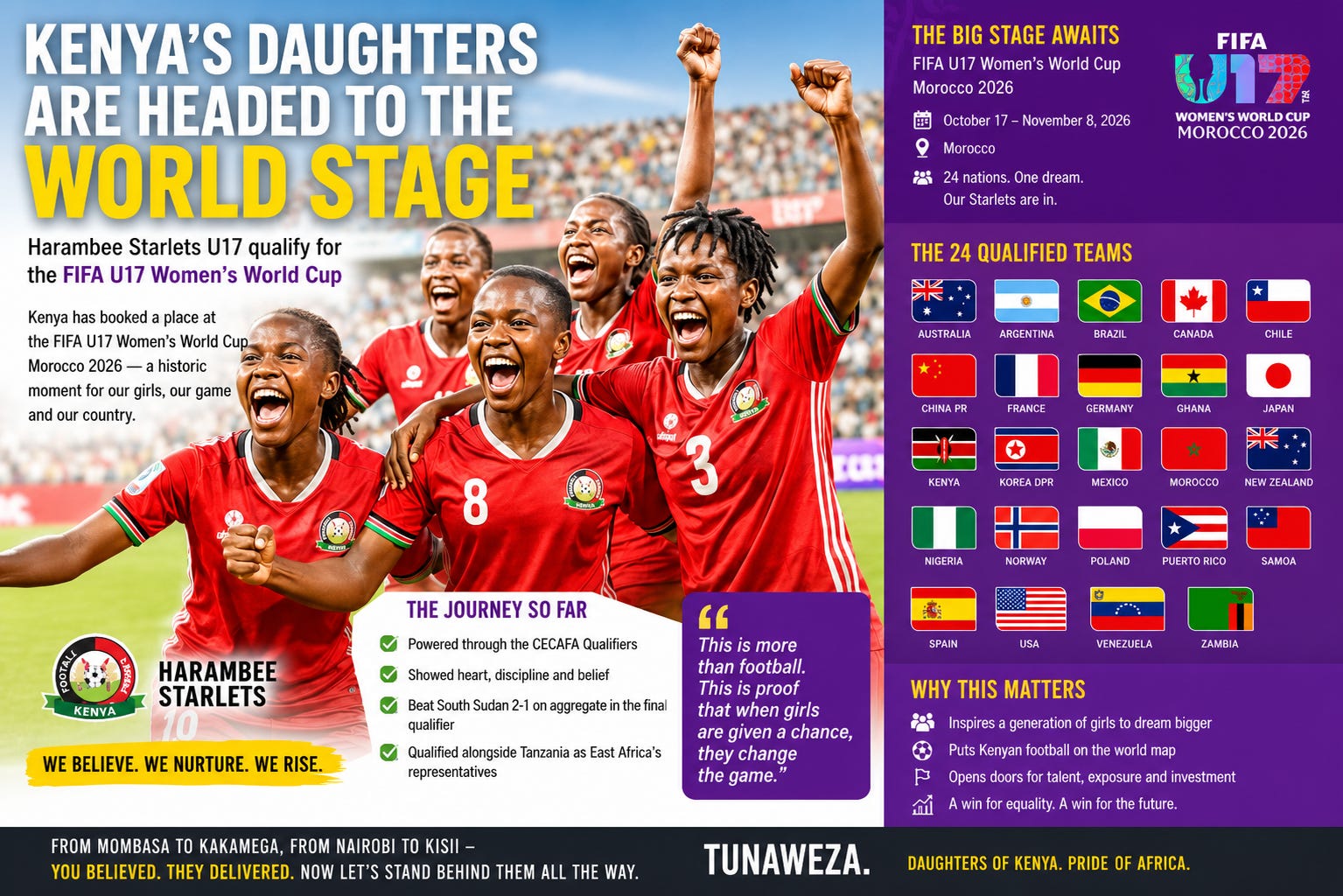
On July 12, Kenya’s Junior Starlets walked into a packed Nyayo carrying a 2–0 lead over South Africa, then conceded first.
In another era of Kenyan football that’s the moment everyone starts calculating disaster.
Instead Gaudancia Maloba, Brenda Awuor and Elizabeth Alizeba scored, and Kenya won 3–1 on the day, 5–1 on aggregate — qualifying for the 2026 FIFA Under-17 Women’s World Cup in Morocco.
It’s coach Mildred Cheche’s second straight World Cup with this age group; the first, in 2024, made the Junior Starlets the first Kenyan football team of either sex to reach a FIFA World Cup, and they beat Mexico 2–1 while they were at it.
Those aren’t motivational quotes. Those are results.
President Ruto hosted both the Junior Starlets and the senior Harambee Starlets at State House on July 14, pledging KSh20 million between the two teams as they departed for Morocco and WAFCON. It took a day or two of nervous back-and-forth for the cash to clear, and the players made their feelings known before boarding. By the time both squads left camp, the money had landed and the mood had lifted.
A smoother handover would have saved everyone the drama.
Behind that sits a narrower story: an FKF list from February counted 49 Kenyan CAF A-licensed coaches, only two of them women — Beldine Odemba and Jackline Juma, who also became the first woman to coach a Kenyan Premier League men’s club. Cheche runs the Under-17s.
Three women are carrying much of the pathway from teenage football to the senior side, and Odemba has been candid that many promises have been broken along the way. But they still fought.
Hapo ndio inauma. (thats whats painful)
Kenya applauds girls for making history while the system around them still needs Presidential intervention to pay on time.
A replica shirt reaches Nairobi in an hour for KSh1,600.
Building — and paying — the people capable of filling it takes longer.
The System Behind the Shirt
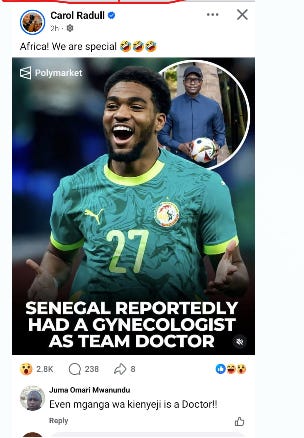
Senegal exited the World Cup 3–2 to Belgium after leading 2–0 with five minutes left.
The federation fired the coach, and its president blamed the medical support — the team doctor, he said, was “just” a gynaecologist.
The joke wrote itself.
Then the Senegalese Association of Sports Medicine corrected the record: the doctor also holds a sports-medicine specialisation, had headed physiotherapy at Fann Hospital, and had served Senegal since 2017 across three World Cups.
Same doctor, different anatomy.
The real question was never his CV — it’s why a federation president claims to “discover” it after a decade of employing the man.
Boardroom failure wearing football boots.
That failure sits inside a bigger forest. WHO’s 2026 report counts about 24 health workers per 10,000 Africans — roughly a third of the threshold for basic universal coverage — while an estimated 27% of trained health workers on the continent, about 1.4 million people, sit unemployed or underemployed.
In Kenya that figure is 14%, even as a 2023 survey found nearly 65% of health workers intend to migrate, and roughly 4,000 Kenyan doctors and nurses leave every year. Kuwa serious: that’s not a shortage.
That’s expensive abundance trapped inside administrative poverty.
The People Behind the Shirt
Tomorrow, Same Forest. Different Monkeys. completes fifty-two weeks of posts.
Facebook has behaved like a current account — attention arrives, circulates, sometimes vanishes by evening.
WhatsApp moves the story through trusted groups.
LinkedIn gives it the quieter boardroom reader.
Substack is the capital account, where a year of stories and over 700 subscribers now sit together, starting to speak their own language:
El Tigre, The Spreadsheet Problem, Three Feathers, Fixture ni Fixture.
A new reader sees separate articles.
Someone who’s stayed starts to see the streets connecting.
That’s how a community forms.
(Full Annual report next week)
A customer buys the KSh1,600 shirt because Yamal plays tonight.
A supporter remembers it nineteen years later.
A country applauds three goals at Nyayo.
A system decides whether the coaches and players stay supported after the stadium empties.
Attention finds the hero.
Community carries the human being.
So notice who’s doing the carrying in your forest. Pay them properly, and on time. Verify qualifications before the crisis.
Reward the coach before the World Cup.
Support the parent before the child becomes famous.
And if this forest has given you a useful story this year, bring one more person to the next conversation.
On this week’s jam, Paul Hardcastle reminds us that sometimes our hopes and dreams are carried by someone who’s 19…….
Same Forest. Different Monkeys.
¡Che! ¡Hasta la victoria siempre, España! ¡Que viva la Furia Roja!
Mubarikiwe. Jah Bless. Go with song.