
Lets start with truth.
Not opinion, not theory, not comfort—facts.
The numbers are not subtle, and they are not hiding.
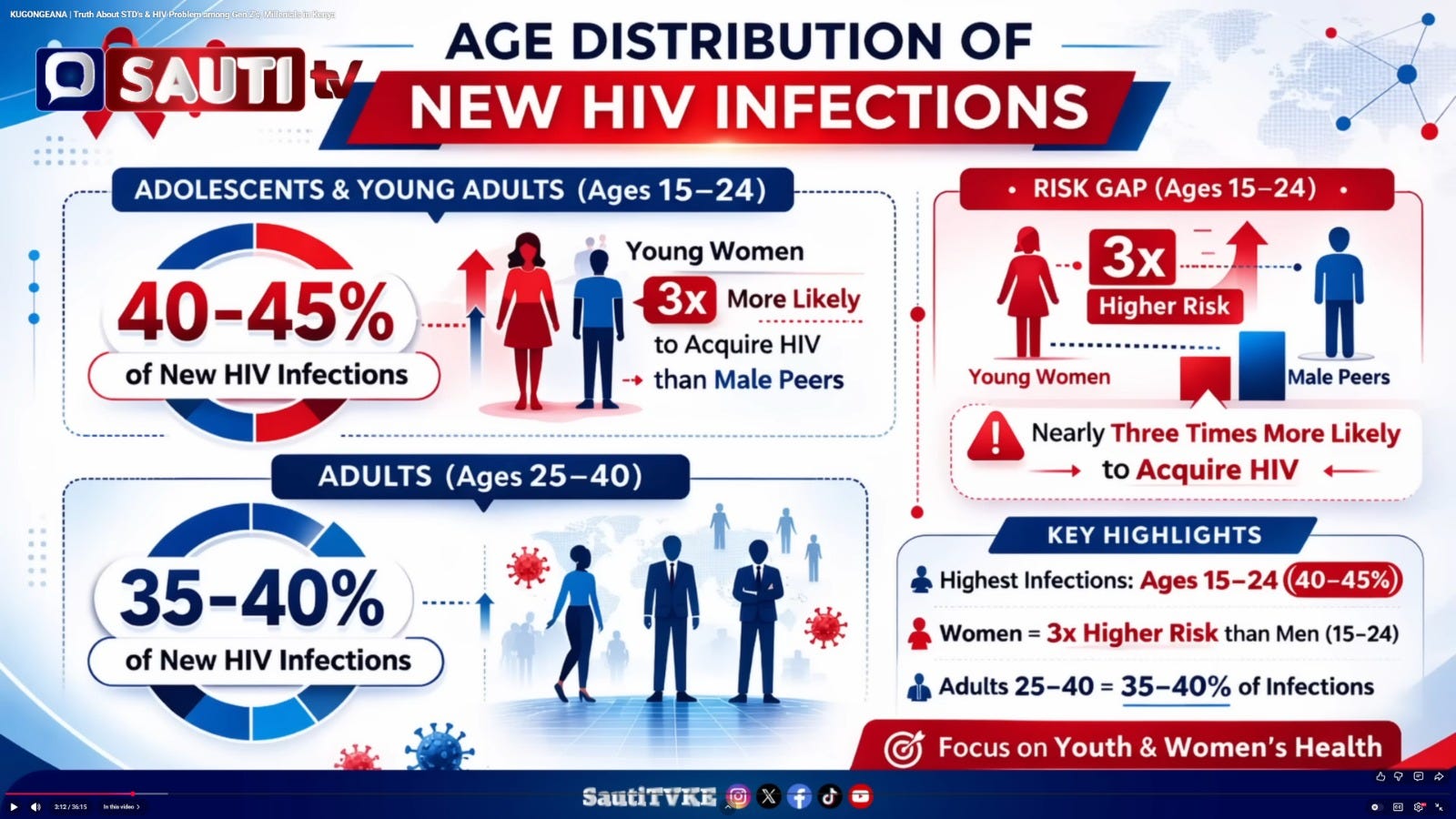
In Kenya today, adolescents and young adults aged 15–24 account for roughly 40–45% of new HIV infections.
Within that same bracket, young women are nearly three times more likely to acquire HIV than their male peers.
Move slightly older into the 25–40 age group and you are still looking at another 35–40% of new infections.
That is not a fringe. That is the core. The working population.
The dating population. The decision-making population.
This is not somewhere else.
This is here.
And once you see that, something changes permanently. You lose the ability to say you didn’t know.
The conversation moves from ignorance to awareness, and then quietly into responsibility.
Because the uncomfortable truth is not that people suddenly changed.
It is that systems lagged.
Same country. Same streets. Same exposure.
Different awareness. Different outcome.

But the story does not end with risk. It turns with access.
Because for the first time in a long time, the individual is not empty-handed.
PrEP exists—daily medication taken before exposure, reducing the risk of HIV from sex by up to 99% when used consistently.
PEP exists—emergency medication taken after exposure, but only within a strict 72-hour window, followed by a 28-day course.
Same science, but timing becomes everything.
One is preparation. The other is reaction.
Between the two sits a decision that cannot be outsourced.
Access is no longer theoretical. Kenya now has over 900 public and private facilities offering these services. A month of PrEP costs roughly KSh 1400–2500 in private settings, with delivery fees around KSh 149. PEP ranges between KSh 900-1500.
The system is no longer locked.
It is searchable. Reachable. Immediate.
You can literally Google it and find a pathway within minutes.
So the equation has changed. Access exists. Affordability exists. Distribution exists. Which leaves one thing—decision.
Because after 72 hours, the window closes.
Completely.
Now bring it back home.
Because nowhere is “same system, different outcome” clearer than in the donkey story.
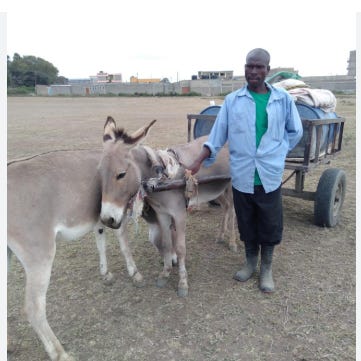
Kenya is currently the extraction point in a global supply chain. From a population of 1.8 million donkeys in 2009, the number has dropped to less than 500,000 today. That is not decline. That is liquidation. Between 2016 and 2019, four licensed slaughterhouses wiped out roughly 15% of the national herd supplying an external market. When the ban came in 2020, and later the African Union imposed a 15-year ban, the trade did not stop. It moved underground. Theft. Night raids. Bush slaughterhouses. Smuggling routes.
And this is where the story turns.
Because in Kenya, a donkey is not livestock. It is infrastructure. Water. Transport. Livelihood.
When one donkey disappears, a household can lose up to 73% of its income. Now layer the biology.
A gestation period of 11 to 14 months. One foal every two to three years.
Slow reproduction. Fast slaughter.
Same donkey.
China sees supply for a luxury wellness product. Australia sees a pest problem with overpopulation. Kenya loses a lifeline.
Same world. Different outcome.
Now add time.

Alessandro Nesta, World Cup winner in 2006, was asked about his son. His son has never seen Italy play in a World Cup. Not once.
That single sentence collapses two decades of history. Legacy does not transfer automatically.
Yesterday’s success does not guarantee today’s presence.
Same country. Same badge.
Same history. Different outcome.
Then something shifts. From individual to collective.
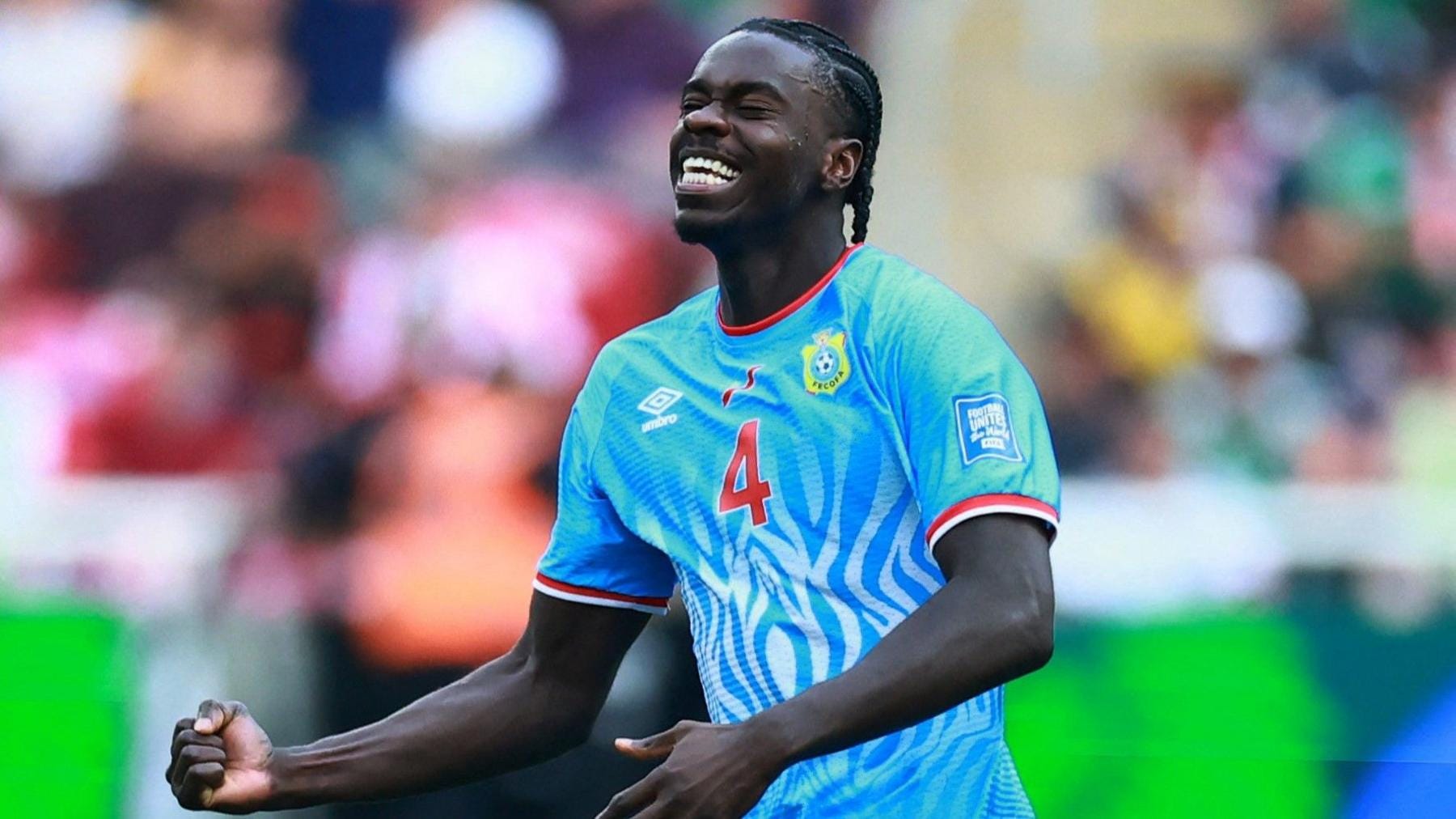
Fifty-two years. That is how long the Democratic Republic of Congo waited to return to the World Cup.
The last time they played, the country was called Zaire.
Entire generations have lived without seeing it.
On April 1, 2026, in the 100th minute, the goal came.
But the real story was not the goal.
It was the streets. The release. The sound of something returning.
“Toleki. Biso nyonso.” (We are going. All of us.)
That is not qualification. That is resurrection.
But emotion alone does not build systems.

That’s where people like Sitoyo Lopokoyit come in.
Not as celebrities. But as builders. System thinkers.
People who understand that transformation does not happen through motivation.
It happens through structure. Through systems that outlive individuals.
Through platforms that allow others to move, grow, and build.
(Don’t ask my headmaster.)
Sitoyo’s old headmaster called him “an average student who works hard.”
Turns out… that’s more than enough.

Because the real story is not the scale you see today.
It is what came before it.
Approximately KSh 50 billion in failed transactions.
That is where it started. Most people would panic.
Blame users. Blame behaviour. Blame the system.
Then move on.
He didn’t. He studied it.
Failure became data. Data became product.
M-Shwari. Fuliza.
And the rest, as they say, is the message that lands quietly on your phone:
“Dear Fundi, Did you know you qualify for a KSh XXXXXX limit. on Fuliza”
That is not luck. That is design.
That is the difference between noise and impact.
Noise talks. Systems sustain.
And that is where the final layer lands.
Same system. Same country. Same exposure.
Different outcomes.
In sport, the greats don’t just endure.
They move.
Cristiano Ronaldo left Manchester United at his peak and stepped into Real Madrid — a different system, a different expectation, a different scale.
The result?
Goals multiplied. Records followed. Champions League nights became routine.
LeBron James did the same.
Cleveland to Miami. Miami back to Cleveland. Then Los Angeles.
Same league. Same rules.
Different outcomes.
Not because the game changed.
Because the environment did. Because the decision did.
LeBron moved teams and changed outcomes.
Sitoyo redesigned systems and changed access.
DRC returned and changed belief.
So the system is no longer the question.
You are.
Because resurrection is not an event. It is a decision.
Every sinner has a future.
But only if they are willing to build it.
Same Forest Different Monkeys.
If this one hit home, don’t keep it to yourself. Pull up a seat. Bring your people.
Tag the one guy still blaming the system.
Forward it to that partner who knows… but hasn’t moved.
And if you’ve got your own version of this story (and want to see where it goes)
Add your two lines.
Get three comments. We’ll build the rest together.
Because the forest is not short of monkeys. Just short of those willing to move.
Same Forest. Different Monkeys.
Till the next episode
Mubarikiwe, Jah Bless
Go with praise
Well written once again. Super!
May we all be the monkey that sees the forest of opportunity instead of a circus in which we are one of the clowns...