
The Orange Light
There is a meme doing the rounds: a glowing orange fuel light on a dashboard. The caption reads: “This little light of mine. I’m gonna let it shine.”
Funny. Until it isn’t.
That light isn’t celebrating; it’s warning you that your tank is empty. If you don’t stop to refuel from something real, you will sputter and stop somewhere inconvenient, pretending you meant to pull over. This week, major stories in sport and business asked the same question: when things stop working, do you reinvent? Or do you remember?
Not reinvent.
Not rebrand.
Not another post filled with words like pivot, disruption, and ecosystem.
Refuel.
Go back to your roots, your depth, and the things that worked before the world convinced you they were outdated

Do You Remember?
You can walk into almost any party gathering—a wedding in Nairobi,
a nyama choma joint on Friday night, an old school reunion where someone has had two shots more than wisdom recommends.
Or just go to 213 Lavington. Ask For NiJo.
When those first notes drop, something strange happens.
The young, the old, the cool,
and even the people with bad knees suddenly remember the choreography. For four minutes, human beings agree on something. No one is arguing about politics, fuel prices, or MMF returns. Everyone is just there, in the same forest.
That song is September.
Maurice White understood something modern creators still struggle to learn:
people rarely remember perfection;
they remember feeling.
His lyricist, Allee Willis, once begged him to remove the famous “ba-dee-ya” line, (the hook sung on September) asking what the f*** does it mean.
Maurice White replied: “Who f****** cares?”
But there was a deeper reveal.
Questlove recently shared that the “21st night of September” was connected to the expected birth date of Maurice White’s son—a secret love letter hidden inside a joyful anthem.
When his wife Marilyn finally heard the meaning years later, she said,
“My whole body smiled.”
Suddenly, the groove becomes something else entirely. Not just disco or nostalgia, but memory. The real genius of Maurice White was where he went looking for it.
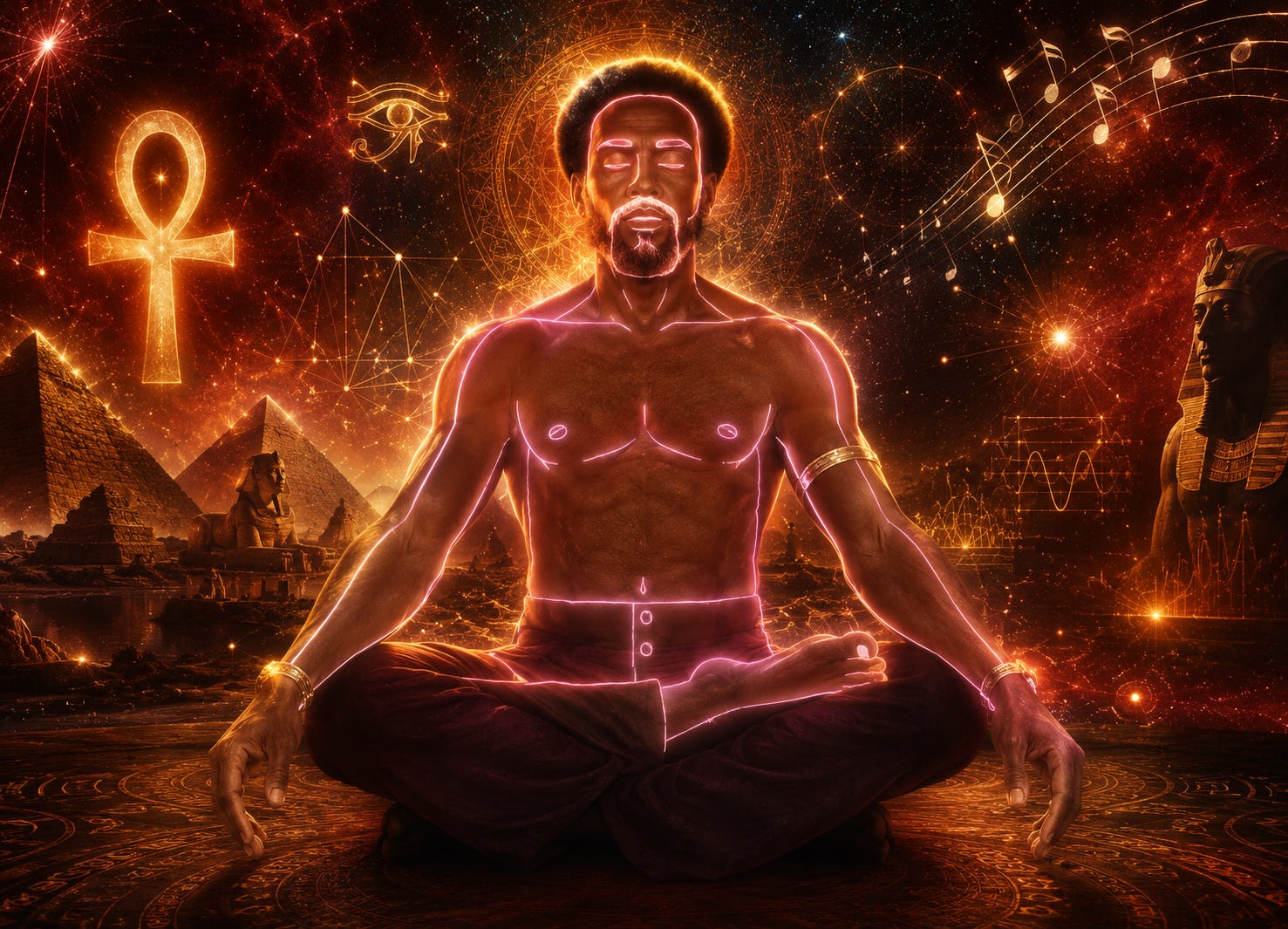
He went back to Kemet—ancient Egypt. He put the Ankh and the Eye of Horus on album sleeves. He took the kalimba—a thumb piano from Zimbabwe—and turned it into a sound that conquered American radio. He went backward thousands of years to sound timeless.
That is not nostalgia. That is architecture.
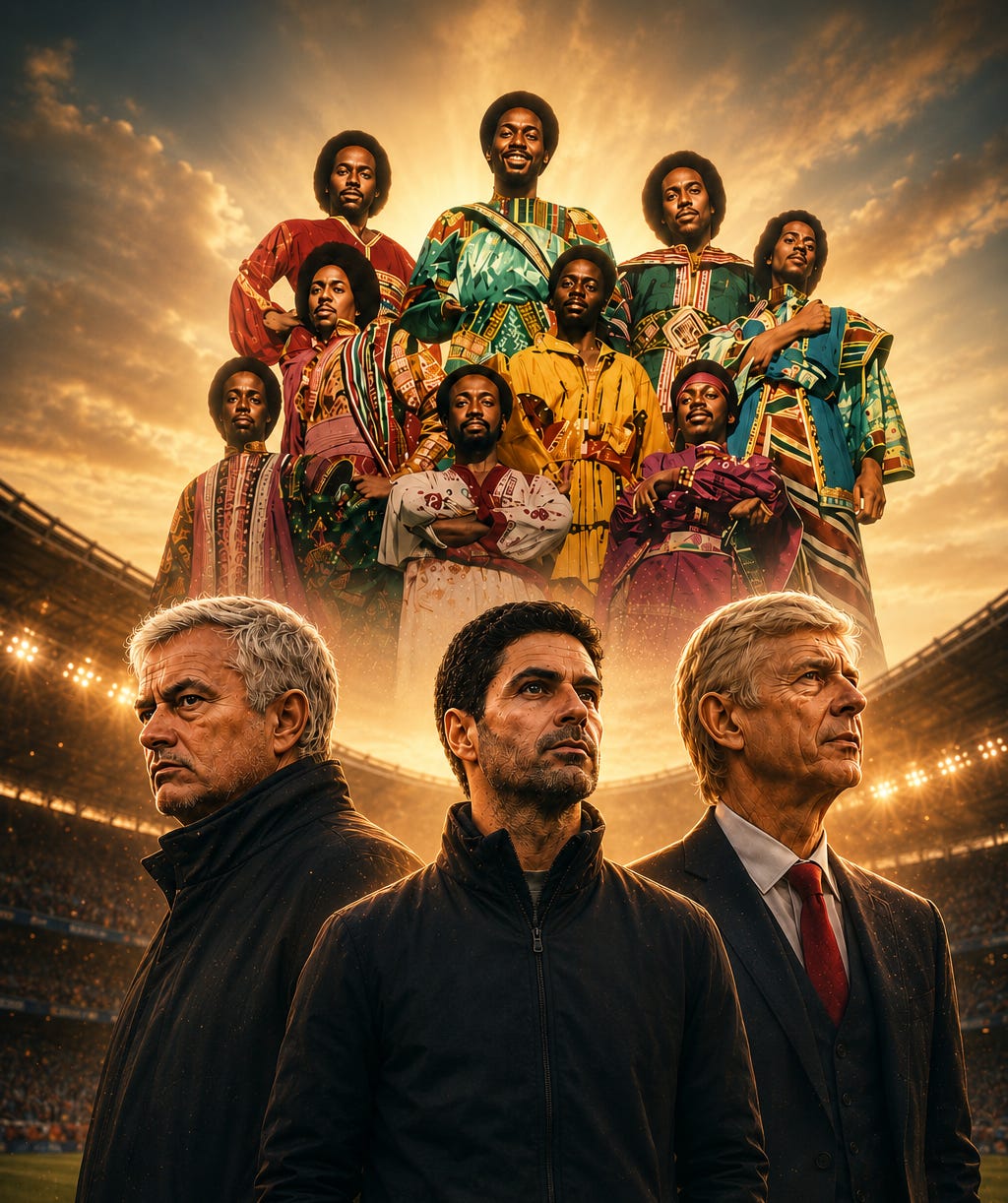
The Special One, The Professor & The Apprentice
Florentino Pérez did not call José Mourinho because he ran out of options;
he called him because he ran out of excuses.
After two seasons without a major trophy and a fractured dressing room full of expensive players behaving like HR problems with shin guards,
Real Madrid looked past the fresh tactical geniuses.
They picked the 61-year-old who already knows where the walls crack.
Sometimes you don’t need somebody new; you need somebody who knows where to tap.
Across London, Arsenal just won their first league title in twenty-two years. Mikel Arteta was never the superstar in that story; he was the apprentice. He sat quietly in Arsène Wenger’s dressing room, absorbing ideas, rhythm, discipline, and culture. People mocked Wenger for years, claiming football had moved on. Then, his student quietly rebuilt a champion using Wenger’s core principles: technical discipline, attacking identity, and cultural cohesion.
Modern kit,
Old architecture.
Same Forest. Different Managers. #COYG
The Headmaster is marking papers again

Across rugby, the All Blacks did the same. Dave Rennie took the job with less than 500 days before the Rugby World Cup. With the rugby public behaving like panicky corporate shareholders, his first call was to Sir Graham Henry ( The Headmaster)—who is nearly 80 years old.
Critics called it sentimental.
Many teams love pretending experience expires like yoghurt.
Yet, Henry walked into their first meeting having already scouted over 60 Super Rugby players, complete with a working shortlist.
That is not a man trapped in the past; it’s a man who never stopped doing the work. Rugby understands what business forgets:
Experience is not the opposite of innovation.
Most times, it is what stops innovation from becoming stupidity.
The Man with Two Gloves

Until recently, Aaron Rai was mostly known as the PGA Tour golfer who wears two gloves. Now he is a major champion. But the beautiful part of the story is the ritual.
Rai turned pro at 17, convinced he was ready. He was not. He lost status twice and nearly disappeared into the brutal machinery of professional golf. His mother, Dalvir Shukla, immigrated to England from Kenya as a teenager. His father used to clean Aaron’s clubs with baby oil because replacement equipment cost money they didn’t have.
Aaron still cleans them that way today.
Then came the PGA Championship. A 68-foot putt on the 17th hole made history. He became the first Englishman to win it since 1919, and the first player of Indian heritage to win a men’s major—achieved with clubs still cleaned the old way. The ritual survived the success.
Compare that to the sales manager who replaced her veteran rep with someone younger, cheaper, and more “dynamic.” The veteran knew clients by name and knew which objections were fake before the tea arrived.
The new rep had energy, a clean LinkedIn profile, and buzzwords like
generating new leads using Linkedin, scalability and cross platform storytelling.
Twelve months later, the pipeline is halved.
Experience reads the room before the meeting starts;
Enthusiasm walks in ready to pitch.
Know the difference.
Bank Otuch. K’Ogalo Pawa.

Eish yawa Gor Mahia.
K’Ogalo.
The club Nairobi built, feeds, and the one that somehow survives every funeral prediction Kenyan football throws at it. This season, they didn’t just win matches; they monetised identity:
Ksh 15 million in league prize money
Ksh 12.9 million from CAF preliminary rounds
Ksh 85 million from SportPesa
Ksh 38.2 million from Azam TV
Ksh 22.78 million from gate collections
That is roughly Ksh 179.88 million in one season, built stream by stream, gate by gate, win by win.
People love the trophy photo, but very few respect the repetition that created it.
That is why most people quit too early;
they want harvest-season emotions without planting-season discipline.
Bank otuch does not arrive because you manifested it.
It arrives because you kept showing up long after the applause disappeared.
K’Ogalo bende nigi dhiang’ (Gor Mahia also has money)—we are no longer beggars, we are the standard!”
— Ochieng’ Jalamo, Lifelong Gor Mahia Supporter
What Light Are You Letting Shine?
Stop rebuilding from zero every time life punches you in the mouth. You already have lived experience, scar tissue, and the knowledge of where things break.
There is a difference between nostalgia and architecture.
Nostalgia says, “Those were the good old days.”
Architecture says, “These foundations still hold.”
That orange fuel light is not your enemy—it is honesty. It is telling you that whatever you abandoned too quickly might still contain the answer.
Three Truths:
Depth is not defeat: Going back to roots, systems, and rituals is not a retreat. It is reconnaissance.
The ritual is the architecture: Aaron Rai still uses baby oil on his clubs.
Maurice White went back to Kemet.
Arteta modernised Wenger without disrespecting him.
The ritual remembers what success forgets.
The cheque will always arrive: Gor Mahia’s millions are not luck; they are compound interest on years of identity and consistency.
Build properly, and eventually,
bank otuch.
The Braai is on Sunday
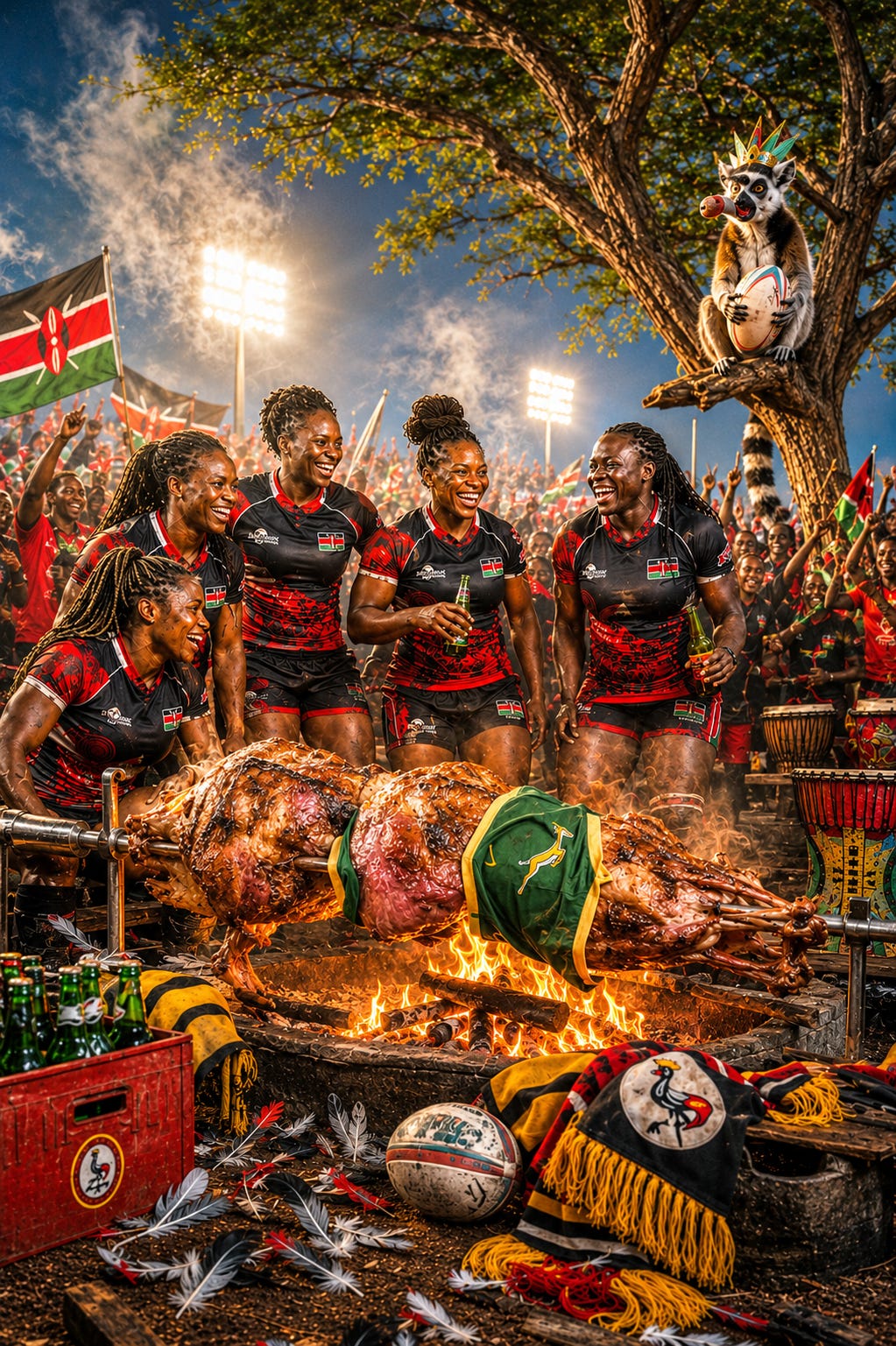
The Kenya Lionesses beat Uganda 43-10 yesterday. Faith Livoi walked away with Player of the Match in front of a loud home crowd at RFUEA. Earlier, South Africa dismantled Madagascar 64-5. The Bok women arrived in Nairobi looking like people who already believe the trophy belongs to them.
Wednesday is Madagascar, where every bonus point matters. Because Sunday is South Africa—the four-time defending champions who have ruled since 2019.
But hosting changes things. This time, the noise will not be green and gold from a distance.
It will be Kenyan isikuti, Kenyan lungs, and Kenyan expectation sitting right on the touchline. The Lionesses—forever cast as “almost there”—finally get to hunt this title at home.
We snacked on the Cranes;
We sharpen the fangs against the Makis on Wednesday.
Then comes Sunday:
The braai.
The Benediction
Dalvir Shukla left Kenya as a teenager and watched her son chase golf using equipment cleaned with baby oil.
“He had already lifted a trophy on Kenyan soil at Muthaiga.
Years later, he lifted a major.”
That is not a golf story;
it is a mother story.
It is the kind of quiet faith that keeps producing people capable of carrying heavy things.
To everyone being told their best chapter is behind them: maybe the answer is not to start again.
Maybe the answer is to remember properly.
What did you leave behind that was actually working?
Please share your thoughts in the (forest) comments.
This week’s hymn
Fittingly, Questlove’s new HBO documentary Earth, Wind & Fire: (To Be Celestial vs. That's the Weight of the World) releases to the public on June 7 on HBO Network, and globally on Max — nearly fifty years after Maurice White taught the world that rhythm, memory and roots could still sound futuristic.
Not just because the groove is medicine.
But because Maurice White hid a love letter inside one of the world’s happiest choruses and nobody noticed for nearly fifty years.
Same Forest. Different Monkeys.
Mubarikiwe. Jah Bless.
Go with song.
This piece, KT....a masterstroke [pun intended]. Kudos as always!!
Back in the day, China repaired broken Vases with gold. To show they were still valuable. Broken crayons still colour. I learnt how (not) to hike Table Mountain. 😂😂😂