
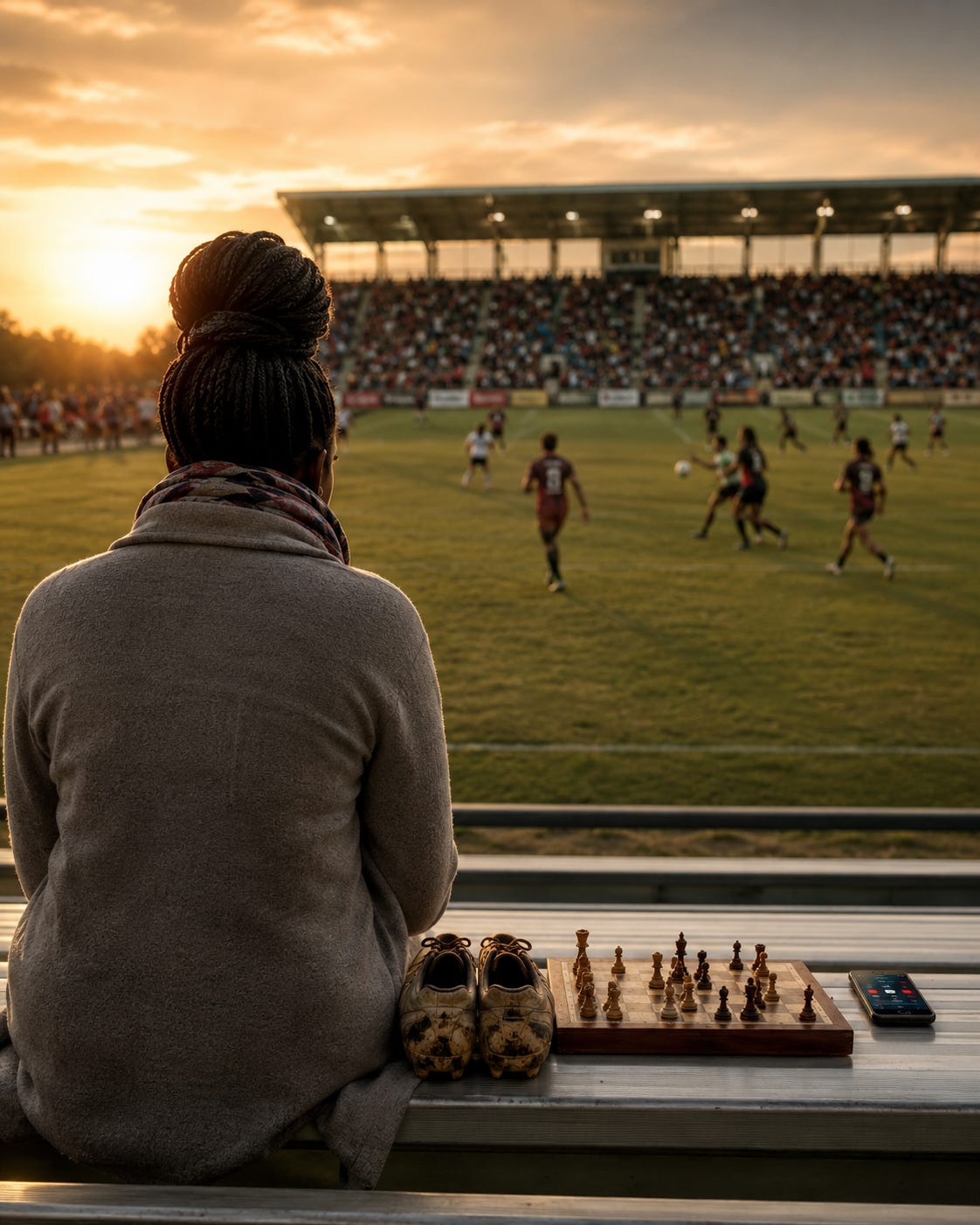
As I write this article, I am watching Kenya Lionesses vs South Africa on Rugby Afrique’s Facebook page.
The score keeps changing. 8-7 half time.The comments keep flying.
The referee is is hard of hearing and seeing to at least seventeen people.
75th minute. Snyder Mokaya receives the ball around half way dashes for about 20 metres steps one defender, rolls around another, drives low, Try Time!!
Kenya 20 South Africa 22.
She’s lining up the kick……
And I have a publishing deadline to beat.
And somewhere in the middle of all that, the camera pans to the crowd.
Parents. Fans. Former players.
People carrying flags. People carrying hopes.
And I find myself wondering how many parents in that crowd are having a silent argument with themselves.
Not about rugby. About their children.
Because somewhere in Kenya tonight, a mother is staring at a pair of rugby boots worth several thousand shillings.
A father is looking at the cost of chess lessons.
Another parent is being told that a smartphone is no longer a luxury. It is a necessity.
Then school fees arrive like an uninvited relative.
Again.
The committee meeting begins.
The practical member speaks first.
“Na hiyo rugby itamsaidia aje?” (how does this rugby help her)
A fair question.
Most rugby players never become Lionesses or Shujaa.
Most chess players never become Magnus Carlsen.
Most TikTok creators never see a sponsorship cheque.
Many dreams never make it past the starting line.
Which is why parents worry.
Because every dream looks expensive when viewed through the lens of school fees.
The funny thing is that every generation thinks it is being sensible.
The generation before us questioned Dee-Jaying.
Then the internet.
Then social media.
Then content creation.
Now many parents find themselves standing on the same ground, asking similar questions with different words.
The rugby field simply happens to be today’s version of the conversation. As the camera pans across the crowd again, I realise the debate may not be about sport at all.
Maybe the question is no longer: “Which dream should we fund?”
Maybe the better question is: “Which dreams are connected to the future we’re walking into?”
The real argument in my view is risk.
Parents are not arguing about rugby.
They are arguing about probability.
Because they have seen enough life to know that talent is common.
Success is not.
As I write this, Shujaa are in Spain fighting for survival on the World Rugby Sevens circuit.
The margins are tiny. One missed tackle. One dropped pass.
One conversion. One injury.
The difference between a hero’s welcome at JKIA and a difficult conversation with selectors.
Thousands of young Kenyans have dreamed of wearing that jersey.
Only a handful ever will.
“Na hiyo rugby itamsaidia aje?” (How will that rugby help?)
The funny thing is that the same question could be asked about chess.
Magnus Carlsen is probably the most famous chess player on earth. His net worth is somewhere between US$25 million and US$50 million.
That sounds impressive.
Until you compare it with the machine sitting next door
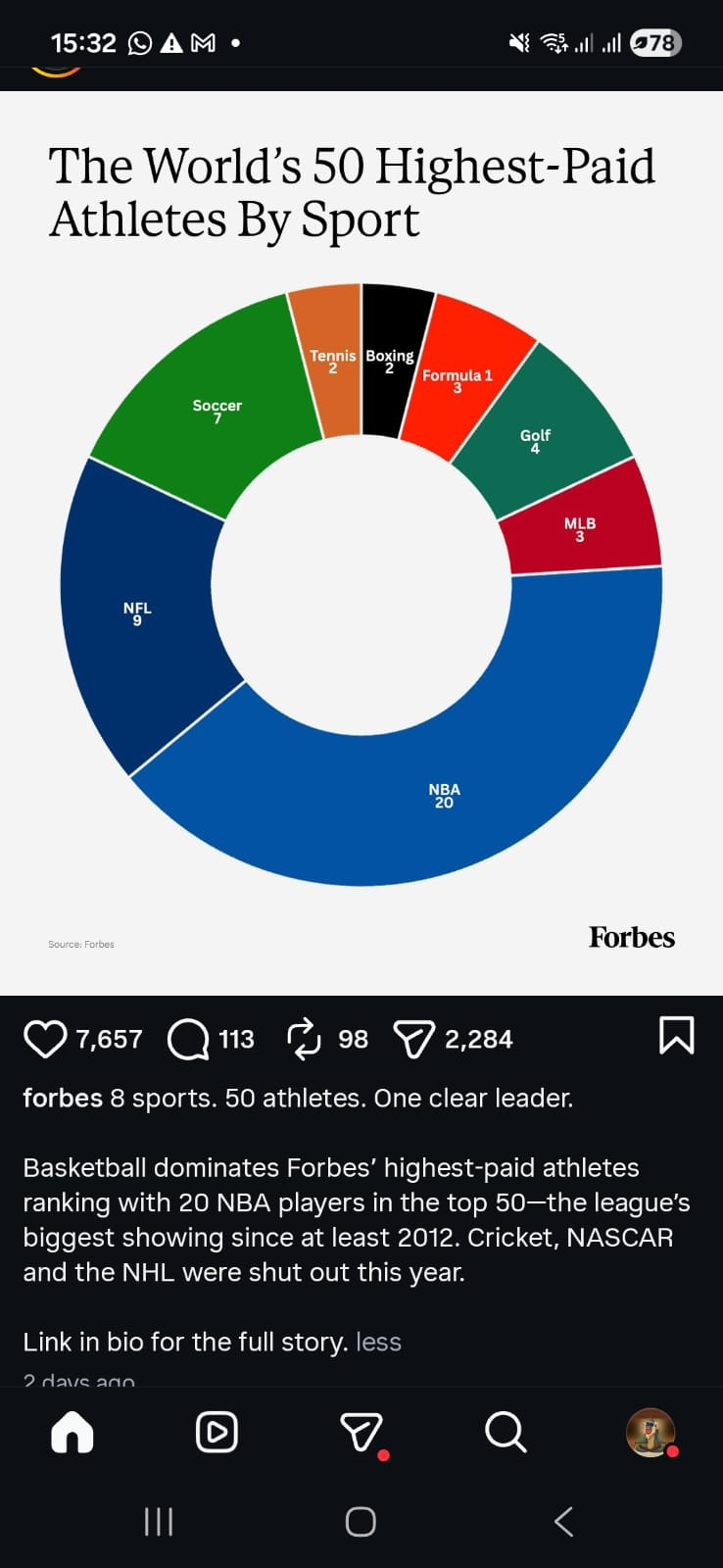
A Forbes graphic stopped me in my tracks.
Twenty of the world's 50 highest-paid athletes were NBA players.
The NFL had nine.
Soccer had seven.
Golf had four.
Formula One had three.
A rookie sitting at the very bottom of an NBA roster can earn over US$1 million a year.
Not Victor Wembanyama. Not Jalen Brunson. Not LeBron or Steph Curry.
The guy at the far end of the bench.
The one casual fans cannot even name.
Twenty. From one sport.
The question is no longer whether sport is risky.
Every dream is risky. The question becomes: why does one machine produce so many highly paid people?
Why does one ecosystem keep generating players, coaches, owners, broadcasters, sponsors, podcasters and investors at industrial scale?
Suddenly the parent staring at rugby boots is no longer comparing rugby against school fees.
They are comparing ecosystems.
Maybe we’ve spent our lives comparing dreams.
Instead of comparing the machines behind those dreams.
Let’s stay with the NBA for a moment.
Back in 2004, Jay-Z reportedly bought a small stake in the New Jersey Nets for about US$1 million. Most people saw a rapper buying into a basketball team. Today the Brooklyn Nets are worth more than US$6 billion.
Then Justin Timberlake. Not a player. Not a coach. Part of the ownership group of the Memphis Grizzlies — valued at over US$3 billion.
Then J. Cole. Another musician. Another audience builder. Another owner. Charlotte Hornets. Roughly US$3 billion.
Three artists. Three cities. One recurring idea.
People who understand audiences eventually buy the places where audiences gather.
Then the pattern crossed the Atlantic.
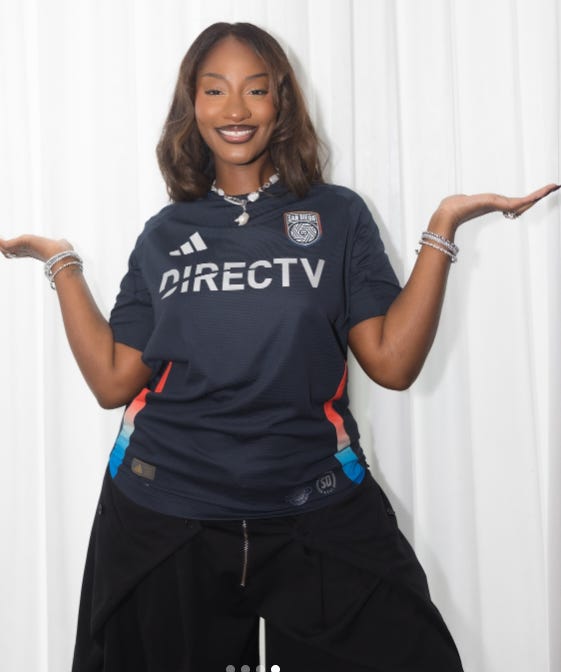
In 2025, Tems became part of the ownership group of San Diego FC. Reports put the MLS expansion fee at around US$500 million. Half a billion dollars just to join the league.
That should tell you something about the value of attention.
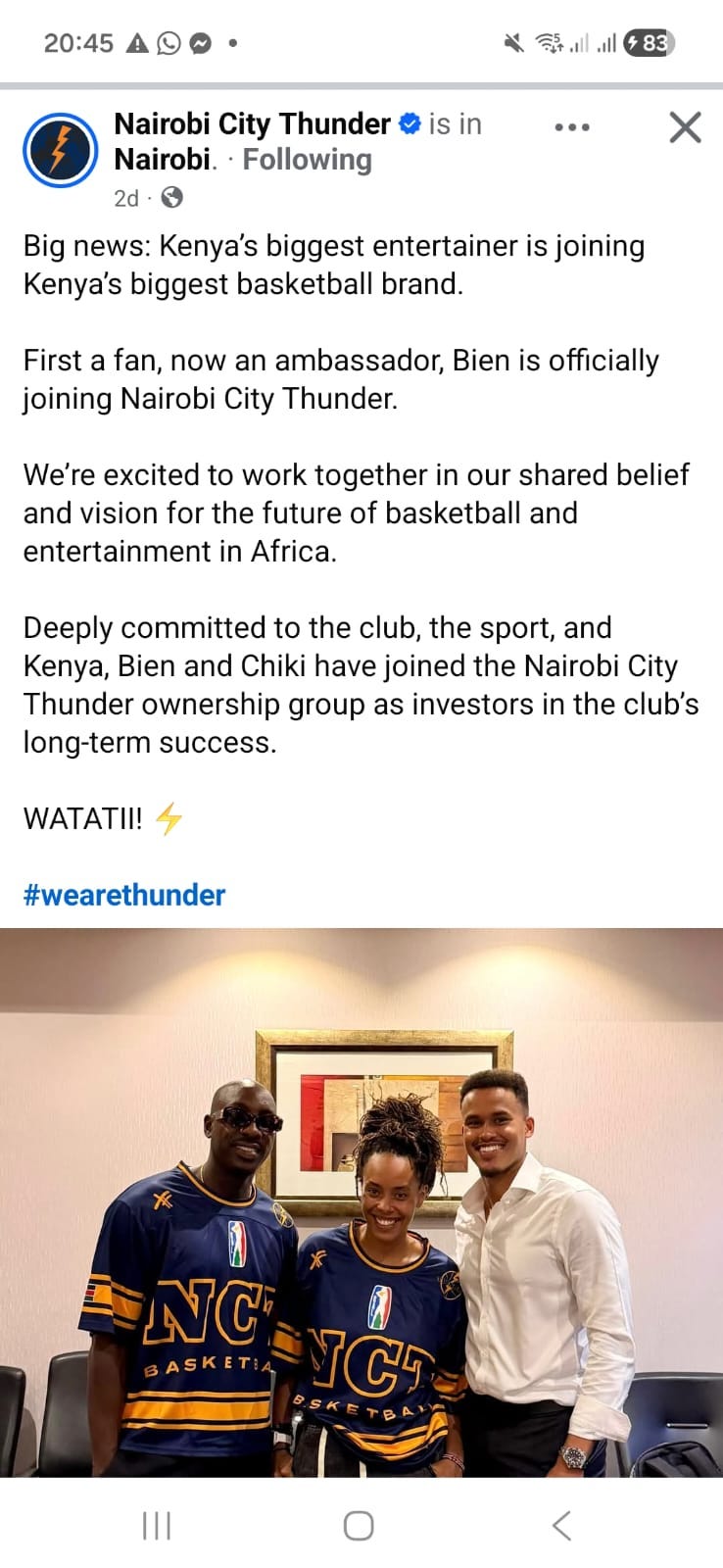
A few years ago, if somebody told you that Bien-Aimé Baraza and Chiki Kuruka would invest in a basketball club, many people would have laughed.
Yet they bought into Nairobi City Thunder.
Not because they suddenly became obsessed with pick-and-rolls or Zone defence.
“A crowd has value.
A fan has value.
A community has value.
Ask any politician, church, football club or salesperson.”
The people making these moves are not buying sport.
They are buying proximity to the future
Which brings us to Kahawa Pride FC.
Because most people still think they are looking at a football club.
The numbers suggest something else.
223,590 views. 679 paying Discord members. 109 jerseys sold.
US$23,568 in revenue in a single month. (Figures published publicly by their founders — “they said it I didn’t :)”
Most Kenyan football clubs would kill for that kind of direct relationship with their supporters.
Because the traditional model looked like this:
build a club, hope fans come, hope sponsors come, hope money comes.
Kahawa Pride ran the equation backwards.
Build an audience. Build a community. Build content. Then build the football club.
The football club becomes a media company.
The media company funds the football club

I work in sales. I have spent years watching talented salespeople lose to less talented ones.
The difference is almost never product knowledge.
It is almost never price.
The difference is almost always this: one person built a relationship before they needed it.
The other arrived when they needed something.
That is the same logic Kahawa Pride is running. That is the same logic Bien is running. That is the same logic every creator earning KSh 100,000 from their bedroom is running.
Build the audience before you need it. Because the day you need it is too late to start.
And suddenly the argument about rugby boots, chess lessons and smartphones starts looking different.
Because a smartphone is no longer just a smartphone.
It is a camera. A studio. A sales desk.
A distribution channel. A broadcast station.
A community-building tool.
Today there are Kenyan creators quietly earning KSh 10,000–50,000 a month from content. Others are making KSh 100,000–200,000 and beyond.
Not millions. Not private jets.
Just enough money to make parents start saying: “ulikuwa serious.” (you were serious)
Here is what I want to say plainly.
Kenya has never been short of talent.
We are in a machine shortage.
We keep producing world-class people and sending them into systems designed to eliminate most of them. We celebrate the one who survives and call the rest unlucky. Then we feed the next generation into the same machine. Again. And again.
The parents in that crowd are not wrong to worry.
But maybe they are asking the wrong question.
The question is not whether the dream is risky.
The question is whether their child understands how the machine works.
Because the machine doesn’t care about talent.
The machine rewards people who understand the machine.
So maybe the rugby boots are an investment.
Maybe the chess set is an investment.
Maybe the smartphone is an investment.
The answer depends less on the tool and more on whether the child understands what they are building.
Not just a skill.
A machine.
So let me ask you something.
If you had KSh 10,000 to invest in a 15-year-old today — boots, chess set, smartphone, or something else entirely — what would you choose?
More importantly: would you tell them why? (share in the comments)
Because that conversation — the one where a parent explains how the machine works instead of just funding the dream — that might be the most valuable investment of all.
The forest hasn’t changed.
The monkeys who thrive are the ones who finally understood the trees.
Same Forest. Different Monkeys.
Mubarikiwe. Jah Bless.
Go with song.
You've caught me at cross hairs with today's post. My 15yo is a great swimmer, he wants to swim everyday (in this weather 🥶) so I've been looking at long sleeve and leg thermal costumes, that 10k won't suffice but an investment it will be. Interest and talent is there. However, the idea of comparing ecosystems is really the question to ponder on, and I shall because you've put talent in a new light. If swimming is his gig, what's the Kenyan vs continental vs global ecosystem? Parenting needs a manual cause it's something new everyday.
I hope my team Gor Mahia and the likes of AFC Leopards would understand what you are saying. I hope and pray the recent images of Arsenal fans flooding streets in replica kit could trigger our local teams into a soul-searching. I hope they would be willing to listen to your logic and observations and start building that machine. Imagine.