
September is Suicide Prevention Month. On 10 September, the world marks World Suicide Prevention Day.
Early this week I was browsing my WhatsApp health-advice group, the kind where sciatica and swollen knees get diagnosed by committee.
We have quietly moved from comparing hangovers to comparing blood-pressure readings.
Then I came across a post by psychologist Annabell Gichure introducing World Suicide Prevention Month.
The laughter stopped.
Suicide is one of those subjects we discuss very well after the fact. Once somebody has died, everyone suddenly remembers the signs.
He had become quiet, she had withdrawn, he stopped returning calls, she gave away something she loved.
We reconstruct the distress so beautifully and precisely, right when the person who needed us to notice can no longer speak to correct our timeline. Yet people do speak—not always through a dramatic announcement, but through smaller signals: a joke that lands wrong, a cancelled plan, an unusual goodbye, a WhatsApp status posted at 2.17 a.m.
Sometimes it is the person who has always looked strongest saying, almost casually: “Bro, nimechoka.” (I am tired)
Our mistake is waiting for them to use the correct words.
On 9 January 2025, Justice Lawrence Mugambi declared Section 226 of Kenya’s Penal Code unconstitutional. Until then, someone could reach the lowest point of their life, survive—and face arrest, prosecution, a fine or imprisonment.
Parliament is now working to delete the offence formally. Nigeria is also moving in the same direction: away from punishment and towards care. But changing the law is easier than changing how families, workplaces and friends respond.
The first response does not have to be clever.
I hear you. I am here. Tell me more.
Speaking out takes courage. Listening properly is also an act of courage.
Ask twice. Sit with the uncomfortable answer. Help them find professional support. If the danger feels immediate, do not leave them alone.
Befrienders Kenya: 0722 178 177—call, SMS or WhatsApp, Monday to Friday, 9 a.m.–5 p.m. For immediate danger, call 999 or 112, or go to the nearest hospital.
Not everyone who changes lives is heard when it matters.
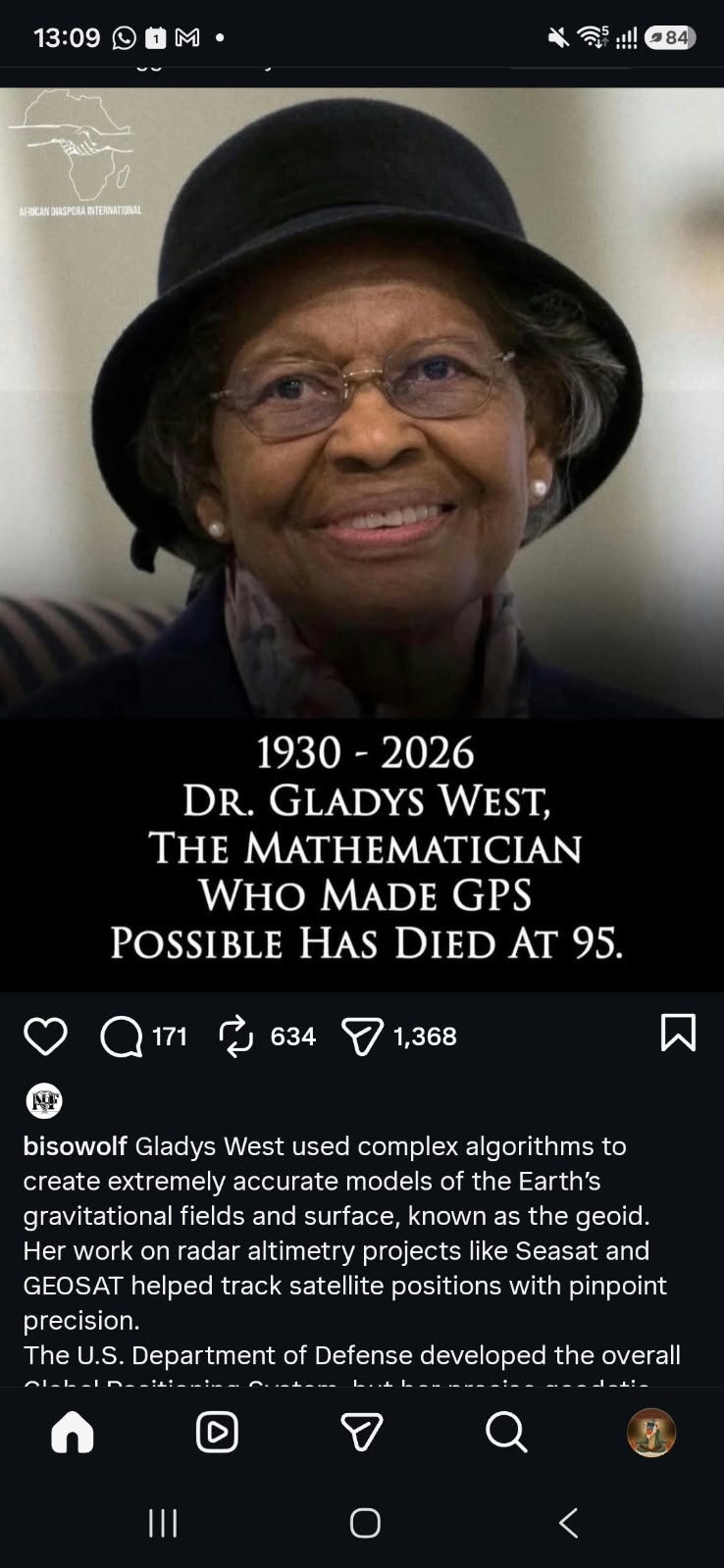
Dr Gladys West was a Black American mathematician hired by the US Navy in 1956. Much of her work modelling the Earth’s shape and gravity. Work that became foundational to GPS, was classified. Even her own children did not fully understand what their mother had helped create.
Recognition came late. In 2018, aged 87, she was inducted into the US Air Force Space and Missile Pioneers Hall of Fame. She died in January this year at 95.
Today, GPS gets you to an unfamiliar office and exposes the partner who said, “I’m just around the corner,” while their blue dot enjoys life in Naivasha.
A Black woman helped the world find its location. The world took decades to find her.
Elsewhere, somebody had finally been allowed off a very large ship.
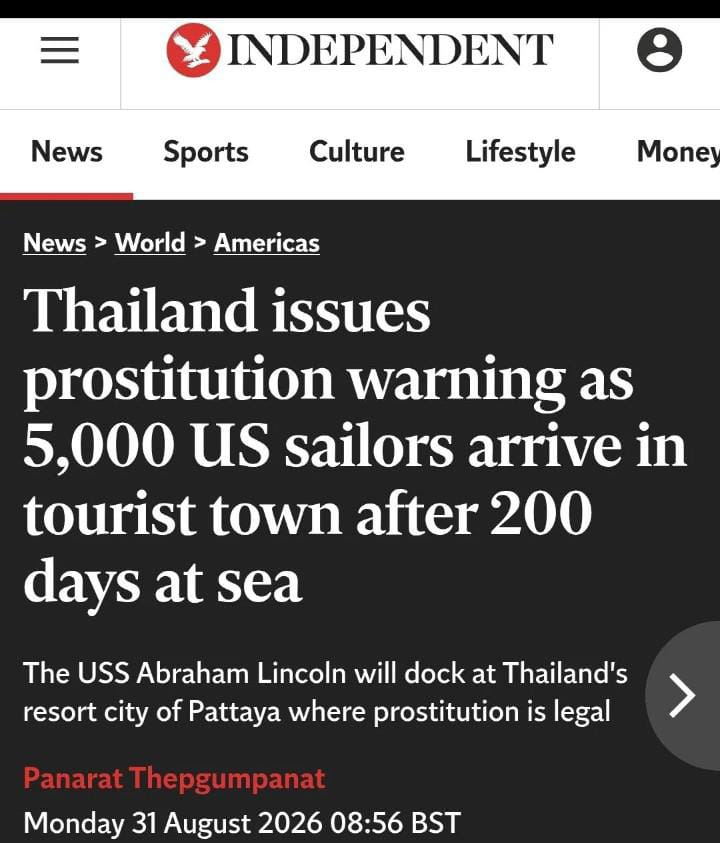
The USS Abraham Lincoln arrived in Thailand carrying roughly 5,000 sailors and Marines after a 286-day deployment, including a record 264 consecutive days at sea.
They needed rest.
Thailand gave them five days, in Pattaya, of all places.
Here in Kenya, our ladies of the twilight would have studied the numbers and immediately formed a WhatsApp chama.
Five thousand seamen. Two hundred and sixty-four days without shore leave.
Five days in town.
Forget feasibility studies. That is a market signal. Locally, Somebody would already be selling “Executive Naval Packages,” payable in dollars, with transport available from the aircraft carrier. Surge pricing would begin before the first sailor reached Kilindini Harbour.
Behind the mischief was something serious. The crew had endured isolation, uncertainty, restricted contact with home and the strain of combat. Shore leave was recognition that even people trained to remain strong eventually need rest, company and ordinary human contact.
Sometimes speaking out sounds like a confession. Sometimes it sounds like 5,000 people finally being allowed ashore.
Back home, two Kenyan stories made the same point in different sports.
Malkia Strikers arrived at the African Women’s Volleyball Championship as defending champions and ten-time continental winners. They swept Zambia and Mali, dismissed Nigeria 3–0, recovered to beat Algeria 3–1, then crushed Cameroon to reach the final.
That run also secured Kenya a place at the 2027 FIVB Volleyball World Cup.
By the time they faced Egypt at Kasarani, the women had done what we always demand of our national teams: wear the flag, win matches and make the country pay attention.
But the real defeat had begun before the first serve.
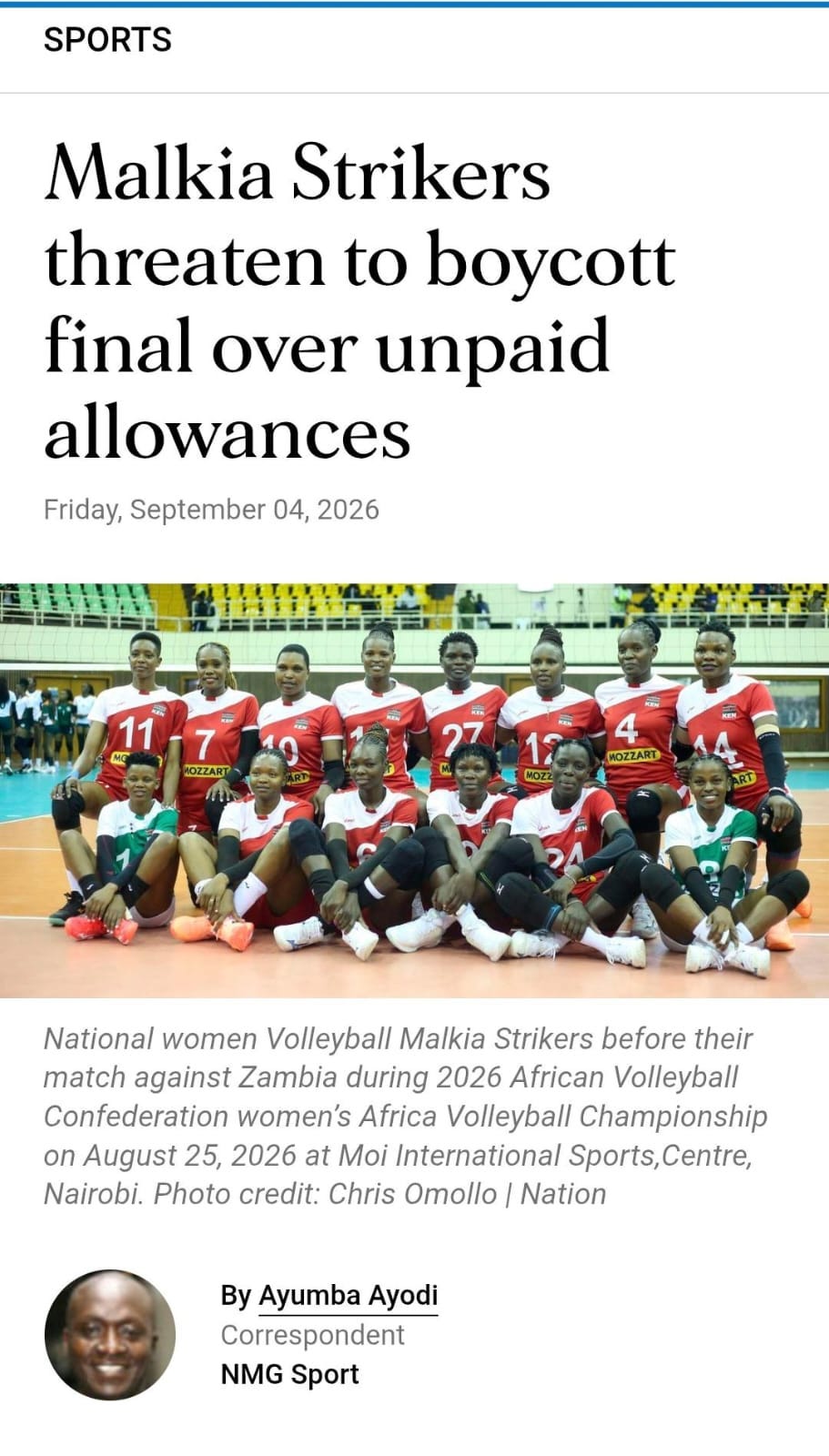
Ahead of the final, the players threatened to boycott over Sh8.9 million in unpaid allowances, outstanding since they entered residential camp.
Egypt won 3–0. Kenya missed an eleventh African title and Africa’s direct qualification place for the 2028 Olympics.
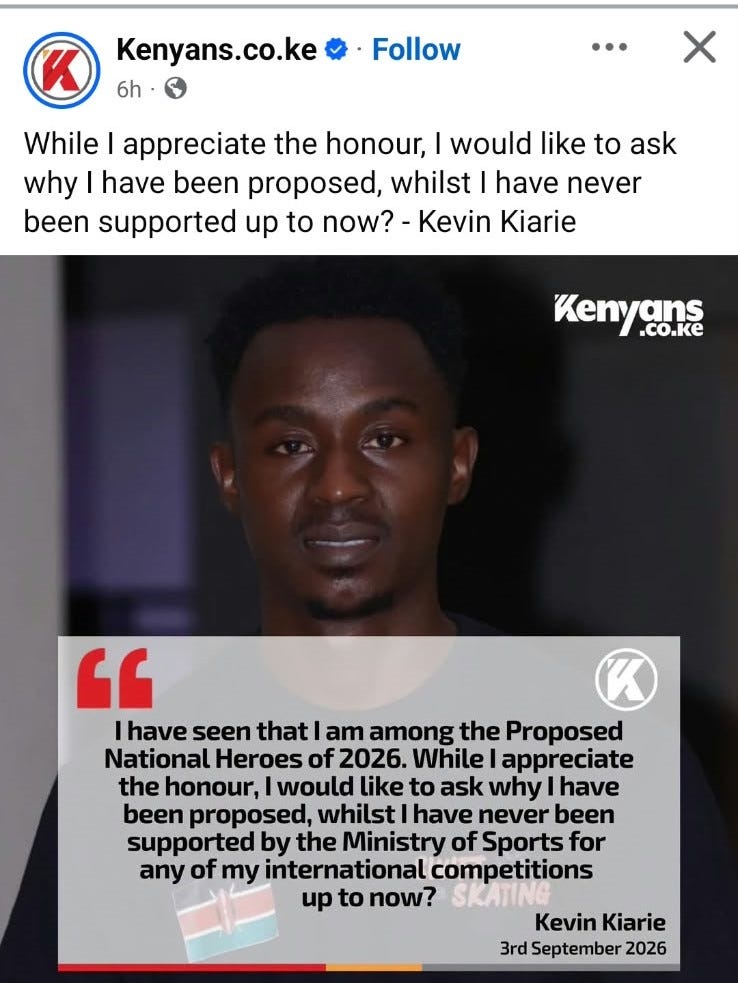
Then there is Kelvin Kiarie, the African freestyle skating champion nominated for National Hero status.
Instead of quietly accepting, he asked why the country was preparing to call him a hero when the Sports Ministry had never supported his international competitions or reimbursed him.
He and his wife had reportedly dipped into their four-year-old daughter’s school fees to fund a competition in Benin. Kenyans crowdfunded just enough to get him there. He took a matatu to the airport late at night for a 3 a.m. flight—then returned with gold and silver medals. Later, he won another two African golds in Egypt.
No state funding. No official reception. No settled reimbursement.
But somebody had found a form and nominated him for national-hero status.
Kenya may not always finance your journey, but we shall laminate your certificate.
When athletes win, officials arrive in tracksuits they never sweat in, find the centre of the photograph, dance and give speeches about patriotism and the girl child.
When allowances are due, everybody develops a hamstring injury.
Do not decorate people for surviving the neglect you helped create.
Pay the women. Reimburse the man. Then bring the medals and matching tracksuits.
But speaking out does not always set you free.
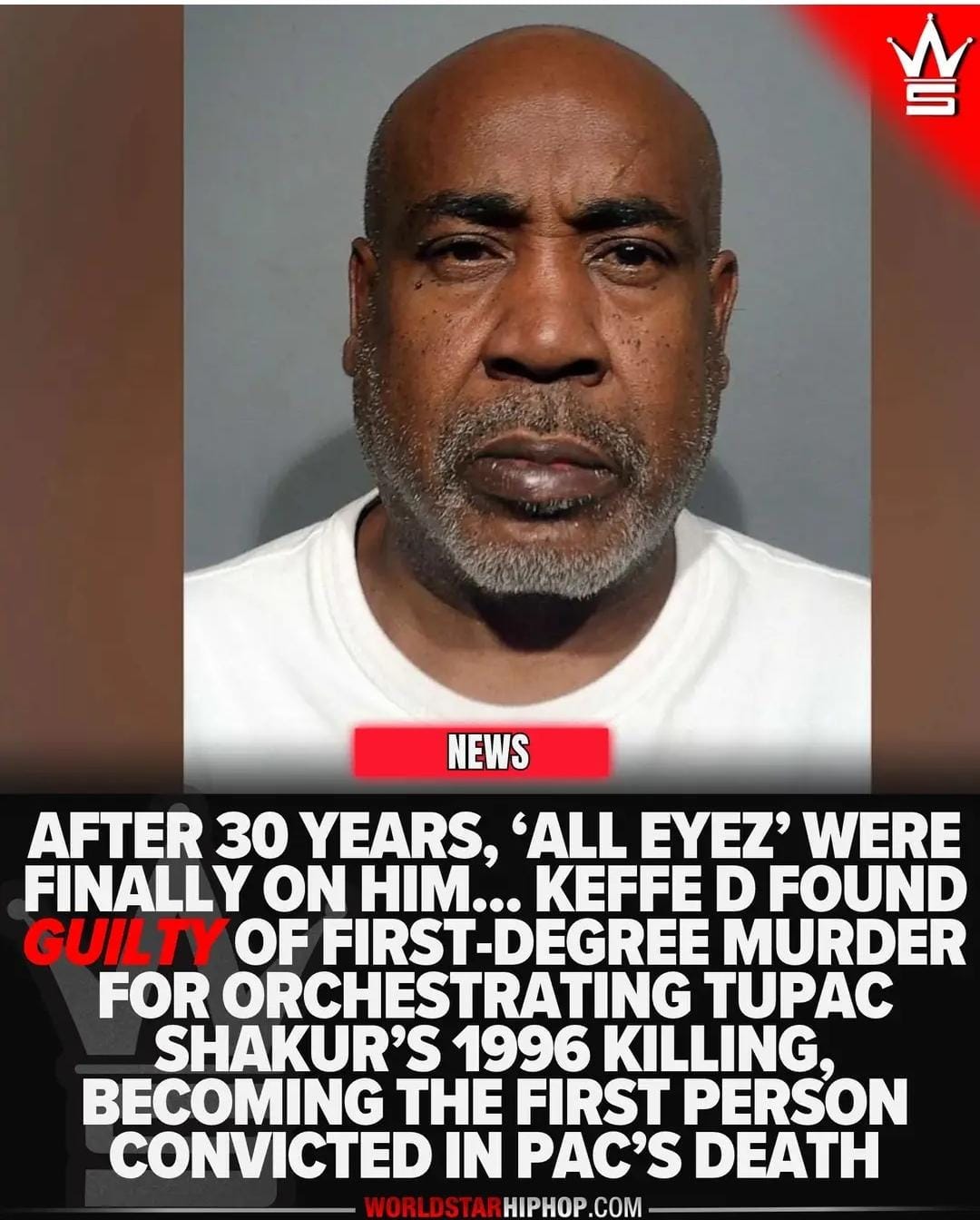
For nearly 30 years after Award winning Rapper Tupac Shakur’s 1996 murder, nobody was convicted. Then Duane “Keffe D” Davis did what silence never asked of him.
He kept talking.
In 2008, Keffe D gave investigators a detailed account under a protected proffer agreement. The arrangement restricted how those particular statements could be used against him.
That might have been the moment to embrace silence.
Instead, he repeated the story in documentaries and interviews. In 2019, he published Compton Street Legend, placing himself inside the white Cadillac from which the shots were fired.
Protection for one police interview was never a lifetime licence to repeat the story everywhere there was a microphone.
When the case finally reached court, Keffe D’s lawyer faced the sort of assignment that should attract hardship allowance. He had to argue that none of it was true.
The memoir was fiction. The interviews were exaggeration. Keffe D had lied for years, placing himself at the centre of one of music’s most famous murders for money and attention. In other words:
My client has told this story for years. Please do not believe him.
The jury believed him instead. On 31 August 2026, Davis was convicted of first-degree murder with a deadly weapon. Prosecutors did not claim he fired the shots. They argued that he obtained the gun and organised the retaliatory attack after Tupac and his entourage assaulted Davis’s nephew, Orlando Anderson. Davis is due to be sentenced on 13 October and intends to appeal.
Kikulacho ki nguoni mwako. ( What consumes you is inside your clothes)
Sometimes it is betrayal by somebody close. Sometimes it is your own mouth, your memoir and a tour of television studios.
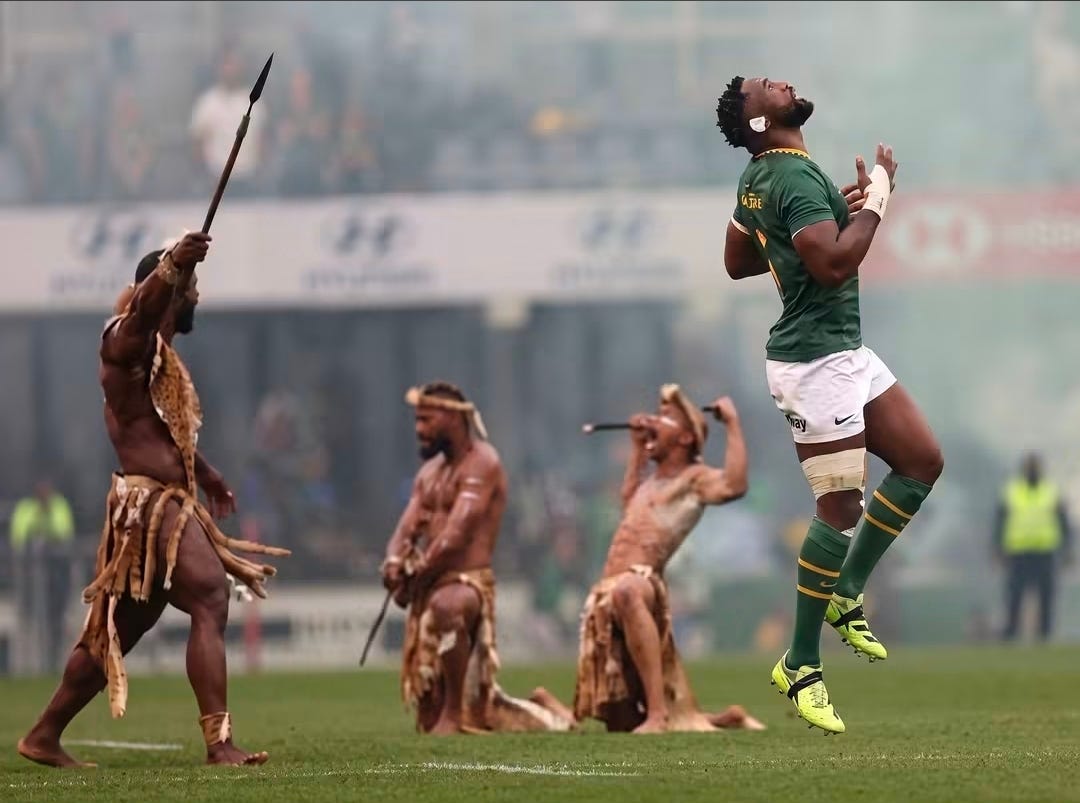
Series: 2–1. Siya Kolisi: the most successful Springbok captain by Test victories.
We ni we Ndzovu. (you are the elephant)
See you in Baltimore. Godspeed, brah!
Which takes me back to Annabell Gichure’s WhatsApp post.
This week, choose one person, not the one posting gym photographs and winning quotes, but the one who has gone quiet, whose performance has dipped, who keeps saying they are tired.
Call them without a motivational poster or a diagnosis.
Ask: How are you—really?
Then leave room for the honest answer.
If they may be in immediate danger, stay with them. Help them reach emergency or professional care.
The law can stop criminalising distress. Parliament can amend the Penal Code. Institutions can publish policies.
But prevention still comes down to one ordinary human moment:
Somebody speaks.
And somebody else decides whether to listen.
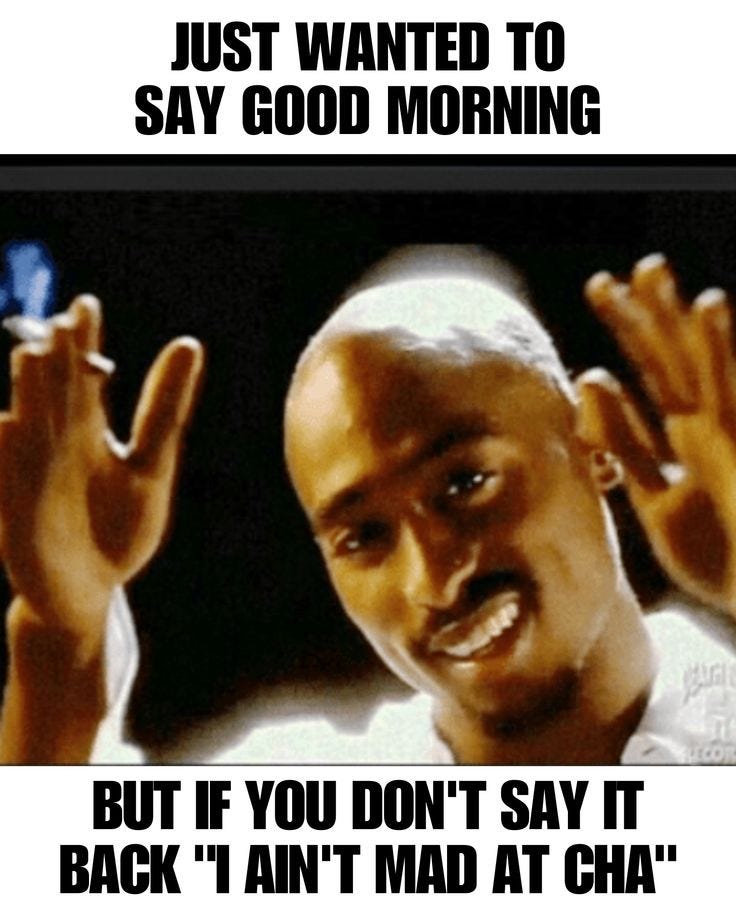
Speak out—and when somebody finally does, listen like it matters.
Same Forest. Different Monkeys.
Mubarikiwe. Jah Bless.
Go with song. (Tupac said it all)