
I woke up to a hilarious video that has gone viral on all WhatsApp groups.
A dude is preparing a tasty lunch for his girlfriend — the ultimate wet fry nyama with kitunguu, mafuta kidogo to thicken the stew, and just a little water. While it simmers, he asks her to add a bit more water.
Waitherero, out of instinct and habit, reaches for a jug and proceeds to drown the soft, succulent nyama, onions, and vegetable oil.
Dude can’t take it anymore. He shows her the door.
She calls her brother, who appears in a Probox with bull horns on the bonnet, a shovel on the rear windscreen, and a loud message: 4 by 4 by Far.
It’s off to the murima — where people will appreciate her culinary skills.
A Murima Christmas doesn’t announce itself.
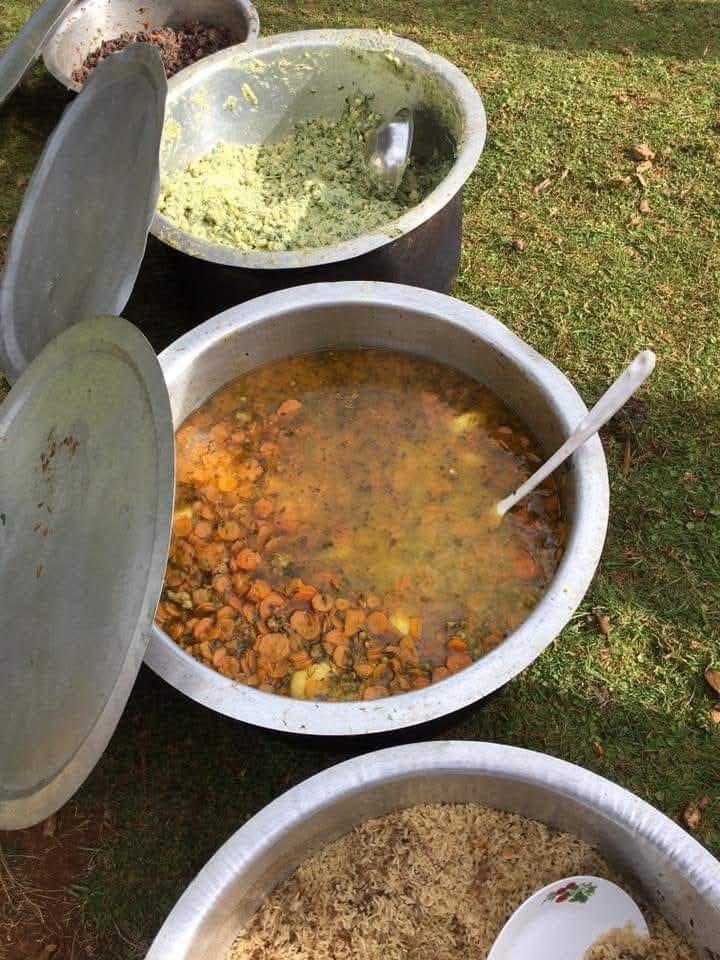
You know it has arrived when sufurias appear outside before anyone has greeted anyone properly.
When smoke from firewood finds your eyes faster than familiar faces.
When someone asks why you’ve lost weight, someone else asks why you haven’t — and nobody waits for the answer.
Mukimo is non-negotiable.
”Gitoero” (stew) must be enough.
Rice appears quietly, for the town people, and nobody comments.
My diaspora brothers and sisters have lost all the make-up, earrings, piercings, and are hiding their outrageous hair with a doo-rag lest Shosho launches a crusade to cast out demons from her spawn.
We know the drill.
The men are slaughtering goats.
The women are trying to stretch Royco into four litres of cabbage, waru, and carrots.
The men will eat half the nyama under the guise of nyama cia athinji — “meat for the people who slaughter”.
The secret to any Murima gathering is to arrive with a commando knife and pretend you have exotic slaughtering skills. That guarantees you a seat where carnivores dwell — where the choice pieces disappear before being presented to the larger family to eat with mukimo and pilau Njeri.
A warning to those unfamiliar with these rituals — especially non-Murima people.
Do not be conned into eating mara (roasted small intestines) first. Oldest scam in the book. Mara is oily and crunchy. You’ll overeat and run out of space for the real meat.
Also don’t fall for the mbavu scam. The men of old were very wise. They enticed women with tasty roasted goat ribs. Ribs are delicious — but here’s the trick: they hold the least meat. While you’re wrestling bones with both hands, the real action happens elsewhere — forelegs, hind legs, and the most delicious ruhonge.
The Kikuyu name for the hind leg / hip area of a goat is ruhonge.
It carries meaning.
In a traditional Kikuyu marriage ceremony (Ngurario), one hip (ruhonge) and the accompanying meat (murote) are given to the person who slaughtered and prepared the goat (muthinji).
So unless I’m going straight to join the athinji, I am not boarding.
I also hail from Nax Vegas — and as everyone knows, the road is already impassable, and it’s only the 21st.
Because Murima Christmas is not about arrival times.
It’s about continuity.
Same food.
Same jokes.
Same arguments.
Different people, different stages of life, eating from the same pot.
And if you sit long enough, without trying to explain anything, the stories begin doing the work for you.
At some point, someone remembers the Jamhuri Day celeberations at Nyayo Stadium.
How the MC warned the crowd:
“Kutakuwa na fly-past. Msishtuke.”
Then the jet came anyway.
Low.
Fast.
Violent.
People froze.
Even the President jumped — muttering “Niliwawuon…”
The laughter came later.
What most people remember is the noise.
What very few remember is what it takes to create seconds like that.
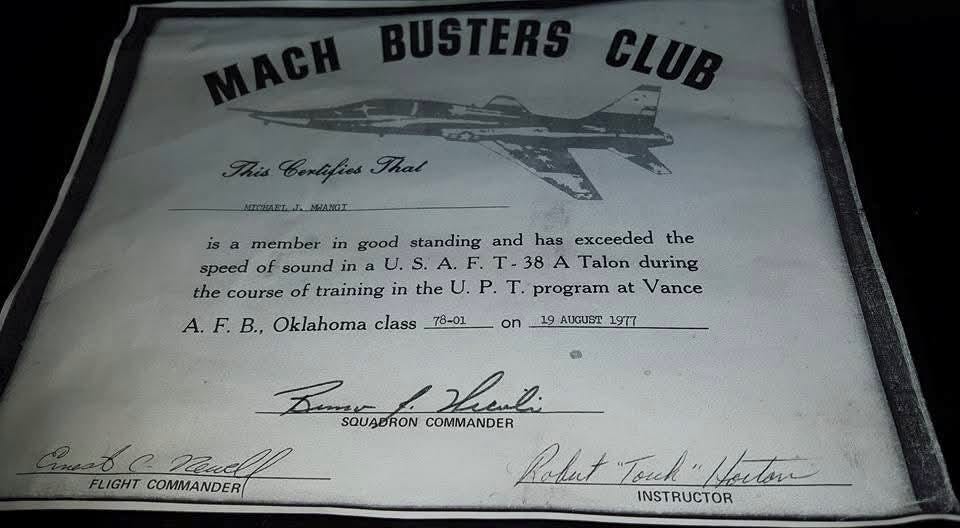
Earlier this week, I met Captain Michael J Mwangi, the first Kenyan to fly subsonic. He walked me through what it takes — in training and in action — to pull off a manoeuvre like that. He was one of seven pilots to fly the first American F-5s and the first Kenyan to break the sound barrier.
AVIATOR EXPLAINER — FOR THE TRIBE
The jets that flew over Nyayo were Northrop F-5 Tiger II fighter aircraft — supersonic jets capable of speeds above Mach 1.6 (over 1,700 km/h). The F-5 is not a show toy. It is a frontline combat and training aircraft demanding extreme physical conditioning and precision flying.
Flying low over a packed civilian stadium is not bravado.
It is mathematics.
Pilots manage:
G-forces exceeding 7–9 Gs, forcing blood away from the brain
Split-second altitude and speed calculations
Human tolerance limits requiring years of conditioning and G-suits to prevent loss of consciousness
Fighter pilots train for failure, not applause.
Training for failure means preparing for mistakes, fatigue, and the unexpected — so that when things go wrong, they don’t end everything.
A small error at that speed is not embarrassing — it is fatal.
What the crowd experienced as shock was the final ten seconds of years of preparation, discipline, and systems that tolerate no shortcuts.
Captain Mwangi spoke calmly about G-forces, load tolerance, repetition, and the cost of error. Fighter pilots don’t rehearse applause. They rehearse failure. Because one mistake doesn’t trend. It ends everything.
That’s a quiet Murima lesson.
Spectacle is expensive.
Preparation is invisible.
And nobody claps for the years.
Between that story and a second helping, someone mentions Jayden and Toshy’s sports journey — the matches, the training, the missing trophies, and next year’s trip to Spain.
I think about what Coach Wanjala has been telling me.
He doesn’t speak in metaphors.
He speaks in numbers.
Calories. Recovery cycles. Load management. Body composition. Time horizons.
What you eat in April shows up in December.
Sleep in school holidays appears later in injury reports.
Talent without structure doesn’t disappear — it plateaus.
Same environment.
Same weather.
Same facilities.
Wildly different outcomes.
Same forest.
Different monkeys.
That’s when someone mentions David.
David Munyua.
Almost casually.
“He’s a vet, by the way.”
That sentence always lingers.
David trains seriously.
Competes seriously.
Represents with pride.
Then goes to work.
Not because he stopped believing in sport.
Because sport didn’t build a system around him.
There are thousands like him — excellence surviving on stubbornness, not structure. Talent moving forward, but without a multiplier.
You don’t need to moralise it.
The contrast does the talking.
WHY THIS MATTERS FOR THOSE WILLING TO INVEST EARLY
Sport has never really been about likes, impressions, or engagement rates. Those are modern words for something older — belonging. The pride of being part of something before it was obvious. Before it was packaged. Before it was safe.
In Murima, nobody sponsors a goat on slaughter day. Value is created months earlier — feeding, care, patience. By the time the nyama hits the fire, the work is already done.
The same is true in sport.
Enduring platforms are built on habit — families returning year after year, children growing into the stands, pride embedding itself quietly into memory. That’s where real customer intimacy is formed. Not through advertising. Through association.
That is why HSBC SVNS is a rare opportunity.
It allows brands to embed themselves in the hearts and minds of a global audience of over 500 million people worldwide across broadcast and digital platforms over a season — not by shouting, but by belonging. Not by chasing engagement, but by becoming part of a lived experience.
This is not about visibility.
It is about presence.
To be remembered not because you arrived loudly — but because you believed early and stayed.
And then someone brings up Joshua.
Not dramatically.
Almost casually.
The boy who crossed codes.
The boy who stacked discipline when outcomes were unclear.
The boy who trusted systems even when guarantees were absent.
This year, Joshua Weru became the first Kenyan to join the NFL’s International Player Pathway since its inception in 2017.
That sentence matters.
But what sits beneath it matters more.
Years of preparation. Different countries. Different systems.
Picking yourself up after heartbreak.
Joshua is not inspiration.
He is evidence.
And sometimes proof doesn’t need explanation.
It’s ten seconds.
A body prepared.
A mind ready.
Godspeed, Joshua.
May work done in silence carry you through the noise.
May habits built far from applause protect you when the lights come on.
The forest is watching.
The path is now visible.
He does not contradict David Munyua’s story.
He completes it.
Same forest.
Different monkeys.
Different systems.
Different ceilings.
If you listen carefully, the thread tightens.
Family Christmas works because people show up every year.
Fighter pilots survive because preparation is funded long before applause.
Coach Wanjala’s athletes progress because inputs are measured, not hoped for.
David Munyua survives because excellence is stubborn.
Joshua breaks through because preparation finally met platform.
Great journeys are built long before they are commercially obvious.
The people who benefit most understand that early.
As the sun drops and plates thin out, Murima does what it always does. People leave in batches. Promises are made. Some kept. Some not.
No call-to-action.
Just a closing prayer.
For continuity.
And gratitude.
Happy Holidays.
#SalesFundiKe
Worth every letter read.
Top shelf.