
There was beer at the marathon.
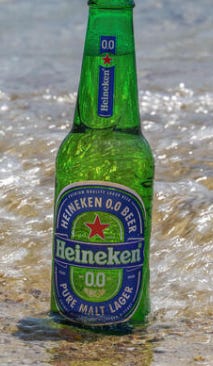
Before you start looking for next year’s registration form, it was Heineken 0.0. Zero alcohol. A clarification capable of destroying a promising conversation. The brand partnered with the 21km race at the Standard Chartered Nairobi Marathon.
Twenty-one kilometres is a long way to go for a beer, but Nairobi has never lacked commitment.
Some of us have travelled farther with less justification.
I have never run this marathon. My acquaintance with organised running comes through the Nairobi Hash House Harriers, the self proclaimed drinking club with a running problem. You ran, exchanged outrageous stories and attended to your thirst. Those who remember running before our watches began reporting to satellites, will understand. Your legs delivered the results personally, usually on the stairs next morning. The Hashers would have preferred the original Heineken.
I have zero answers.
Lucas Marang’a in his article A Running Bash supplies the eyewitness colour: roughly 30,000 runners, groups carrying music, a man in a suit and another in firefighter gear. Nairobi had dressed for every eventuality.
Congratulations to Standard Chartered for building a tradition people train for, recruit friends into and return to.
Long may the city keep this appointment.
While browsing for gym gear, I encountered tights. These deserve respect.
High waists, compression, ventilation panels and pockets that accommodate a phone. Anyone whose keys have slapped against their thigh while jogging will appreciate the progress. Then recently arrived what are called scrunch bum tights, with a gathered rear seam to contour and accentuate.
Why contour? Round is also a shape.
There are specifications here, people. “Something stretchy” will not settle the matter.
Run Beyond the sports store at Warwick Centre offers a KSh 3,000 gait assessment. Cameras examine how you move before you choose your shoes.
Nike at Sarit awaits the pure of heart and platinum credit card.
My guy Albert at Zoezi Shoes serves those whose budget favours slightly used sneakers. Your shoes may have completed a marathon before you have.
Tumewaskiza. Have You, Though?
Thirty thousand runners need shoes, socks, bras, watches and something to carry water. Quite a few tills ring before the medals arrive. Once home, however, even the best-equipped runner must negotiate the television budget. The children are home for two months. November, Christmas and January’s school fees are all queuing at the same wallet.
Those of us raised on one station remember waiting for programmes to begin. Today, someone announces there is nothing to watch while holding enough entertainment to occupy our entire childhood.
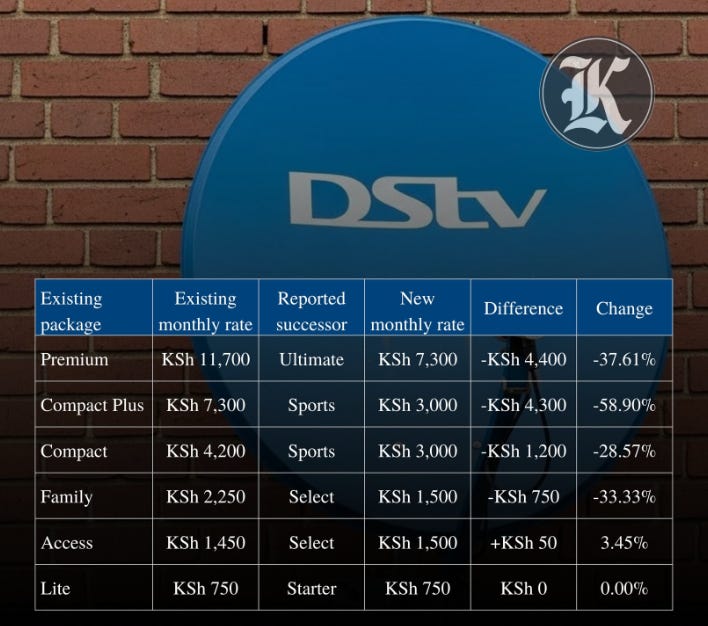
From 5 November, DStv’s six packages become four: Starter, KSh 750; Select, KSh 1,500; Sports, KSh 3,000; Ultimate, KSh 7,300 monthly. Sports includes every Premier League and Champions League match. Rugby, Formula 1, MotoGP, cricket, tennis and golf sit in Ultimate. I subscribed partly for rugby; when it left my package, I stopped paying. The price of reconciliation is clear. Household approval remains pending.
Premium’s KSh 11,700 becomes Ultimate’s KSh 7,300. That saves KSh 4,400 monthly, or KSh 52,800 annually. Meaningful money, especially now.
The comments beneath prominent Kenyan technology analyst Moses Kemibaro’s article “DSTV finally gets it” deserve attention. Commenter MM still considers KSh 3,000 expensive. He reports paying KSh 1,500 for 20 Mbps internet, against KSh 4,000 for 10 Mbps previously. Less money, twice the advertised speed, and the connection serves the whole house. FM says customers found alternatives and moved on.
FS raises the revenue question. Matching one KSh 7,300 subscription takes approximately 2.43 subscriptions at KSh 3,000, before costs. Of course, the old price earns nothing from someone who has left.
ES remembers years of concerns being noted; Moses replies that change followed years of losing customers. Individual experiences, yes, but worth hearing before assuming a discount brings everyone back. Some families have already worked out who watches what, on which screen, and what it costs.
Others are wondering how to put more money into the household altogether. There is always somebody ready to help with that.
Dr Amir Has Entered the Chat
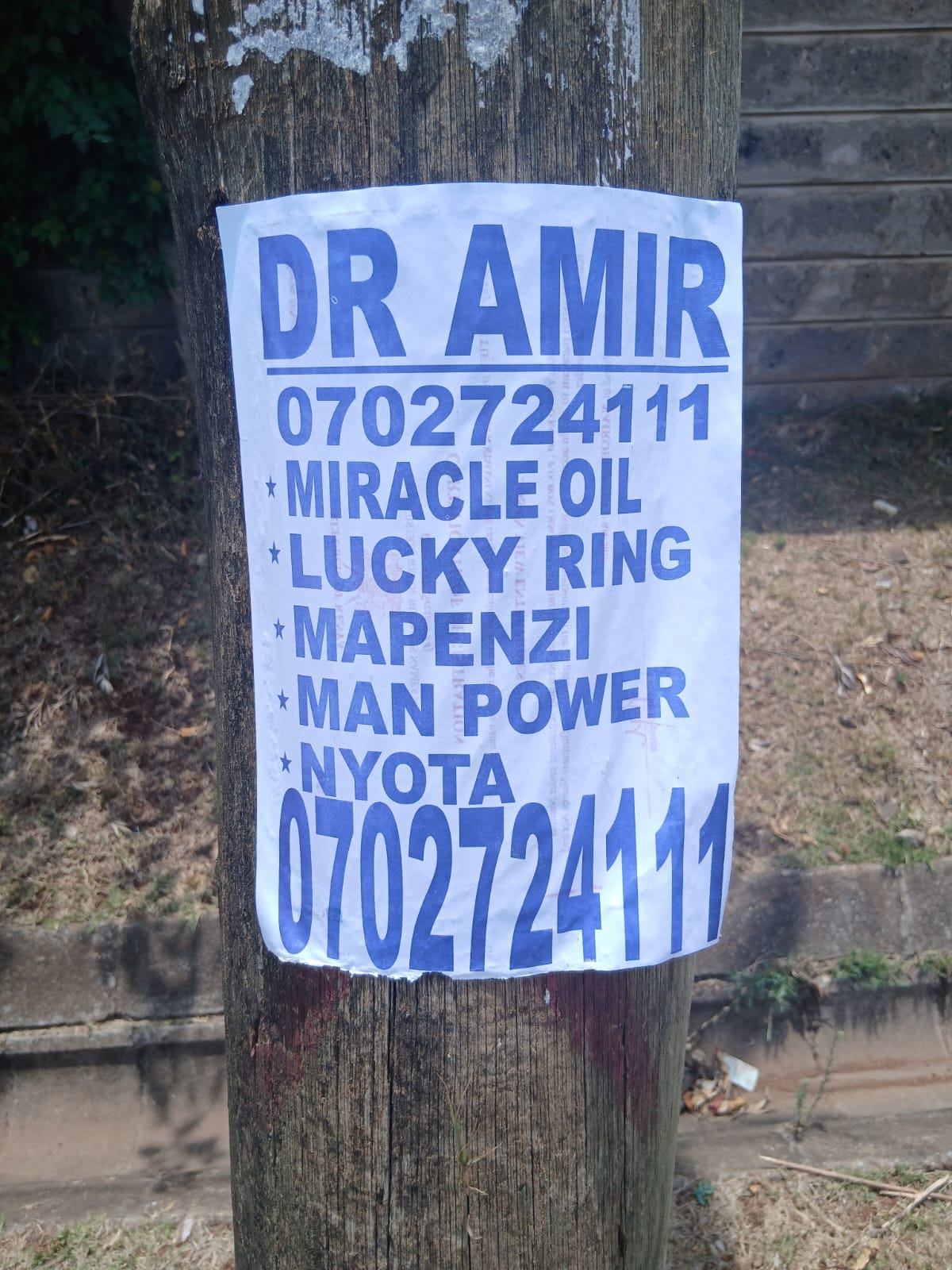
Our investor passes Dr Amir’s poster and shakes his head.
Miracle Oil. Lucky Ring. Mapenzi. Man Power. Nyota.
Village witchcraft, he decides, before returning to a WhatsApp group where somebody is explaining how a digital coin will rescue everyone from employment. The doctor has a wooden pole. The investment group has impressive charts, unfamiliar acronyms and a man joining from overseas. Even the promises arrive with better graphics.
BTC, ETH, USDT. Nobody wants to interrupt and look backward. Bitcoin’s creator used the name Satoshi Nakamoto; the identity remains unresolved. Binance, the exchange, has known founders, Changpeng Zhao and Yi He. Buying a coin and trusting somebody to hold it are different decisions. You can understand the first and still get a nasty surprise from the second.

On 29 October, money began leaving Binance the world’s largest cryptocurrency exchange. TRM Labs estimates attackers moved $6.36 billion across ten blockchains, most of it in twenty minutes, and attributes the attack to North Korea’s TraderTraitor unit.
Twenty minutes.
Some of us take longer deciding which account to transfer school fees from.
Binance initially pointed to a compromised engineer’s laptop and suspended withdrawals. It reported roughly $3 billion frozen with partners.
Imagine opening your app to discover that your money is there, according to the screen, but taking it out is temporarily unavailable. Its $1 billion SAFU emergency reserve amounted to about one-sixth of the reported theft. Binance said it would cover losses using its funds too: 90% replaced by 31 October, rising to 95% today as withdrawals resumed in phases.
Replaced does not mean recovered from the thieves.
An exchange being robbed does not turn cryptocurrency into witchcraft. Nor does everyone investing in it misunderstand the risks. But our amused investor might allow Dr Amir’s customers a little grace. He, too, has entrusted money to an assurance he cannot personally test. When somebody else’s name carries your confidence, their trouble soon becomes yours.
Football sponsors have been examining that arrangement too.
Free Speech. Expensive Echo.
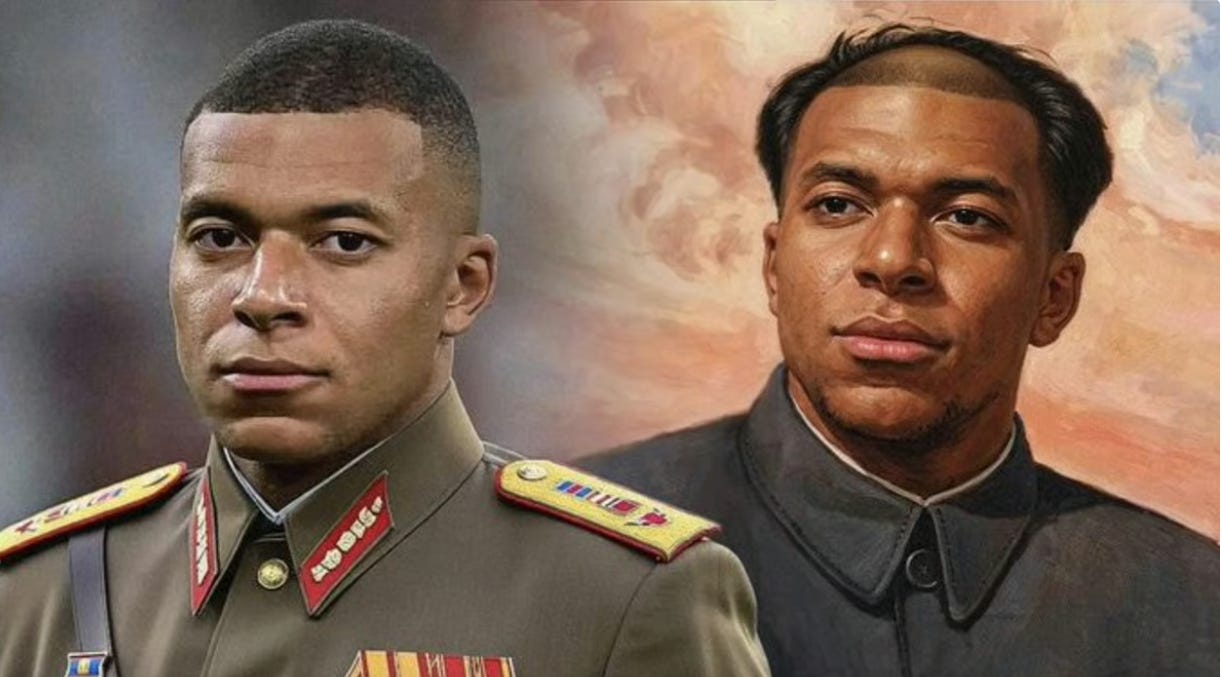
We complain that footballers say nothing in interviews. Credit to the players for that. Respect the opposition. One game at a time. Then Kylian Mbappé answers a question about his favourite meme, and you immediately understand why communications people hover nearby.
He recalled his face superimposed on somebody he thought was a Chinese dictator. The clip showed Mao Zedong’s image with Mbappé’s features.
He found it funny. Some people paying him did not.
Chinese companies Dongpeng, Mengniu and Milkground ended their partnerships. French paper, Le Monde, citing trade publications, puts the Dongpeng and Mengniu agreements at approximately 50 million yuan, or €6.7 million. That is reported contract value; his actual personal loss remains undisclosed. Three departing brands, although Milkground belongs to Mengniu. Presumably, nobody in that group fancied explaining the joke at the next meeting.
Then China Media Group suspended Spanish league coverage. La Liga expressed regret. Other clubs had neither made the remark nor approved it, yet their access to viewers was affected. David Skilling’s Original Football analysis follows that widening exposure: the consequences travelled well beyond the man who spoke.
A historical Nielsen estimate, cited by Madrid, put its Chinese following at approximately 97 million people. That is a considerable audience to leave outside while everyone discusses what you meant. Sponsors can choose another player. Broadcasters can choose another competition. The supporters, meanwhile, wanted to watch football.
Before You Approve That Discount
On Monday, look at the names behind next year’s sales target. Have you budgeted for Nike Sarit customers or are you using a list of everybody wearing trainers?
And that subscriber who left: perhaps his cheaper internet now entertains the children and runs his business.
What exactly would he come back for?
Call a few former customers before commissioning another promotion. Ask where the money went. You may discover that the household solved its problem while you were still discussing the discount.
November Belongs to Us
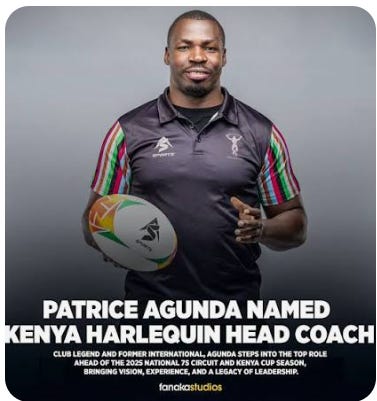
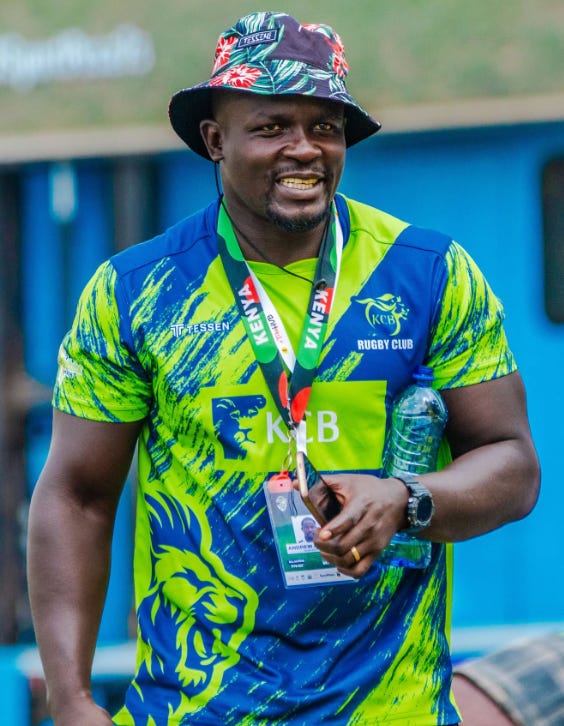
Andrew Amonde and Patrice Agunda once wore Shujaa colours together. In the 2014 final, they opposed each other as players. Twelve years later, they met as coaches. Amonde’s KCB won 47–7, claiming their eleventh Impala Floodlit title.
Mwamba ladies also beat Quins Ladies 20–8.
2 teams 2 finals. Kudos Kenya Harlequin FC #Strong Sure Superior
A bruising evening for Agunda, a true Harlequin: fifteen playing seasons, five as
captain, and now preparing others to wear the shirt. Those of us watching leave with an opinion. He returns to work with the players.
His birthday is 7 November.
Happy birthday Patrice, our skipper our coach our stalwart.
Hopefully somebody has organised something requiring no post-match analysis.
Welcome to our birthday month. November babies, assemble. Scorpio rules.
In the words of recently departed Sir Patrick Stewart as Captain Jean Luc Pricard in Star Trek:
“It is possible to commit no mistakes and still lose. That is not a weakness. That is life.”
The older I get, the more people I can put beside those words. People who did what they could and still had to start again. I have a few afternoons I would gladly replay myself. Another birthday finds me grateful for friends who will listen, until somebody remembers something ridiculous and we abandon the serious conversation.
This November, make one of those calls. Ask your old friend when they are free. We have postponed enough good afternoons waiting for everybody’s diary to agree.
May we have good health, useful work and many more occasions to gather.
May the StanChart marathon keep giving Nairobi this annual appointment.
Those of us from the Hash still need somebody to explain why the beer was twenty-one kilometres away. And in case you didnt know the words to the drinking song. Here we go.
Same Forest. Different Monkeys.
Mubarikiwe. Jah Bless.